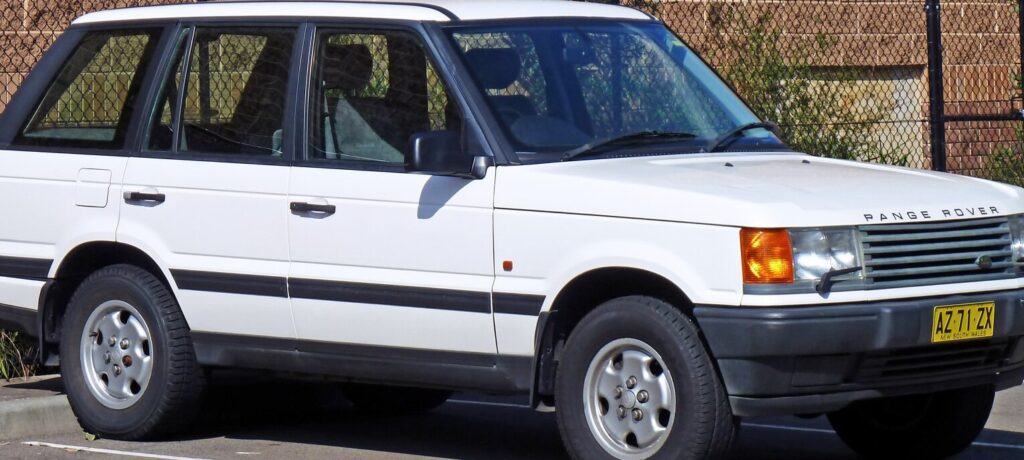
The Land Rover Range Rover II 4.6 V8 HSE, produced from 1994 to 2001, represented a significant evolution of the iconic Range Rover lineage. Positioned as the top-tier trim level within the second-generation Range Rover (codenamed P38A), the 4.6 V8 HSE offered a blend of luxury, off-road capability, and performance. It built upon the foundation laid by the original Range Rover, continuing its tradition as a sophisticated and capable all-terrain vehicle, but with updated technology and a more refined interior. The P38A generation, and specifically the 4.6 HSE, aimed to solidify the Range Rover’s position in the premium SUV market, competing with vehicles like the Mercedes-Benz M-Class and BMW X5, though offering a distinctly British character and a greater emphasis on off-road prowess.
Technical Specifications
| Brand | Land Rover |
| Model | Range Rover |
| Generation | Range Rover II |
| Type (Engine) | 4.6 V8 HSE (224 Hp) |
| Start of production | 1994 |
| End of production | 2001 |
| Powertrain Architecture | Internal Combustion engine |
| Body type | SUV |
| Seats | 5 |
| Doors | 5 |
| Fuel consumption (urban) | 22.9 l/100 km (10.3 US mpg) |
| Fuel consumption (extra urban) | 16.4 l/100 km (14.3 US mpg) |
| Fuel Type | Petrol (Gasoline) |
| Acceleration 0 – 100 km/h | 9.9 sec |
| Acceleration 0 – 62 mph | 9.9 sec |
| Acceleration 0 – 60 mph | 9.4 sec |
| Maximum speed | 196 km/h (121.79 mph) |
| Weight-to-power ratio | 9.9 kg/Hp |
| Weight-to-torque ratio | 5.8 kg/Nm |
| Power | 224 Hp @ 4750 rpm |
| Power per litre | 49.2 Hp/l |
| Torque | 380 Nm @ 3600 rpm (280.27 lb.-ft. @ 3600 rpm) |
| Engine layout | Front, Longitudinal |
| Engine displacement | 4553 cm3 (277.84 cu. in.) |
| Number of cylinders | 8 |
| Engine configuration | V-engine |
| Cylinder Bore | 94 mm (3.7 in.) |
| Piston Stroke | 82 mm (3.23 in.) |
| Compression ratio | 9.3:1 |
| Number of valves per cylinder | 2 |
| Fuel injection system | Multi-port manifold injection |
| Engine aspiration | Naturally aspirated engine |
| Engine oil capacity | 6.6 l (6.97 US qt | 5.81 UK qt) |
| Kerb Weight | 2220 kg (4894.26 lbs.) |
| Max. weight | 2780 kg (6128.85 lbs.) |
| Max load | 560 kg (1234.59 lbs.) |
| Trunk (boot) space – minimum | 520 l (18.36 cu. ft.) |
| Trunk (boot) space – maximum | 1640 l (57.92 cu. ft.) |
| Fuel tank capacity | 100 l (26.42 US gal | 22 UK gal) |
| Length | 4713 mm (185.55 in.) |
| Width | 1853 mm (72.95 in.) |
| Height | 1817 mm (71.54 in.) |
| Wheelbase | 2745 mm (108.07 in.) |
| Front track | 1540 mm (60.63 in.) |
| Rear (Back) track | 1530 mm (60.24 in.) |
| Drive wheel | All wheel drive (4×4) |
| Number of gears and type of gearbox | 4 gears, automatic transmission |
| Front suspension | Air suspension |
| Rear suspension | Air suspension |
| Front brakes | Ventilated discs |
| Rear brakes | Disc |
| Assisting systems | ABS (Anti-lock braking system) |
| Power steering | Hydraulic Steering |
| Tires size | 255/65 R16 |
| Wheel rims size | 16 |
Powertrain & Engine Architecture
The heart of the Range Rover II 4.6 V8 HSE was the 4.6-liter Rover V8 engine, specifically the 14PBT variant. This engine, a descendant of the original Buick-designed V8, had undergone significant development by Rover over the years. It featured a 90-degree V-angle, a cast iron block, and aluminum cylinder heads. The 4.6-liter displacement was achieved through a larger bore and stroke compared to earlier Rover V8s. Fuel delivery was handled by a multi-port fuel injection system, controlled by a Lucas 14C1 engine control unit. The engine produced 224 horsepower at 4750 rpm and 380 Newton-meters (280 lb-ft) of torque at 3600 rpm. The automatic transmission was a ZF 4HP24, a four-speed unit known for its smoothness and reliability. This transmission was specifically tuned to complement the V8’s torque curve, providing comfortable cruising and adequate acceleration.
Driving Characteristics
The 4.6 V8 HSE offered a distinctly different driving experience compared to the Range Rover II’s other engine options, such as the 2.5-liter inline-six or the 3.9-liter V8. The larger displacement V8 provided significantly more power and torque, resulting in quicker acceleration and more effortless highway cruising. While not a sports car, the HSE could reach 60 mph in around 9.4 seconds and achieve a top speed of 121.79 mph. The ZF automatic transmission, while smooth, wasn’t particularly quick-shifting, and the gear ratios were geared towards comfort and fuel economy rather than outright performance. Compared to the manual transmission options available on other Range Rover II models, the automatic felt less engaging, but it was far more convenient for everyday driving. The air suspension, standard on the HSE, provided a remarkably comfortable ride, both on and off-road.
Equipment & Trim Levels
The HSE trim level represented the pinnacle of luxury for the Range Rover II. Standard features included leather upholstery, wood trim, electric front seats with memory function, automatic climate control, and a premium sound system. Exterior features included unique alloy wheels, body-colored bumpers, and a distinctive HSE badge. Optional extras included a sunroof, rear seat entertainment system, and upgraded leather options. The interior was designed to provide a comfortable and refined environment, with a focus on high-quality materials and craftsmanship. The HSE’s interior was noticeably more luxurious than the base models, offering a more premium feel.
Chassis & Braking
The Range Rover II utilized a robust body-on-frame construction, providing excellent strength and durability. The HSE model featured a sophisticated air suspension system, which allowed for adjustable ride height and improved off-road capability. Front suspension utilized double wishbones with air springs, while the rear employed a similar setup. Braking duties were handled by ventilated discs at the front and solid discs at the rear, assisted by an anti-lock braking system (ABS). The HSE’s chassis was designed to handle the increased weight and power of the 4.6 V8 engine, providing a stable and controlled driving experience.
Market Reception & Comparison
The Range Rover II 4.6 V8 HSE was generally well-received by critics, who praised its luxurious interior, comfortable ride, and capable off-road performance. However, its fuel economy was often criticized, with reported figures of around 10.3 US mpg in urban driving and 14.3 US mpg on the highway. Compared to the 3.9-liter V8, the 4.6 HSE offered a noticeable performance improvement, but at the cost of increased fuel consumption. The 2.5-liter inline-six was more fuel-efficient but lacked the power and refinement of the V8 engines. The HSE’s higher price point also limited its appeal to a more affluent clientele.
Legacy
The Range Rover II 4.6 V8 HSE remains a desirable classic SUV today. While maintenance can be expensive due to the vehicle’s age and complexity, the 4.6 V8 engine is generally considered to be reliable if properly maintained. The ZF automatic transmission is also known for its durability. The P38A Range Rover, and particularly the HSE variant, has gained a loyal following among enthusiasts who appreciate its blend of luxury, capability, and British character. Finding well-maintained examples is becoming increasingly difficult, but the 4.6 V8 HSE continues to represent a significant chapter in the Range Rover’s storied history.