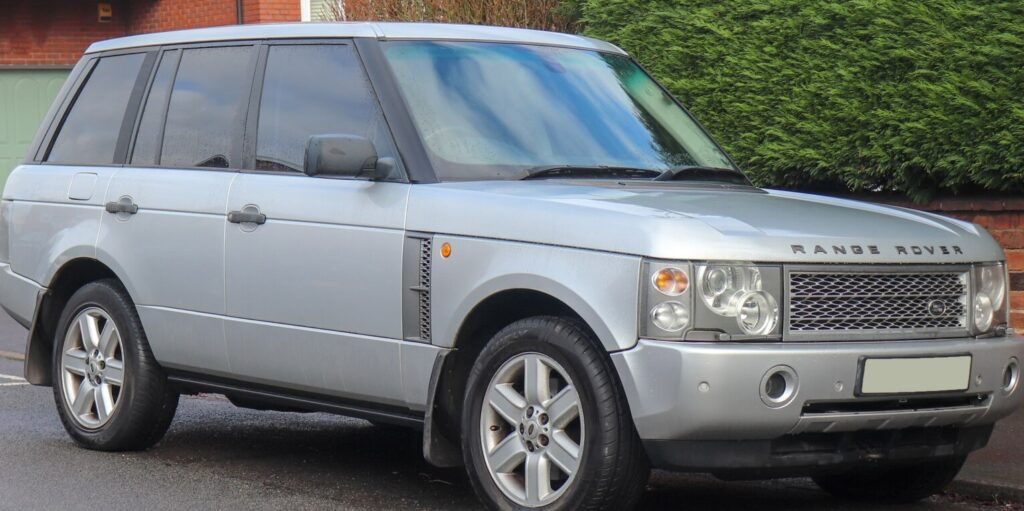
The Land Rover Range Rover III, produced from 2001 to 2005, marked a substantial advancement for the iconic British SUV. The 2.9 TD 24V variant, powered by a 2.9-liter turbocharged diesel engine generating 177 horsepower, occupied a distinct position within the Range Rover III lineup. Designed as a more fuel-efficient option compared to the gasoline V8 engines, it aimed to strike a balance between performance and economy for European and international buyers. This generation, known internally as the LM4x4 platform, introduced a new standard of luxury and technology to the Range Rover, while upholding its renowned off-road prowess.
Technical Specifications
| Brand | Land Rover |
| Model | Range Rover |
| Generation | Range Rover III |
| Type (Engine) | 2.9 TD 24V (177 Hp) |
| Start of production | 2001 |
| End of production | 2005 |
| Powertrain Architecture | Internal Combustion engine |
| Body type | SUV |
| Seats | 5 |
| Doors | 5 |
| Fuel consumption (urban) | 14.4 l/100 km (16.3 US mpg, 19.6 UK mpg, 6.9 km/l) |
| Fuel consumption (extra urban) | 9.4 l/100 km (25 US mpg, 30.1 UK mpg, 10.6 km/l) |
| Fuel consumption (combined) | 11.3 l/100 km (20.8 US mpg, 25 UK mpg, 8.8 km/l) |
| Fuel Type | Diesel |
| Acceleration 0 – 100 km/h | 13.6 sec |
| Acceleration 0 – 62 mph | 13.6 sec |
| Acceleration 0 – 60 mph | 12.9 sec |
| Maximum speed | 179 km/h (111.23 mph) |
| Weight-to-power ratio | 14.1 kg/Hp, 70.8 Hp/tonne |
| Weight-to-torque ratio | 6.4 kg/Nm, 156 Nm/tonne |
| Power | 177 Hp @ 4000 rpm |
| Power per litre | 60.5 Hp/l |
| Torque | 390 Nm @ 2000 rpm (287.65 lb.-ft. @ 2000 rpm) |
| Engine layout | Front, Longitudinal |
| Engine Model/Code | 306D1 |
| Engine displacement | 2926 cm3 (178.56 cu. in.) |
| Number of cylinders | 6 |
| Engine configuration | Inline |
| Cylinder Bore | 84 mm (3.31 in.) |
| Piston Stroke | 88 mm (3.46 in.) |
| Compression ratio | 18.1:1 |
| Number of valves per cylinder | 4 |
| Fuel injection system | Diesel Commonrail |
| Engine aspiration | Turbocharger, Intercooler |
| Valvetrain | OHC |
| Engine oil capacity | 8.75 l (9.25 US qt | 7.7 UK qt) |
| Coolant | 11 l (11.62 US qt | 9.68 UK qt) |
| Kerb Weight | 2500 kg (5511.56 lbs.) |
| Max. weight | 3050 kg (6724.1 lbs.) |
| Max load | 550 kg (1212.54 lbs.) |
| Trunk (boot) space – minimum | 535 l (18.89 cu. ft.) |
| Trunk (boot) space – maximum | 1755 l (61.98 cu. ft.) |
| Fuel tank capacity | 100 l (26.42 US gal | 22 UK gal) |
| Length | 4950 mm (194.88 in.) |
| Width | 1955 mm (76.97 in.) |
| Height | 1860 mm (73.23 in.) |
| Wheelbase | 2880 mm (113.39 in.) |
| Front track | 1630 mm (64.17 in.) |
| Rear (Back) track | 1625 mm (63.98 in.) |
| Drive wheel | All wheel drive (4×4) |
| Number of gears and type of gearbox | 5 gears, automatic transmission |
| Front suspension | Air suspension |
| Rear suspension | Air suspension |
| Front brakes | Ventilated discs |
| Rear brakes | Disc |
| Assisting systems | ABS (Anti-lock braking system), Hydraulic Steering |
| Tires size | 255/55 R19 |
Powertrain & Engine Architecture
The 2.9 TD variant’s core was the 306D1 engine, a 2.9-liter inline-six cylinder diesel. This engine was the result of a collaborative effort between Land Rover and BMW, capitalizing on BMW’s expertise in diesel engine technology. It featured a durable cast iron block and an aluminum cylinder head. The engine utilized a common rail direct injection system, delivering fuel at exceptionally high pressure to enhance combustion efficiency and reduce emissions. A turbocharger, paired with an intercooler, further boosted performance, achieving an output of 177 hp and 390 Nm (287.65 lb-ft) of torque. The five-speed automatic transmission, sourced from ZF, was specifically tuned to complement the diesel engine’s torque characteristics. This transmission provided smooth gear changes and contributed to the Range Rover’s refined driving experience.
Driving Characteristics
The 2.9 TD automatic delivered a distinct driving experience compared to the gasoline-powered Range Rover III models. While lacking the immediate acceleration of the V8s, it offered substantial torque for comfortable cruising and effortless towing. The automatic transmission, while smooth, wasn’t particularly quick to downshift, resulting in a more relaxed driving style. The gear ratios were optimized for fuel economy and strong mid-range power delivery. Compared to the manual transmission versions of the same engine, the automatic offered greater convenience, especially in city driving, but at the cost of some driver engagement. The 0-60 mph time of approximately 12.9 seconds was respectable for a large SUV of its time, but clearly positioned it below the more powerful variants.
Equipment & Trim Levels
The 2.9 TD typically came standard with a generous array of features, reflecting the Range Rover’s luxury positioning. Standard amenities included leather upholstery, climate control, power-adjustable front seats, and a premium audio system. Optional extras included heated seats, a sunroof, upgraded audio systems, and various exterior styling enhancements. Trim levels were relatively standardized for the diesel variant, with most models featuring a similar specification. The interior design adhered to the contemporary Range Rover aesthetic, incorporating wood and chrome accents to create a sophisticated atmosphere.
Chassis & Braking
The Range Rover III’s chassis was a robust body-on-frame construction, providing exceptional strength and durability. The 2.9 TD variant incorporated an air suspension system on both the front and rear axles, delivering a remarkably comfortable ride and the ability to adjust ride height for improved off-road performance. Braking was handled by ventilated discs at the front and solid discs at the rear, coupled with an Anti-lock Braking System (ABS) for enhanced safety. Hydraulic power steering provided precise and responsive handling. Stabilizer bars were fitted to both the front and rear axles to minimize body roll during cornering.
Market Reception & Comparison
The 2.9 TD variant was generally well-received by automotive critics as a practical and economical alternative to the gasoline Range Rovers. Its fuel economy, averaging around 20.8 US mpg combined, represented a significant improvement over the V8 models. However, some reviewers noted the engine’s relative lack of refinement compared to its competitors and the somewhat sluggish response of the automatic transmission. Compared to the 4.4-liter V8, the 2.9 TD offered a more affordable entry point into Range Rover ownership, but at the expense of outright performance and prestige. The 2.9 TD also presented a more economical option compared to the later 3.0 TD6 models.
Legacy
The 306D1 engine, despite some inherent quirks, proved to be a reasonably reliable powertrain when properly maintained. Common issues included turbocharger failures and injector problems, but these were generally addressable with regular servicing. In today’s used car market, the 2.9 TD Range Rover III represents a relatively affordable way to experience Range Rover luxury and capability. Its robust construction and relatively straightforward mechanicals make it a popular choice among enthusiasts and those seeking a durable and capable SUV. However, prospective buyers should be aware of the potential for age-related issues and the importance of a comprehensive pre-purchase inspection.