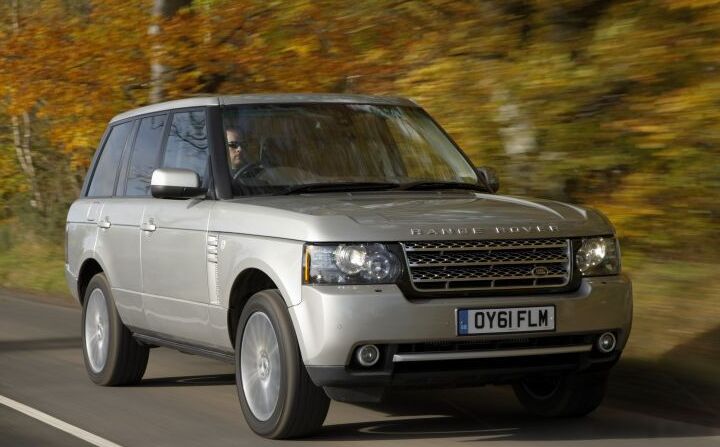
The Land Rover Range Rover III, specifically the facelifted version introduced in 2009, represented a significant evolution of the iconic luxury SUV. The 3.6 LR TD V8 AWD Automatic variant, produced from 2010 to 2012, occupied a key position in the Range Rover lineup, offering a compelling blend of performance, refinement, and capability. This model aimed to provide a more efficient alternative to the petrol engines while maintaining the Range Rover’s hallmark luxury and off-road prowess. It was positioned as a mid-to-upper range offering, appealing to buyers seeking a powerful and capable SUV with a diesel engine.
Technical Specifications
| Brand | Land Rover |
| Model | Range Rover |
| Generation | Range Rover III (facelift 2009) |
| Type (Engine) | 3.6 LR TD V8 (271 Hp) AWD Automatic |
| Start of production | 2010 |
| End of production | 2012 |
| Powertrain Architecture | Internal Combustion engine |
| Body type | SUV |
| Seats | 5 |
| Doors | 5 |
| Fuel consumption (combined) | 11.1 l/100 km |
| Fuel consumption (US mpg) | 21.2 US mpg |
| Fuel consumption (UK mpg) | 25.4 UK mpg |
| Fuel consumption (km/l) | 9 km/l |
| CO2 emissions | 294 g/km |
| Fuel Type | Diesel |
| Acceleration 0 – 100 km/h | 9.2 sec |
| Acceleration 0 – 62 mph | 9.2 sec |
| Acceleration 0 – 60 mph | 8.7 sec |
| Maximum speed | 200 km/h (124.27 mph) |
| Power | 271 Hp @ 4000 rpm |
| Power per litre | 74.7 Hp/l |
| Torque | 630 Nm @ 2000 rpm (464.66 lb.-ft. @ 2000 rpm) |
| Engine layout | Front, Longitudinal |
| Engine Model/Code | 368DT |
| Engine displacement | 3628 cm3 (221.39 cu. in.) |
| Number of cylinders | 8 |
| Engine configuration | V-engine |
| Cylinder Bore | 81 mm (3.19 in.) |
| Piston Stroke | 88 mm (3.46 in.) |
| Compression ratio | 17.3:1 |
| Number of valves per cylinder | 4 |
| Fuel injection system | Diesel Commonrail |
| Engine aspiration | BiTurbo, Intercooler |
| Engine oil capacity | 9.5 l (10.04 US qt | 8.36 UK qt) |
| Coolant | 14 l (14.79 US qt | 12.32 UK qt) |
| Fuel tank capacity | 105 l (27.74 US gal | 23.1 UK gal) |
| Permitted trailer load with brakes (12%) | 3500 kg (7716.18 lbs.) |
| Length | 4972 mm (195.75 in.) |
| Width with mirrors folded | 2034 mm (80.08 in.) |
| Height | 1865 mm (73.43 in.) |
| Wheelbase | 2880 mm (113.39 in.) |
| Front track | 1629 mm (64.13 in.) |
| Rear track | 1625 mm (63.98 in.) |
| Drive wheel | All wheel drive (4×4) |
| Number of gears and type of gearbox | 6 gears, automatic transmission |
| Front suspension | Independent type McPherson |
| Rear suspension | Double wishbone |
| Front brakes | Ventilated discs |
| Rear brakes | Disc |
| Assisting systems | ABS (Anti-lock braking system) |
| Steering type | Steering rack and pinion |
| Power steering | Electric Steering |
Powertrain & Engine Architecture
The heart of this Range Rover variant is the 368DT 3.6-liter V8 turbodiesel engine. This engine is a significant departure from earlier Range Rover engines, utilizing a common-rail direct injection system and a sequential twin-turbocharger setup. The twin-turbo configuration, with a smaller turbo for low-end response and a larger turbo for high-end power, contributes to the engine’s broad torque curve. The engine boasts a high compression ratio of 17.3:1, typical for diesel engines, maximizing efficiency. The 368DT engine was developed in collaboration with PSA Peugeot Citroën and also found application in various Peugeot and Citroën models. The six-speed automatic transmission, sourced from ZF, was a crucial component, designed to handle the substantial torque output of the diesel V8. This transmission featured a torque converter and offered a smooth, albeit not particularly sporty, driving experience.
Driving Characteristics
The 3.6 LR TD V8 Automatic Range Rover offered a markedly different driving experience compared to its petrol-powered siblings or the lower-powered diesel variants. The substantial 630 Nm (464.66 lb-ft) of torque available from 2000 rpm provided effortless acceleration and strong pulling power, making it well-suited for towing. While the 0-60 mph time of around 8.7 seconds wasn’t blistering, it was more than adequate for a vehicle of this size and weight. The automatic transmission, while smooth, could feel somewhat hesitant during quick downshifts. Compared to the more agile handling of the supercharged petrol models, the diesel felt more planted and composed, prioritizing comfort over outright sportiness. The gear ratios were optimized for relaxed cruising and off-road capability rather than aggressive acceleration.
Equipment & Trim Levels
The 3.6 LR TD V8 Automatic typically came equipped with a generous level of standard features, befitting the Range Rover’s luxury positioning. Leather upholstery, heated front seats, a premium audio system, automatic climate control, and parking sensors were common inclusions. Higher trim levels offered options such as adaptive cruise control, a panoramic sunroof, upgraded leather, and rear-seat entertainment. The interior design followed the Range Rover III’s theme of understated elegance, with wood and metal trim accents. The dashboard layout was relatively straightforward, prioritizing functionality and ease of use.
Chassis & Braking
The Range Rover III’s chassis was built around a robust monocoque construction, providing a solid foundation for both on-road comfort and off-road capability. The suspension system featured independent double wishbones at the front and a multi-link setup at the rear, offering a comfortable ride even on rough surfaces. Air suspension was standard, allowing for adjustable ride height and improved off-road articulation. Braking duties were handled by ventilated discs all around, providing ample stopping power. Anti-lock brakes (ABS) and electronic stability control were standard safety features.
Market Reception & Comparison
The 3.6 LR TD V8 Automatic Range Rover was generally well-received by critics, who praised its refined engine, comfortable ride, and impressive off-road capabilities. Fuel economy, while not exceptional, was a significant improvement over the petrol models. However, some reviewers noted the transmission’s occasional sluggishness and the relatively high price tag. Compared to the 3.6L petrol variant, the diesel offered better fuel economy and more torque, making it a more practical choice for long-distance driving and towing. Compared to the smaller 2.7L diesel, the V8 provided a more refined and powerful driving experience. Reliability proved to be generally good, although the complex air suspension system could be prone to issues.
Legacy
The 3.6 LR TD V8 Automatic Range Rover III remains a desirable used car today, particularly for buyers seeking a capable and comfortable luxury SUV. The 368DT engine, while not without its complexities, has proven to be relatively durable with proper maintenance. The availability of parts and qualified mechanics is generally good. However, potential buyers should be aware of the potential for air suspension issues and the cost of maintaining a vehicle of this complexity. This variant represents a sweet spot in the Range Rover III lineup, offering a compelling blend of performance, refinement, and capability at a more accessible price point than the higher-end models.