Technical Specifications
| Brand | Land Rover |
| Model | Range Rover |
| Generation | Range Rover III (facelift 2005) |
| Type (Engine) | 3.6 TDV8 (271 Hp) AWD Automatic |
| Start of production | 2006 |
| End of production | 2009 |
| Powertrain Architecture | Internal Combustion engine |
| Body type | SUV |
| Seats | 5 |
| Doors | 5 |
| Fuel consumption (urban) | 14.5 l/100 km (16.2 US mpg, 19.5 UK mpg, 6.9 km/l) |
| Fuel consumption (extra urban) | 9.2 l/100 km (25.6 US mpg, 30.7 UK mpg, 10.9 km/l) |
| Fuel consumption (combined) | 11.1 l/100 km (21.2 US mpg, 25.4 UK mpg, 9 km/l) |
| CO2 emissions | 294 g/km |
| Fuel Type | Diesel |
| Acceleration 0 – 100 km/h | 9.2 sec |
| Acceleration 0 – 62 mph | 9.2 sec |
| Acceleration 0 – 60 mph | 8.7 sec |
| Maximum speed | 200 km/h (124.27 mph) |
| Emission standard | Euro 4 |
| Weight-to-power ratio | 10 kg/Hp, 99.7 Hp/tonne |
| Weight-to-torque ratio | 4.2 kg/Nm, 235.6 Nm/tonne |
| Power | 271 Hp @ 4000 rpm |
| Power per litre | 74.7 Hp/l |
| Torque | 640 Nm @ 2000 rpm (472.04 lb.-ft. @ 2000 rpm) |
| Engine layout | Front, Longitudinal |
| Engine Model/Code | 368DT |
| Engine displacement | 3628 cm3 (221.39 cu. in.) |
| Number of cylinders | 8 |
| Engine configuration | V-engine |
| Cylinder Bore | 81 mm (3.19 in.) |
| Piston Stroke | 88 mm (3.46 in.) |
| Compression ratio | 17.3:1 |
| Number of valves per cylinder | 4 |
| Fuel injection system | Diesel Commonrail |
| Engine aspiration | Twin-Turbo, Intercooler |
| Valvetrain | DOHC |
| Engine oil capacity | 9.5 l (10.04 US qt, 8.36 UK qt) |
| Coolant | 14 l (14.79 US qt, 12.32 UK qt) |
| Kerb Weight | 2717 kg (5989.96 lbs.) |
| Max. weight | 3200 kg (7054.79 lbs.) |
| Max load | 483 kg (1064.83 lbs.) |
| Trunk (boot) space – minimum | 994 l (35.1 cu. ft.) |
| Trunk (boot) space – maximum | 2099 l (74.13 cu. ft.) |
| Fuel tank capacity | 104.5 l (27.61 US gal, 22.99 UK gal) |
| Max. roof load | 100 kg (220.46 lbs.) |
| Permitted trailer load with brakes (12%) | 3500 kg (7716.18 lbs.) |
| Permitted trailer load without brakes | 750 kg (1653.47 lbs.) |
| Length | 4972 mm (195.75 in.) |
| Width with mirrors folded | 2034 mm (80.08 in.) |
| Width including mirrors | 2216 mm (87.24 in.) |
| Height | 1837-1877 mm (72.32 – 73.9 in.) |
| Wheelbase | 2880 mm (113.39 in.) |
| Front track | 1629 mm (64.13 in.) |
| Rear (Back) track | 1625 mm (63.98 in.) |
| Ride height (ground clearance) | 225-275 mm (8.86 – 10.83 in.) |
| Minimum turning circle (turning diameter) | 12.6 m (41.34 ft.) |
| Approach angle | 29-34° |
| Departure angle | 24.2-26.6° |
| Ramp-over (brakeover) angle | 25-30° |
| Wading depth | 700 mm (27.56 in.) |
| Drivetrain Architecture | The Internal combustion engine (ICE) drives permanently the four wheels of the vehicle. |
| Drive wheel | All wheel drive (4×4) |
| Number of gears and type of gearbox | 6 gears, automatic transmission |
| Front suspension | Independent type McPherson, Air suspension |
| Rear suspension | Double wishbone, Air suspension |
| Front brakes | Ventilated discs, 360×30 mm |
| Rear brakes | Ventilated discs, 354×20 mm |
| Assisting systems | ABS (Anti-lock braking system) |
| Steering type | Steering rack and pinion |
| Power steering | Hydraulic Steering |
| Tires size | 255/60 R18; 255/55 R19 |
| Wheel rims size | 7.5J x 18; 8J x 19 |
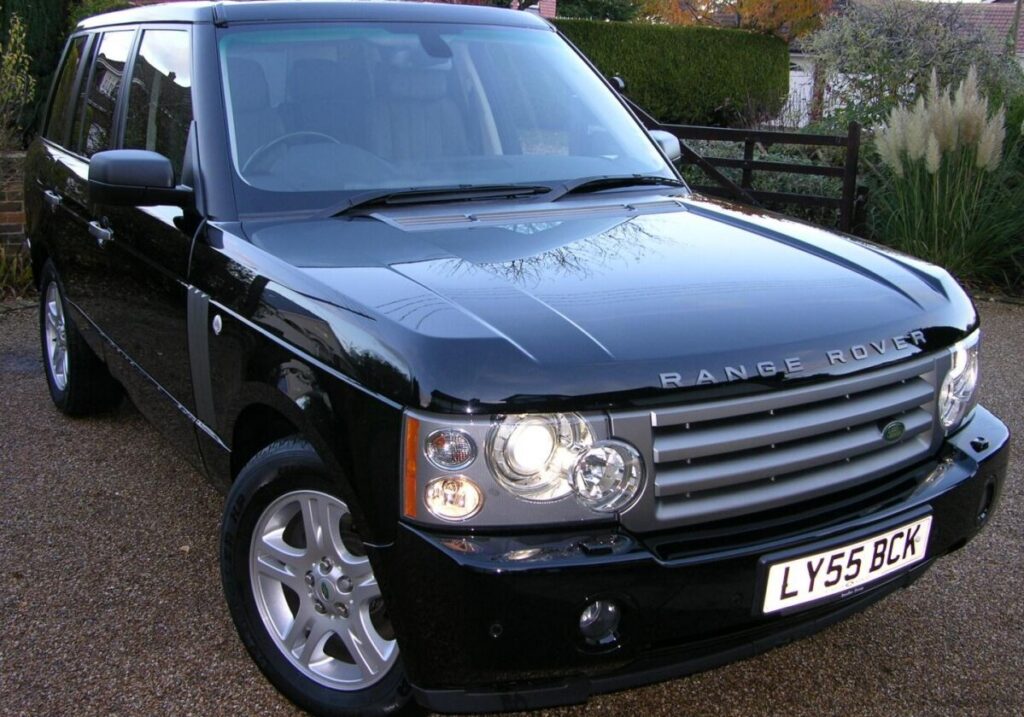
The Range Rover III, launched in 2002 and facelifted in 2005, represented a significant step forward for Land Rover, embracing a more luxurious and technologically advanced approach. The 3.6 TDV8 variant, introduced with the facelift, was a key addition to the engine lineup. It offered a compelling alternative to the petrol engines, providing strong torque for towing and off-road excursions, coupled with improved fuel economy. This model year saw refinements to the exterior styling, interior appointments, and electronic systems, solidifying the Range Rover’s position as a premium SUV. The 3.6 TDV8 automatic was aimed at buyers who desired a sophisticated and capable vehicle without the involvement of a manual transmission.
Powertrain & Engine Architecture
The heart of the 3.6 TDV8 is the 368DT engine, a 3.6-liter V8 diesel. This engine utilizes a common rail direct injection system, delivering fuel at extremely high pressure for optimized combustion. The engine employs twin turbochargers with an intercooler, boosting power and torque output. The ‘DOHC’ (Double Overhead Camshaft) valvetrain ensures efficient valve control. The engine’s architecture is longitudinal, meaning it’s mounted lengthwise in the chassis. Paired with this engine is a six-speed automatic transmission, providing smooth and effortless gear changes. This transmission was specifically designed to handle the substantial torque produced by the diesel engine, offering a balance between performance and refinement. The automatic gearbox was a key selling point for buyers prioritizing ease of use and comfort.
Driving Characteristics
The 3.6 TDV8 automatic Range Rover offered a distinctly different driving experience compared to its petrol counterparts or manual diesel versions. The automatic transmission, while smooth, did slightly diminish the sense of direct control offered by a manual gearbox. However, the abundance of torque – 640 Nm (472 lb-ft) – meant that the vehicle felt effortlessly powerful in most driving situations. Acceleration from 0-60 mph took around 8.7 seconds, respectable for a large SUV. The automatic transmission’s gear ratios were tuned for both on-road comfort and off-road capability, providing ample low-end grunt for tackling challenging terrain. While not as overtly sporty as some competitors, the 3.6 TDV8 offered a refined and capable driving experience, particularly well-suited for long journeys and towing. The transmission’s programming prioritized smooth shifts over aggressive downshifts, contributing to the overall sense of relaxed cruising.
Equipment & Trim Levels
The 3.6 TDV8 automatic typically came with a generous level of standard equipment. This included leather upholstery, climate control, a premium audio system, and electrically adjustable seats. Optional extras included features such as a panoramic sunroof, upgraded navigation system, rear seat entertainment, and various exterior styling enhancements. Trim levels varied depending on the market, but generally, the 3.6 TDV8 sat within the mid-to-high range of the lineup. Interior finishes were typically high-quality, with wood and aluminum trim accents. The overall ambiance was one of luxury and sophistication. Higher trim levels often included features like heated and cooled seats, massaging functions, and more elaborate leather stitching.
Chassis & Braking
The Range Rover III utilized a robust chassis construction, incorporating a monocoque design for strength and rigidity. The suspension system featured independent McPherson struts at the front and a double wishbone setup at the rear, both incorporating air suspension. This air suspension system allowed for adjustable ride height, enhancing both on-road comfort and off-road capability. Braking duties were handled by ventilated discs on all four wheels, providing ample stopping power. Anti-lock Braking System (ABS) was standard, enhancing safety and control. Stabilizer bars were fitted front and rear to reduce body roll during cornering. The air suspension also contributed to a more stable and controlled ride, particularly when towing or carrying a heavy load.
Market Reception & Comparison
The 3.6 TDV8 automatic Range Rover was generally well-received by automotive critics. It was praised for its powerful engine, comfortable ride, and luxurious interior. However, some reviewers noted that the automatic transmission could feel slightly sluggish at times, and fuel economy, while better than the petrol models, was still relatively high. Compared to the 4.4-liter petrol V8, the TDV8 offered significantly more torque and better fuel efficiency. Against the 2.7-liter TDV6, the 3.6 TDV8 provided a substantial power upgrade, justifying its higher price point. Reliability was generally good, although, like all complex vehicles, the Range Rover III could be prone to certain issues, particularly with the air suspension system and the electronic control modules.
Legacy
The 3.6 TDV8 engine proved to be a durable and reliable powerplant when properly maintained. Today, these Range Rovers are sought after by enthusiasts who appreciate their blend of luxury, capability, and relatively strong diesel power. While maintenance costs can be higher than for some other SUVs, the 3.6 TDV8’s robust construction and readily available parts supply ensure that it remains a viable option for those seeking a classic luxury SUV. The automatic transmission, while not always the first choice for driving purists, continues to provide smooth and reliable operation in many examples. The 3.6 TDV8 variant cemented the Range Rover’s reputation as a capable and refined all-terrain vehicle, capable of tackling both challenging off-road conditions and providing a comfortable and luxurious on-road experience. Well-maintained examples continue to command respectable prices in the used car market, reflecting their enduring appeal.