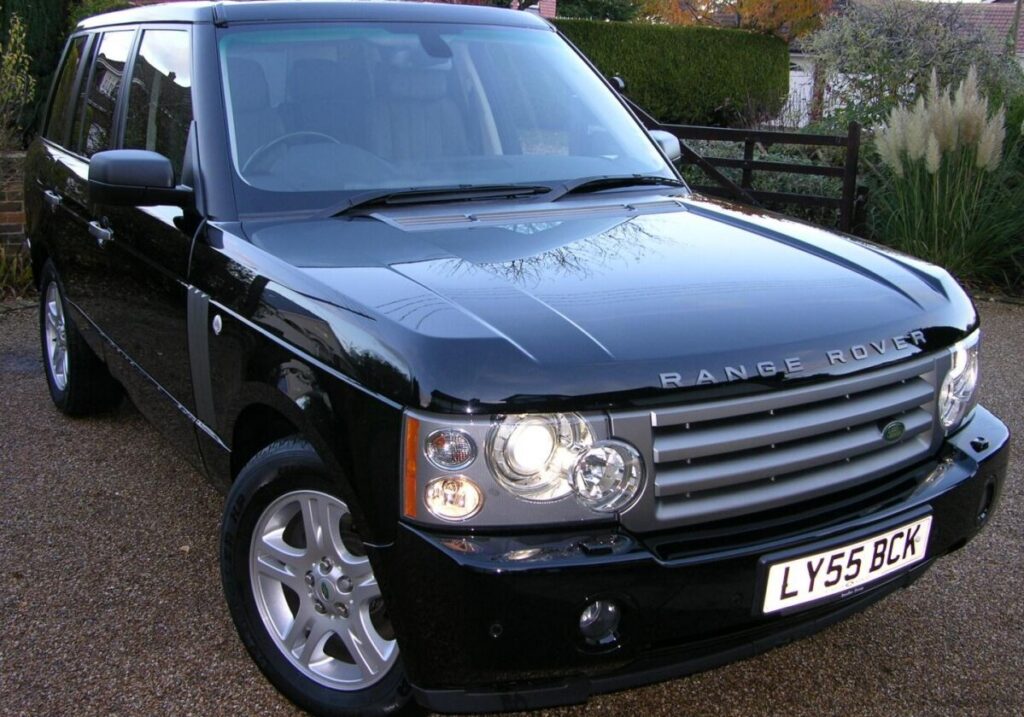
The Land Rover Range Rover III, specifically the facelifted version introduced in 2005, represented a significant evolution of the iconic luxury SUV. This iteration, produced through 2006, continued the third generation’s blend of off-road capability and opulent comfort, but with refinements to styling, technology, and engine options. The 4.4 i V8 32V (299 Hp) variant occupied a premium position within the Range Rover III lineup, offering a substantial step up in performance compared to the base models while remaining below the supercharged flagship. It was aimed at buyers seeking a powerful and refined SUV experience without the ultimate price tag of the top-tier trim.
Technical Specifications
| Brand | Land Rover |
| Model | Range Rover |
| Generation | Range Rover III (facelift 2005) |
| Type (Engine) | 4.4 i V8 32V (299 Hp) |
| Start of production | 2005 |
| End of production | 2006 |
| Powertrain Architecture | Internal Combustion engine |
| Body type | SUV |
| Seats | 5 |
| Doors | 5 |
| Fuel consumption (urban) | 21.2 l/100 km (11.1 US mpg, 13.3 UK mpg, 4.7 km/l) |
| Fuel consumption (extra urban) | 11.4 l/100 km (20.6 US mpg, 24.8 UK mpg, 8.8 km/l) |
| Fuel Type | Petrol (Gasoline) |
| Acceleration 0 – 100 km/h | 9.2 sec |
| Acceleration 0 – 62 mph | 9.2 sec |
| Acceleration 0 – 60 mph | 8.7 sec |
| Maximum speed | 208 km/h (129.25 mph) |
| Weight-to-power ratio | 8.3 kg/Hp, 120.3 Hp/tonne |
| Weight-to-torque ratio | 5.8 kg/Nm, 171 Nm/tonne |
| Power | 299 Hp @ 5500 rpm |
| Power per litre | 68 Hp/l |
| Torque | 425 Nm @ 4000 rpm (313.46 lb.-ft. @ 4000 rpm) |
| Engine layout | Front, Longitudinal |
| Engine Model/Code | 448PN |
| Engine displacement | 4394 cm3 (268.14 cu. in.) |
| Number of cylinders | 8 |
| Engine configuration | V-engine |
| Cylinder Bore | 88 mm (3.46 in.) |
| Piston Stroke | 90.3 mm (3.56 in.) |
| Compression ratio | 10.8:1 |
| Number of valves per cylinder | 4 |
| Fuel injection system | Multi-port manifold injection |
| Engine aspiration | Naturally aspirated engine |
| Valvetrain | DOHC |
| Engine oil capacity | 7.7 l (8.14 US qt, 6.78 UK qt) |
| Kerb Weight | 2485 kg (5478.49 lbs.) |
| Max. weight | 3100 kg (6834.33 lbs.) |
| Max load | 615 kg (1355.84 lbs.) |
| Trunk (boot) space – minimum | 535 l (18.89 cu. ft.) |
| Trunk (boot) space – maximum | 1755 l (61.98 cu. ft.) |
| Fuel tank capacity | 105 l (27.74 US gal, 23.1 UK gal) |
| Length | 4950 mm (194.88 in.) |
| Width | 1955 mm (76.97 in.) |
| Height | 1860 mm (73.23 in.) |
| Wheelbase | 2880 mm (113.39 in.) |
| Front track | 1630 mm (64.17 in.) |
| Rear (Back) track | 1625 mm (63.98 in.) |
| Drive wheel | All wheel drive (4×4) |
| Number of gears and type of gearbox | 6 gears, automatic transmission |
| Front suspension | Air suspension |
| Rear suspension | Air suspension |
| Front brakes | Ventilated discs |
| Rear brakes | Disc |
| Assisting systems | ABS (Anti-lock braking system) |
| Steering type | Steering rack and pinion |
| Power steering | Hydraulic Steering |
| Tires size | 225/60 R18 |
Powertrain & Engine Architecture
The heart of this Range Rover variant is the 4.4-liter naturally aspirated V8 engine, designated as the 448PN. This engine is a descendant of the BMW M62 V8, developed during BMW’s ownership of Land Rover. It features a 90-degree V-angle, four valves per cylinder operated by double overhead camshafts (DOHC), and multi-port fuel injection. The engine’s architecture prioritized smooth power delivery and refinement over outright performance, aligning with the Range Rover’s luxury positioning. The 6-speed automatic transmission, sourced from ZF, was a crucial component, offering relatively smooth shifts and a wide gear ratio spread. This transmission was known for its durability, but also for its tendency to ‘hunt’ for gears in certain driving conditions.
Driving Characteristics
The 4.4-liter V8, producing 299 horsepower and 313 lb-ft of torque, provided ample power for the substantial weight of the Range Rover. Acceleration from 0-60 mph took approximately 8.7 seconds, making it a capable performer for its size and class. However, it wasn’t a sports car. The automatic transmission, while smooth, didn’t offer the responsiveness of a manual gearbox or more modern automatic transmissions. The gear ratios were tuned for comfortable cruising and off-road capability, rather than aggressive acceleration. Compared to the supercharged 4.2-liter V8, the 4.4-liter felt less urgent, but offered a more relaxed and refined driving experience. Against the diesel variants, like the TD6, the 4.4 i V8 provided significantly more horsepower but at the cost of considerably lower fuel economy.
Equipment & Trim Levels
The 4.4 i V8 typically came well-equipped, positioning it as a mid-to-high-range trim level. Standard features included leather upholstery, wood trim, automatic climate control, a premium audio system, and power-adjustable front seats. Optional extras were plentiful, including heated and cooled seats, rear seat entertainment, upgraded audio systems (often Harman Kardon), and various exterior styling enhancements. The interior design was characterized by a blend of luxury and functionality, with a focus on creating a comfortable and refined cabin environment.
Chassis & Braking
The Range Rover III utilized a robust body-on-frame construction, providing excellent strength and off-road durability. The suspension system was a key feature, employing air suspension on both the front and rear axles. This allowed for adjustable ride height and provided a remarkably comfortable ride, even on rough terrain. Braking duties were handled by ventilated discs at the front and solid discs at the rear, coupled with an Anti-lock Braking System (ABS). The braking performance was adequate for the vehicle’s weight, but not particularly sporty.
Market Reception & Comparison
The 4.4 i V8 Range Rover III was generally well-received by automotive critics. It was praised for its comfortable ride, luxurious interior, and capable off-road performance. However, fuel economy was a common criticism, with the V8 engine consuming a significant amount of gasoline. Compared to the diesel models, the 4.4 i V8 offered less fuel efficiency but more outright power. Against competitors like the BMW X5 and Mercedes-Benz M-Class, the Range Rover stood out for its superior off-road capability and more distinctive styling.
Legacy
The 4.4-liter V8 in the Range Rover III, while not the most fuel-efficient or technologically advanced engine of its time, has proven to be relatively reliable. With proper maintenance, these engines can accumulate high mileage. However, they are prone to certain issues, such as oil leaks and cooling system failures. In the used car market, the 4.4 i V8 Range Rover III represents a good value for buyers seeking a luxurious and capable SUV. Its combination of comfort, performance, and off-road ability continues to appeal to a wide range of buyers, though potential owners should be prepared for the ongoing maintenance costs associated with a vehicle of this complexity and age.