
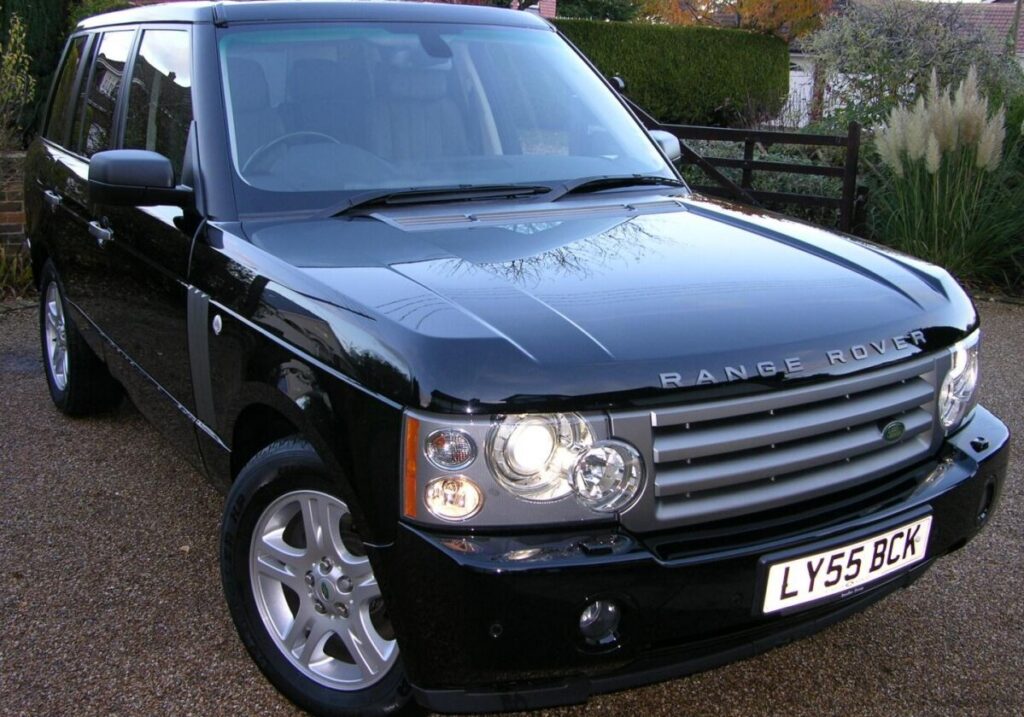
The Land Rover Range Rover III, specifically the facelifted version introduced in 2005, represented a significant evolution of the iconic luxury SUV. Produced from 2006 to 2007, the 4.4 i V8 32V (306 Hp) variant occupied a prominent position within the Range Rover lineup, offering a blend of performance, refinement, and off-road capability. This iteration of the Range Rover, built on the 1HX0/A3 platform, aimed to solidify the model’s reputation as a sophisticated and capable vehicle for discerning buyers. It served as a bridge between the initial launch of the third-generation Range Rover and the subsequent advancements in technology and efficiency.
Technical Specifications
| Brand | Land Rover |
| Model | Range Rover |
| Generation | Range Rover III (facelift 2005) |
| Type (Engine) | 4.4 i V8 32V (306 Hp) |
| Start of production | 2006 |
| End of production | 2007 |
| Powertrain Architecture | Internal Combustion engine |
| Body type | SUV |
| Seats | 5 |
| Doors | 5 |
| Fuel consumption (urban) | 21.2 l/100 km (11.1 US mpg, 13.3 UK mpg, 4.7 km/l) |
| Fuel consumption (extra urban) | 11.4 l/100 km (20.6 US mpg, 24.8 UK mpg, 8.8 km/l) |
| Fuel consumption (combined) | 14.9 l/100 km (15.8 US mpg, 19 UK mpg, 6.7 km/l) |
| Fuel Type | Petrol (Gasoline) |
| Acceleration 0 – 100 km/h | 8.3 sec |
| Acceleration 0 – 62 mph | 8.3 sec |
| Acceleration 0 – 60 mph | 7.9 sec |
| Maximum speed | 200 km/h (124.27 mph) |
| Emission standard | Euro 4 |
| Weight-to-power ratio | 8.5 kg/Hp, 118.1 Hp/tonne |
| Weight-to-torque ratio | 5.9 kg/Nm, 169.8 Nm/tonne |
| Power | 306 Hp @ 5750 rpm |
| Power per litre | 69.6 Hp/l |
| Torque | 440 Nm @ 4000 rpm (324.53 lb.-ft. @ 4000 rpm) |
| Engine layout | Front, Longitudinal |
| Engine Model/Code | 448PN |
| Engine displacement | 4394 cm3 (268.14 cu. in.) |
| Number of cylinders | 8 |
| Engine configuration | V-engine |
| Cylinder Bore | 88 mm (3.46 in.) |
| Piston Stroke | 90.3 mm (3.56 in.) |
| Compression ratio | 10.8:1 |
| Number of valves per cylinder | 4 |
| Fuel injection system | Multi-port manifold injection |
| Engine aspiration | Naturally aspirated engine |
| Valvetrain | DOHC |
| Engine oil capacity | 7.7 l (8.14 US qt, 6.78 UK qt) |
| Coolant capacity | 11.2 l (11.83 US qt, 9.85 UK qt) |
| Kerb Weight | 2592 kg (5714.38 lbs.) |
| Max. weight | 3100 kg (6834.33 lbs.) |
| Max load | 508 kg (1119.95 lbs.) |
| Trunk (boot) space – minimum | 535 l (18.89 cu. ft.) |
| Trunk (boot) space – maximum | 2091 l (73.84 cu. ft.) |
| Fuel tank capacity | 104 l (27.47 US gal, 22.88 UK gal) |
| Length | 4950 mm (194.88 in.) |
| Width | 1955 mm (76.97 in.) |
| Height | 1863 mm (73.35 in.) |
| Wheelbase | 2880 mm (113.39 in.) |
| Front track | 1630 mm (64.17 in.) |
| Rear (Back) track | 1625 mm (63.98 in.) |
| Drive wheel | All wheel drive (4×4) |
| Number of gears and type of gearbox | 6 gears, automatic transmission |
| Front suspension | Air suspension |
| Rear suspension | Air suspension |
| Front brakes | Ventilated discs |
| Rear brakes | Disc |
| Assisting systems | ABS (Anti-lock braking system) |
| Steering type | Steering rack and pinion |
| Power steering | Hydraulic Steering |
| Tires size | 225/60 R18 |
INTRODUCTION
The 2006-2007 Land Rover Range Rover III 4.4 i V8 32V (306 Hp) represented a significant step forward in the evolution of the Range Rover. Following the initial launch of the third-generation model in 2002, the 2005 facelift brought with it revised styling, improved interior appointments, and refinements to the powertrain. This particular variant, powered by the 4.4-liter naturally aspirated V8 engine paired with a six-speed automatic transmission, was positioned as a mid-range offering, appealing to buyers who desired a balance of performance and luxury without the higher price tag of the supercharged models. It was a key player in the North American and European markets, where the Range Rover maintained its status as a symbol of prestige and capability.
Powertrain & Engine Architecture
At the heart of this Range Rover variant lies the 4.4-liter (4394 cc) naturally aspirated V8 engine, designated as the 448PN. This engine, a member of the Jaguar/Land Rover AJ-V8 family, features a 60-degree V-angle and utilizes a multi-port fuel injection system. The engine produces 306 horsepower at 5750 rpm and 440 Nm (324.53 lb-ft) of torque at 4000 rpm. The engine boasts a double overhead camshaft (DOHC) valvetrain with four valves per cylinder, contributing to its smooth power delivery. The six-speed automatic transmission, sourced from ZF, was specifically tuned to complement the V8’s characteristics, providing relatively smooth shifts and adequate responsiveness. While not as quick as the supercharged variants, the automatic transmission offered a more relaxed driving experience, particularly suited for long-distance cruising.
Driving Characteristics
The 4.4 i V8 automatic Range Rover offered a comfortable and refined driving experience. Acceleration from 0-60 mph took approximately 7.9 seconds, making it adequately quick for most driving situations. The automatic transmission, while not offering the driver engagement of a manual gearbox, provided seamless gear changes and contributed to the vehicle’s overall smoothness. The gear ratios were optimized for both on-road comfort and off-road capability. Compared to the higher-output supercharged models, this variant felt less urgent in its acceleration, but it offered a more relaxed and fuel-efficient driving experience. Compared to the diesel variants, the 4.4 i V8 provided a more traditional V8 soundtrack and a more linear power delivery.
Equipment & Trim Levels
The 2006-2007 Range Rover 4.4 i V8 typically came standard with a comprehensive list of features, including leather upholstery, wood trim, automatic climate control, a premium audio system, and power-adjustable seats. Optional extras included a rear-seat entertainment system, upgraded leather options, and various exterior styling enhancements. The facelifted models also benefited from improved interior materials and a more modern infotainment system. The trim level generally sat between the base models and the higher-spec supercharged versions, offering a good balance of luxury and value.
Chassis & Braking
The Range Rover III utilized a robust chassis and a sophisticated suspension system designed to provide both on-road comfort and off-road capability. The 4.4 i V8 variant featured an air suspension system on both the front and rear axles, allowing for adjustable ride height and improved ride quality. Braking duties were handled by ventilated discs at the front and solid discs at the rear, coupled with an anti-lock braking system (ABS). The steering system employed a hydraulic power steering rack and pinion setup, providing precise and responsive steering feel.
Market Reception & Comparison
The Range Rover III 4.4 i V8 was generally well-received by automotive critics. It was praised for its luxurious interior, comfortable ride, and capable off-road performance. However, some critics noted that the fuel economy was relatively poor, and the naturally aspirated V8 engine lacked the outright performance of the supercharged variants. Compared to the diesel-powered Range Rovers, the 4.4 i V8 offered a different driving experience, with a more refined engine note and a more linear power delivery. The diesel models generally offered better fuel economy and torque, making them more suitable for towing and long-distance driving.
Legacy
The 4.4 i V8 engine, while not the most common Range Rover powertrain, has proven to be relatively reliable when properly maintained. The ZF six-speed automatic transmission is also known for its durability. However, like all Range Rovers of this era, these vehicles can be prone to certain issues, such as air suspension problems and electrical gremlins. In the used car market today, the 2006-2007 Range Rover 4.4 i V8 represents a relatively affordable entry point into Range Rover ownership, offering a blend of luxury, capability, and a classic V8 driving experience. Finding a well-maintained example is crucial, as ongoing maintenance and repair costs can be significant.


