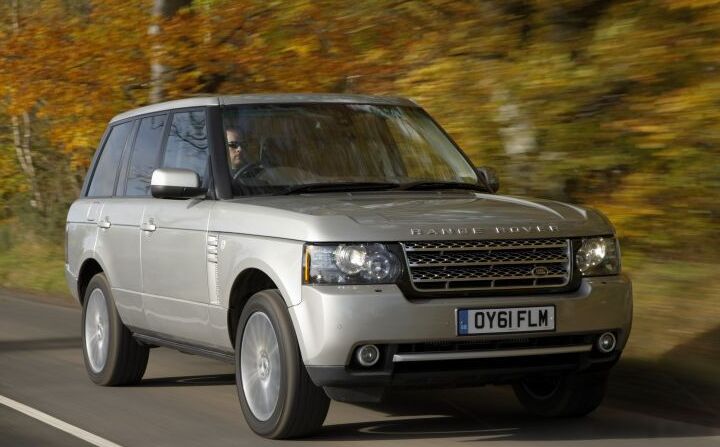
The Land Rover Range Rover III, specifically the facelifted version introduced in 2009, represented a significant evolution of the iconic luxury SUV. Production of the 4.4 LR TD V8 (313 Hp) AWD Automatic variant spanned from 2011 to 2012. This model occupied a prominent position within the Range Rover lineup, offering a blend of performance, refinement, and off-road capability. It was positioned as a high-end offering, appealing to buyers seeking a powerful diesel engine paired with the convenience of an automatic transmission and Land Rover’s renowned four-wheel-drive system. The facelift brought styling updates, improved interior materials, and advancements in technology, solidifying the Range Rover’s status as a leader in the luxury SUV segment.
Technical Specifications
| Brand | Land Rover |
| Model | Range Rover |
| Generation | Range Rover III (facelift 2009) |
| Type (Engine) | 4.4 LR TD V8 (313 Hp) AWD Automatic |
| Start of production | 2011 |
| End of production | 2012 |
| Powertrain Architecture | Internal Combustion engine |
| Body type | SUV |
| Seats | 5 |
| Doors | 5 |
| Fuel consumption (urban) | 11.5 l/100 km (20.5 US mpg, 24.6 UK mpg, 8.7 km/l) |
| Fuel consumption (extra urban) | 8.2 l/100 km (28.7 US mpg, 34.4 UK mpg, 12.2 km/l) |
| Fuel consumption (combined) | 9.4 l/100 km (25 US mpg, 30.1 UK mpg, 10.6 km/l) |
| CO2 emissions | 253 g/km |
| Fuel Type | Diesel |
| Acceleration 0 – 100 km/h | 7.8 sec |
| Acceleration 0 – 62 mph | 7.8 sec |
| Acceleration 0 – 60 mph | 7.4 sec |
| Maximum speed | 210 km/h (130.49 mph) |
| Emission standard | Euro 5 |
| Power | 313 Hp @ 4000 rpm |
| Power per litre | 71.7 Hp/l |
| Torque | 700 Nm @ 1500-3000 rpm (516.29 lb.-ft. @ 1500-3000 rpm) |
| Engine layout | Front, Longitudinal |
| Engine Model/Code | 448DT |
| Engine displacement | 4367 cm3 (266.49 cu. in.) |
| Number of cylinders | 8 |
| Engine configuration | V-engine |
| Cylinder Bore | 84 mm (3.31 in.) |
| Piston Stroke | 98.5 mm (3.88 in.) |
| Compression ratio | 16.1:1 |
| Number of valves per cylinder | 4 |
| Fuel injection system | Diesel Commonrail |
| Engine aspiration | BiTurbo, Intercooler |
| Valvetrain | OHC |
| Engine oil capacity | 9.5 l (10.04 US qt, 8.36 UK qt) |
| Coolant | 8.2 l (8.66 US qt, 7.21 UK qt) |
| Fuel tank capacity | 101 l (26.68 US gal, 22.22 UK gal) |
| Length | 4972 mm (195.75 in.) |
| Width including mirrors | 2216 mm (87.24 in.) |
| Height | 1865 mm (73.43 in.) |
| Wheelbase | 2880 mm (113.39 in.) |
| Drag coefficient (Cd) | 0.38 |
| Minimum turning circle | 12.6 m (41.34 ft.) |
| Drive wheel | All wheel drive (4×4) |
| Number of gears | 8 |
| Gearbox type | Automatic transmission |
| Front suspension | Independent type McPherson |
| Rear suspension | Double wishbone |
| Front brakes | Ventilated discs |
| Rear brakes | Ventilated discs |
| Assisting systems | ABS (Anti-lock braking system) |
| Steering type | Steering rack and pinion |
| Power steering | Electric Steering |
Powertrain & Engine Architecture
The heart of this Range Rover variant is the 4.4-liter LR TD V8 diesel engine, designated with the engine code 448DT. This engine is a longitudinally mounted V8, featuring twin turbochargers and an intercooler to maximize power and efficiency. The engine utilizes a Diesel Commonrail fuel injection system, delivering precise fuel metering for optimal combustion. The valvetrain employs an Overhead Cam (OHC) configuration. The engine produces 313 horsepower at 4000 rpm and a substantial 700 Nm (516 lb-ft) of torque between 1500 and 3000 rpm. This broad torque curve is a key characteristic of the engine, providing strong pulling power across a wide range of engine speeds. Paired with the engine is an eight-speed automatic transmission, providing smooth and efficient gear changes. This transmission was a significant upgrade over previous Range Rover automatics, offering closer gear ratios and improved responsiveness.
Driving Characteristics
The 4.4 LR TD V8 with the eight-speed automatic delivers a refined and capable driving experience. The abundance of torque allows for effortless acceleration, even with the vehicle’s substantial weight. The automatic transmission is well-tuned, providing smooth shifts and contributing to a relaxed cruising experience. While not as overtly sporty as some of its competitors, the Range Rover offers a composed and confident ride, both on and off-road. Compared to the supercharged petrol variants, the diesel offers superior fuel economy and a more relaxed power delivery. Against the lower-powered diesel options (like the 3.0 TD6), the 4.4 LR TD V8 provides a noticeable performance advantage, particularly when towing or carrying a full load. The eight-speed transmission helps to keep the engine in its optimal power band, maximizing efficiency and responsiveness.
Equipment & Trim Levels
The 4.4 LR TD V8 Automatic typically came equipped with a high level of standard features. These included leather upholstery, heated front and rear seats, a premium audio system, automatic climate control, and a touchscreen infotainment system. Optional extras included features such as adaptive cruise control, a panoramic sunroof, rear-seat entertainment, and upgraded interior trim materials. The Range Rover’s interior was renowned for its luxurious appointments and attention to detail. The dashboard layout was generally consistent across trim levels, with variations in trim materials and available options.
Chassis & Braking
The Range Rover III utilizes an independent McPherson strut suspension at the front and a double wishbone suspension at the rear, providing a comfortable and controlled ride. The suspension is electronically controlled, adjusting damping rates to optimize ride quality and handling. Braking duties are handled by ventilated discs on all four wheels, providing ample stopping power. An Anti-lock Braking System (ABS) is standard, enhancing safety and stability during emergency braking. The steering system employs a rack and pinion setup with electric power assistance, offering precise and responsive steering feel.
Market Reception & Comparison
The 4.4 LR TD V8 Automatic variant of the Range Rover III was generally well-received by automotive critics. It was praised for its powerful engine, refined ride, and luxurious interior. Fuel economy was considered respectable for a vehicle of its size and capability, although it didn’t match the efficiency of the smaller diesel engines. Reliability was generally good, although some owners reported issues with the air suspension system, a common concern with Range Rovers of this era. Compared to rivals like the Porsche Cayenne and BMW X5, the Range Rover offered a unique blend of luxury, off-road capability, and British heritage.
Legacy
The 4.4 LR TD V8 engine proved to be a robust and reliable powerplant when properly maintained. In the used car market, these Range Rovers continue to hold their value, particularly well-maintained examples. The engine’s strong torque output and relatively simple construction (compared to some of the more complex petrol engines) contribute to its longevity. While maintenance costs can be higher than those of more mainstream SUVs, the Range Rover’s enduring appeal and luxurious character ensure its continued desirability among discerning buyers. The combination of the powerful diesel engine and smooth automatic transmission remains a popular choice for those seeking a capable and comfortable luxury SUV.