
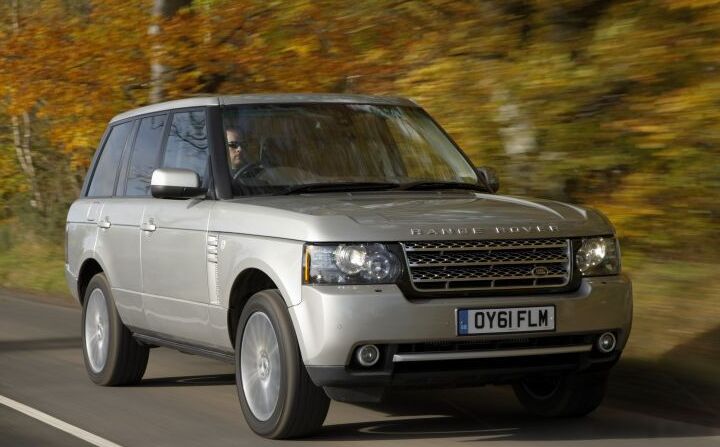
The Land Rover Range Rover III, specifically the facelifted model produced between 2009 and 2012, represented a significant evolution of the iconic luxury SUV. Among the various engine and drivetrain configurations offered, the 5.0 LR V8 producing 375 horsepower paired with a six-speed automatic transmission and all-wheel drive (AWD) held a prominent position as a balance between performance and refinement. This variant aimed to deliver a compelling experience for buyers seeking substantial power without the outright sportiness of some alternatives, or the fuel efficiency of the smaller displacement engines. It sat comfortably within the mid-to-upper range of the Range Rover III lineup, offering a premium experience with a focus on effortless capability.
Technical Specifications
| Brand | Land Rover |
| Model | Range Rover |
| Generation | Range Rover III (facelift 2009) |
| Type (Engine) | 5.0 LR V8 (375 Hp) AWD Automatic |
| Start of production | 2009 |
| End of production | 2012 |
| Powertrain Architecture | Internal Combustion engine |
| Body type | SUV |
| Seats | 5 |
| Doors | 5 |
| Fuel consumption (economy) – urban (NEDC) | 20.8 l/100 km (11.3 US mpg, 13.6 UK mpg, 4.8 km/l) |
| Fuel consumption (economy) – extra urban (NEDC) | 10 l/100 km (23.5 US mpg, 28.2 UK mpg, 10 km/l) |
| Fuel consumption (economy) – combined (NEDC) | 14 l/100 km (16.8 US mpg, 20.2 UK mpg, 7.1 km/l) |
| CO2 emissions (NEDC) | 326 g/km |
| Fuel Type | Petrol (Gasoline) |
| Acceleration 0 – 100 km/h | 7.6 sec |
| Acceleration 0 – 62 mph | 7.6 sec |
| Acceleration 0 – 60 mph | 7.2 sec |
| Maximum speed | 210 km/h (130.49 mph) |
| Emission standard | Euro 5 |
| Weight-to-power ratio | 6.9 kg/Hp, 145.1 Hp/tonne |
| Weight-to-torque ratio | 5.1 kg/Nm, 197.4 Nm/tonne |
| Power | 375 Hp @ 6500 rpm |
| Power per litre | 75 Hp/l |
| Torque | 510 Nm @ 3500 rpm (376.16 lb.-ft. @ 3500 rpm) |
| Engine layout | Front, Longitudinal |
| Engine Model/Code | 508PN |
| Engine displacement | 5000 cm3 (305.12 cu. in.) |
| Number of cylinders | 8 |
| Engine configuration | V-engine |
| Cylinder Bore | 92.5 mm (3.64 in.) |
| Piston Stroke | 93 mm (3.66 in.) |
| Compression ratio | 11.5:1 |
| Number of valves per cylinder | 4 |
| Fuel injection system | Direct injection |
| Engine aspiration | Naturally aspirated engine |
| Valvetrain | DOHC |
| Engine oil capacity | 8 l (8.45 US qt | 7.04 UK qt) |
| Coolant | 15.9 l (16.8 US qt | 13.99 UK qt) |
| Kerb Weight | 2584 kg (5696.74 lbs.) |
| Max. weight | 3200 kg (7054.79 lbs.) |
| Max load | 616 kg (1358.05 lbs.) |
| Trunk (boot) space – minimum | 994 l (35.1 cu. ft.) |
| Trunk (boot) space – maximum | 2099 l (74.13 cu. ft.) |
| Fuel tank capacity | 101 l (26.68 US gal | 22.22 UK gal) |
| Max. roof load | 100 kg (220.46 lbs.) |
| Permitted trailer load with brakes (12%) | 3500 kg (7716.18 lbs.) |
| Permitted trailer load without brakes | 750 kg (1653.47 lbs.) |
| Length | 4972 mm (195.75 in.) |
| Width with mirrors folded | 2034 mm (80.08 in.) |
| Width including mirrors | 2216 mm (87.24 in.) |
| Height | 1837-1877 mm (72.32 – 73.9 in.) |
| Wheelbase | 2880 mm (113.39 in.) |
| Front track | 1629 mm (64.13 in.) |
| Rear (Back) track | 1625 mm (63.98 in.) |
| Ride height (ground clearance) | 232-283 mm (9.13 – 11.14 in.) |
| Drag coefficient (Cd) | 0.38 |
| Minimum turning circle (turning diameter) | 12.6 m (41.34 ft.) |
| Approach angle | 29-34° |
| Departure angle | 24.2-26.6° |
| Ramp-over (brakeover) angle | 24.4-30° |
| Wading depth | 700 mm (27.56 in.) |
| Drivetrain Architecture | The Internal combustion engine (ICE) drives permanently the four wheels of the vehicle. |
| Drive wheel | All wheel drive (4×4) |
| Number of gears and type of gearbox | 6 gears, automatic transmission |
| Front suspension | Independent type McPherson, Air suspension |
| Rear suspension | Double wishbone, Air suspension |
| Front brakes | Ventilated discs, 360×30 mm |
| Rear brakes | Ventilated discs, 354×20 mm |
| Assisting systems | ABS (Anti-lock braking system) |
| Steering type | Steering rack and pinion |
| Power steering | Electric Steering |
| Wheel rims size | 19; 20 |
Powertrain & Engine Architecture
At the heart of this Range Rover variant lies the 5.0 LR V8 engine, designated with the code 508PN. This naturally aspirated V8 is a cornerstone of Land Rover engineering, known for its smooth power delivery and robust construction. The engine utilizes direct fuel injection, a technology that improves efficiency and responsiveness by injecting fuel directly into the combustion chamber. The double overhead camshaft (DOHC) valvetrain, with four valves per cylinder, optimizes airflow for increased power output. The 5.0L displacement provides a substantial amount of torque, making it well-suited for towing and off-road driving. The engine is longitudinally mounted in the chassis, driving all four wheels through a ZF six-speed automatic transmission. This transmission was chosen for its smoothness and reliability, offering a comfortable driving experience. It features adaptive shift programming, adjusting shift points based on driving conditions and throttle input.
Driving Characteristics
The 375 horsepower and 376 lb-ft of torque delivered by the 5.0 LR V8, coupled with the automatic transmission, resulted in a driving experience focused on effortless power and refinement. Acceleration from 0-60 mph took approximately 7.2 seconds, respectable for a large, heavy SUV. While not as quick as some of the more performance-oriented Range Rover variants, this configuration provided ample power for highway cruising, overtaking, and towing. The automatic transmission, while smooth, wasn’t particularly sporty, prioritizing comfort over aggressive shifting. Compared to the manual transmission options, the automatic offered a more relaxed driving experience, particularly in urban environments. The AWD system provided excellent traction in various conditions, enhancing both on-road stability and off-road capability.
Equipment & Trim Levels
The 5.0 LR V8 Automatic typically came equipped with a generous array of standard features, reflecting the Range Rover’s luxury positioning. Leather upholstery was standard, along with wood and metal trim accents throughout the cabin. Features like automatic climate control, a premium audio system, and power-adjustable seats were also included. Optional extras included features like a rear-seat entertainment system, adaptive cruise control, and upgraded leather packages. Trim levels varied slightly depending on the market, but generally, this engine configuration was offered in higher-spec trims, emphasizing luxury and convenience.
Chassis & Braking
The Range Rover III utilized a robust body-on-frame construction, providing excellent strength and durability. The suspension system featured independent McPherson struts at the front and a double wishbone setup at the rear, both incorporating air suspension. This air suspension system allowed for adjustable ride height, enhancing both off-road capability and on-road comfort. Braking duties were handled by ventilated discs on all four wheels, providing ample stopping power. The front brakes measured 360x30mm, while the rear brakes were 354x20mm. An anti-lock braking system (ABS) was standard, enhancing safety and control during emergency braking situations.
Market Reception & Comparison
The 5.0 LR V8 Automatic Range Rover III was generally well-received by critics and consumers alike. It was praised for its smooth power delivery, comfortable ride, and luxurious interior. However, its fuel economy was a common criticism, with combined fuel consumption figures around 16.8 US mpg. Compared to the smaller displacement engines (like the 3.6L V8 or the TDV6 diesel), this variant offered significantly more power but at the expense of fuel efficiency. The diesel variants were often favored by those prioritizing fuel economy and long-distance cruising, while the supercharged V8 models appealed to buyers seeking maximum performance. Reliability was generally good, although the complex air suspension system could be prone to issues over time.
Legacy
The 5.0 LR V8 engine has proven to be a durable and reliable powerplant, and examples of this powertrain continue to be sought after in the used car market. While maintenance costs can be higher than those of smaller engines, the robust construction and readily available parts supply contribute to its longevity. The Range Rover III, particularly this 375 hp variant, remains a desirable luxury SUV, offering a blend of performance, comfort, and capability that continues to appeal to discerning buyers. The combination of the powerful V8 engine and the smooth automatic transmission created a driving experience that defined the Range Rover’s reputation for refined luxury and effortless performance.


