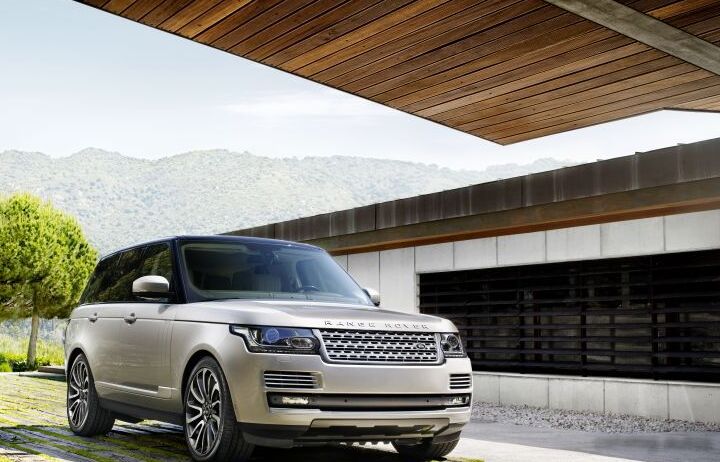
The Land Rover Range Rover IV 3.0 SD V6, produced between 2014 and 2017, represented a significant step forward in blending luxury, off-road capability, and fuel efficiency for the iconic British marque. This variant, positioned as a mid-range offering within the fourth-generation Range Rover (L405) lineup, introduced a sophisticated diesel-electric hybrid powertrain. It aimed to appeal to buyers seeking a premium SUV experience with reduced environmental impact, without sacrificing the performance expected of a Range Rover. The 3.0 SD V6 Hybrid utilized the 4×4 drivetrain and air suspension systems synonymous with the Range Rover nameplate, while incorporating a parallel hybrid system to enhance fuel economy and lower emissions.
Technical Specifications
| Brand | Land Rover |
| Model | Range Rover |
| Generation | Range Rover IV |
| Type (Engine) | 3.0 SD V6 (340 Hp) AWD Automatic Hybrid |
| Start of production | 2014 |
| End of production | 2017 |
| Powertrain Architecture | FHEV (Full Hybrid Electric Vehicle) |
| Body type | SUV |
| Seats | 5 |
| Doors | 5 |
| Fuel consumption (urban) | 6.7 l/100 km (35.1 US mpg, 42.2 UK mpg, 14.9 km/l) |
| Fuel consumption (extra urban) | 6.3 l/100 km (37.3 US mpg, 44.8 UK mpg, 15.9 km/l) |
| Fuel consumption (combined) | 6.4 l/100 km (36.8 US mpg, 44.1 UK mpg, 15.6 km/l) |
| CO2 emissions | 169 g/km |
| Fuel Type | Diesel |
| Acceleration 0 – 100 km/h | 6.9 sec |
| Acceleration 0 – 62 mph | 6.9 sec |
| Acceleration 0 – 60 mph | 6.6 sec |
| Maximum speed | 218 km/h (135.46 mph) |
| Emission standard | Euro 5 |
| Weight-to-power ratio | 7 kg/Hp, 142 Hp/tonne |
| Weight-to-torque ratio | 3.4 kg/Nm, 292.4 Nm/tonne |
| Electric motor power | 48 Hp |
| Electric motor Torque | 170 Nm (125.39 lb.-ft.) |
| System power | 340 Hp @ 4000 rpm |
| System torque | 700 Nm @ 1500-3000 rpm (516.29 lb.-ft. @ 1500-3000 rpm) |
| Engine Power | 292 Hp |
| Power per litre | 97.6 Hp/l |
| Engine Torque | 600 Nm (442.54 lb.-ft.) |
| Engine layout | Front, Longitudinal |
| Engine Model/Code | 306DT |
| Engine displacement | 2993 cm3 (182.64 cu. in.) |
| Number of cylinders | 6 |
| Engine configuration | V-engine |
| Cylinder Bore | 84 mm (3.31 in.) |
| Piston Stroke | 90 mm (3.54 in.) |
| Compression ratio | 16.1:1 |
| Number of valves per cylinder | 4 |
| Fuel injection system | Diesel Commonrail |
| Engine aspiration | Turbocharger, Intercooler |
| Engine oil capacity | 6 l (6.34 US qt | 5.28 UK qt) |
| Coolant capacity | 11.84 l (12.51 US qt | 10.42 UK qt) |
| Kerb Weight | 2394 kg (5277.87 lbs.) |
| Fuel tank capacity | 80 l (21.13 US gal | 17.6 UK gal) |
| Length | 4999 mm (196.81 in.) |
| Width | 1983 mm (78.07 in.) |
| Width with mirrors folded | 2220 mm (87.4 in.) |
| Height | 1835 mm (72.24 in.) |
| Wheelbase | 2922 mm (115.04 in.) |
| Drag coefficient (Cd) | 0.36 |
| Minimum turning circle | 12.7 m (41.67 ft.) |
| Approach angle | 34.7° |
| Departure angle | 29.6° |
| Ramp-over angle | 27.3° |
| Wading depth | 900 mm (35.43 in.) |
| Drive wheel | All wheel drive (4×4) |
| Number of gears | 8 |
| Gearbox type | Automatic transmission |
| Front suspension | Air suspension |
| Rear suspension | Air suspension |
| Front brakes | Ventilated discs |
| Rear brakes | Ventilated discs |
| Steering type | Steering rack and pinion |
| Power steering | Electric |
Powertrain & Engine Architecture
At the heart of the Range Rover IV 3.0 SD V6 Hybrid lies the 306DT engine, a 3.0-liter V6 turbodiesel. This engine, a member of the Jaguar-Land Rover AJD family, utilizes a common-rail direct injection system and a variable geometry turbocharger to deliver a respectable 292 horsepower and 442.54 lb-ft of torque. The addition of a 48 horsepower electric motor, integrated into the eight-speed automatic transmission, boosts the combined system output to 340 horsepower and a substantial 516.29 lb-ft of torque. The electric motor is powered by a lithium-ion battery pack located under the boot floor, slightly reducing luggage capacity compared to non-hybrid models. The hybrid system operates in a parallel configuration, meaning both the diesel engine and electric motor can power the wheels independently or in conjunction. The eight-speed automatic transmission, sourced from ZF, is known for its smooth shifts and efficiency, and was specifically calibrated to work seamlessly with the hybrid powertrain.
Driving Characteristics
The 3.0 SD V6 Hybrid offers a unique driving experience compared to its petrol and higher-output diesel siblings. While not as overtly powerful as the supercharged V6 or V8 models, the hybrid powertrain provides ample torque from low engine speeds, resulting in strong acceleration. The electric motor fills in the gaps in the diesel engine’s power delivery, providing near-instantaneous response. In electric-only mode, the Range Rover can travel for short distances at low speeds, reducing emissions in urban environments. The hybrid system’s regenerative braking feature helps to recharge the battery, further enhancing efficiency. The eight-speed automatic transmission contributes to a relaxed cruising experience, with well-chosen gear ratios that keep the engine within its optimal power band. Compared to the 3.0 SDV6 non-hybrid, the hybrid version offers improved fuel economy, but at the cost of a slightly heavier vehicle due to the battery pack.
Equipment & Trim Levels
The 3.0 SD V6 Hybrid was typically offered in well-equipped trim levels, often mirroring the higher-end specifications of the non-hybrid Range Rovers. Standard features included leather upholstery, heated front seats, a touchscreen infotainment system with navigation, automatic climate control, and a comprehensive suite of safety features. Optional extras included adaptive cruise control, a panoramic sunroof, premium audio systems, and a variety of interior trim options. The interior design was characterized by its luxurious materials and attention to detail, reflecting the Range Rover’s premium positioning. The hybrid models often featured unique badging and interior accents to distinguish them from other variants.
Chassis & Braking
The Range Rover IV’s chassis is built around a lightweight aluminum monocoque construction, contributing to its impressive strength and rigidity. The 3.0 SD V6 Hybrid utilizes an air suspension system as standard, providing a comfortable ride and the ability to adjust the vehicle’s ride height for improved off-road capability. The braking system consists of ventilated discs on all four wheels, providing ample stopping power. Anti-lock braking system (ABS) and electronic stability control (ESC) are standard features, enhancing safety and control. The steering is electrically assisted, offering a precise and responsive feel.
Market Reception & Comparison
The Range Rover IV 3.0 SD V6 Hybrid was generally well-received by critics, who praised its fuel efficiency, refined driving experience, and luxurious interior. However, some reviewers noted that the hybrid system added complexity and weight, and that the performance was not as exhilarating as the higher-output models. Compared to the 3.0 SDV6 non-hybrid, the hybrid version offered a significant improvement in fuel economy, but at a higher price point. Against competitors such as the Porsche Cayenne Hybrid and BMW X5 xDrive40e, the Range Rover Hybrid offered a unique blend of luxury, off-road capability, and fuel efficiency.
Legacy
The Range Rover IV 3.0 SD V6 Hybrid represented a pivotal moment in Land Rover’s transition towards electrification. While the hybrid system itself has been superseded by more advanced plug-in hybrid technology in later Range Rover models, the 3.0 SD V6 Hybrid remains a desirable vehicle in the used car market. The powertrain has proven to be relatively reliable, although regular maintenance is essential to ensure optimal performance. The combination of luxury, capability, and fuel efficiency continues to appeal to buyers seeking a premium SUV experience.