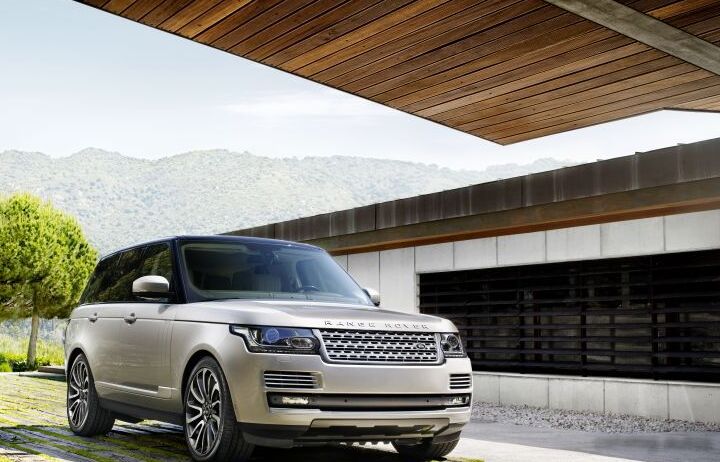
The Land Rover Range Rover IV, produced from 2012 to 2017, represented a significant evolution of the iconic luxury SUV. Among the various engine and drivetrain configurations offered, the 3.0-liter V6 turbodiesel with 258 horsepower and an eight-speed automatic transmission became a popular choice, particularly in European and international markets. This variant occupied a middle ground in the Range Rover IV lineup, offering a balance of performance, fuel efficiency, and refinement, appealing to buyers who didn’t require the outright power of the supercharged V6 or V8 options. It was positioned as a more economical alternative without sacrificing the Range Rover’s core luxury and off-road capabilities.
Technical Specifications
| Brand | Land Rover |
| Model | Range Rover |
| Generation | Range Rover IV |
| Type (Engine) | 3.0 V6 (258 Hp) AWD Automatic |
| Start of production | 2012 |
| End of production | 2017 |
| Powertrain Architecture | Internal Combustion engine |
| Body type | SUV |
| Seats | 5 |
| Doors | 5 |
| Fuel consumption (urban) | 8.5 l/100 km (27.7 US mpg) |
| Fuel consumption (extra urban) | 7 l/100 km (33.6 US mpg) |
| Fuel consumption (combined) | 7.5 l/100 km (31.4 US mpg) |
| CO2 emissions | 196 g/km |
| Fuel Type | Diesel |
| Acceleration 0 – 100 km/h | 7.9 sec |
| Acceleration 0 – 62 mph | 7.9 sec |
| Acceleration 0 – 60 mph | 7.5 sec |
| Maximum speed | 209 km/h (129.87 mph) |
| Emission standard | Euro 5 |
| Weight-to-power ratio | 8.4 kg/Hp |
| Weight-to-torque ratio | 3.6 kg/Nm |
| Power | 258 Hp @ 4000 rpm |
| Torque | 600 Nm @ 2000 rpm (442.54 lb.-ft. @ 2000 rpm) |
| Engine layout | Front, Longitudinal |
| Engine Model/Code | 306DT |
| Engine displacement | 2993 cm3 (182.64 cu. in.) |
| Number of cylinders | 6 |
| Engine configuration | V-engine |
| Cylinder Bore | 84 mm (3.31 in.) |
| Piston Stroke | 90 mm (3.54 in.) |
| Compression ratio | 16.1:1 |
| Number of valves per cylinder | 4 |
| Fuel injection system | Diesel Commonrail |
| Engine aspiration | BiTurbo, Intercooler |
| Engine oil capacity | 6 l (6.34 US qt | 5.28 UK qt) |
| Coolant capacity | 8.93 l (9.44 US qt | 7.86 UK qt) |
| Kerb Weight | 2160 kg (4761.98 lbs.) |
| Trunk (boot) space – minimum | 550 l (19.42 cu. ft.) |
| Trunk (boot) space – maximum | 2030 l (71.69 cu. ft.) |
| Fuel tank capacity | 85 l (22.45 US gal | 18.7 UK gal) |
| Length | 4999 mm (196.81 in.) |
| Width | 1983 mm (78.07 in.) |
| Width with mirrors folded | 2073 mm (81.61 in.) |
| Height | 1835 mm (72.24 in.) |
| Wheelbase | 2922 mm (115.04 in.) |
| Front track | 1690 mm (66.54 in.) |
| Rear track | 1683 mm (66.26 in.) |
| Drag coefficient (Cd) | 0.34 |
| Minimum turning circle | 12.3 m (40.35 ft.) |
| Front suspension | Air suspension |
| Rear suspension | Air suspension |
| Front brakes | Ventilated discs |
| Rear brakes | Ventilated discs |
| Number of gears | 8 |
| Gearbox type | Automatic transmission |
Powertrain & Engine Architecture
The heart of this Range Rover variant is the 306DT engine, a 3.0-liter V6 turbodiesel. This engine utilizes a common rail direct injection system, delivering fuel at extremely high pressure for optimized combustion. The engine is equipped with a sequential twin-turbocharger setup, featuring a small, low-inertia turbo for quick response and a larger turbo for sustained power delivery. An intercooler helps to cool the compressed intake air, further enhancing performance. The engine boasts a relatively high compression ratio of 16.1:1, contributing to its efficiency. The eight-speed automatic transmission, sourced from ZF, is a crucial component, offering smooth and rapid gear changes. This transmission is known for its efficiency and ability to keep the engine within its optimal power band.
Driving Characteristics
The 258 hp and 442 lb-ft of torque provided by the 3.0-liter V6 diesel and eight-speed automatic combination resulted in a capable and refined driving experience. Acceleration from 0-60 mph took approximately 7.5 seconds, which was respectable for a large, luxurious SUV. While not as overtly sporty as the supercharged petrol versions, the diesel offered ample power for everyday driving and overtaking maneuvers. The automatic transmission’s close gear ratios ensured that the engine remained in its sweet spot, maximizing efficiency and responsiveness. Compared to the manual transmission options, the automatic prioritized comfort and ease of use, making it ideal for city driving and long journeys. The torque converter smoothed out gear changes, providing a more relaxed driving experience than a traditional manual gearbox.
Equipment & Trim Levels
The 3.0 V6 Automatic typically came well-equipped, reflecting the Range Rover’s luxury positioning. Standard features included leather upholstery, heated front seats, a touchscreen infotainment system, automatic climate control, and parking sensors. Optional extras included a panoramic sunroof, upgraded audio systems (often Meridian), adaptive cruise control, and a rear-seat entertainment system. Trim levels varied by market, but generally offered increasing levels of luxury and technology. Higher trims often featured more extensive leather trim, wood veneer accents, and advanced driver-assistance systems.
Chassis & Braking
The Range Rover IV’s chassis was designed to provide a comfortable ride both on and off-road. The air suspension system, standard on this variant, allowed for adjustable ride height and damping, adapting to various terrains and driving conditions. The suspension geometry was optimized for stability and control. Braking duties were handled by ventilated discs on all four wheels, providing ample stopping power. Anti-lock braking system (ABS) and electronic stability control were standard safety features. The vehicle’s weight, around 4762 lbs, was managed effectively by the suspension and braking systems, ensuring a composed driving experience.
Market Reception & Comparison
The 3.0 V6 diesel automatic Range Rover IV was generally well-received by automotive critics. It was praised for its blend of performance, fuel economy, and refinement. Compared to the more powerful supercharged V6 and V8 models, the diesel offered significantly better fuel economy, making it a more practical choice for high-mileage drivers. Against competitors like the BMW X5 and Mercedes-Benz GL-Class, the Range Rover IV distinguished itself with its superior off-road capability and luxurious interior. However, some critics noted that the diesel engine was not as refined or responsive as the petrol alternatives.
Legacy
The 3.0-liter V6 diesel engine proved to be a reliable and durable powertrain in the Range Rover IV. While diesel engines, in general, have faced increased scrutiny regarding emissions, the 306DT engine, when properly maintained, has demonstrated long-term reliability. On the used car market, Range Rover IV models equipped with this engine and transmission combination remain popular, offering a compelling combination of luxury, capability, and value. Regular maintenance, including oil changes and filter replacements, is crucial for ensuring the longevity of this powertrain. The engine’s robust construction and the ZF eight-speed automatic transmission contribute to its continued appeal among discerning buyers.