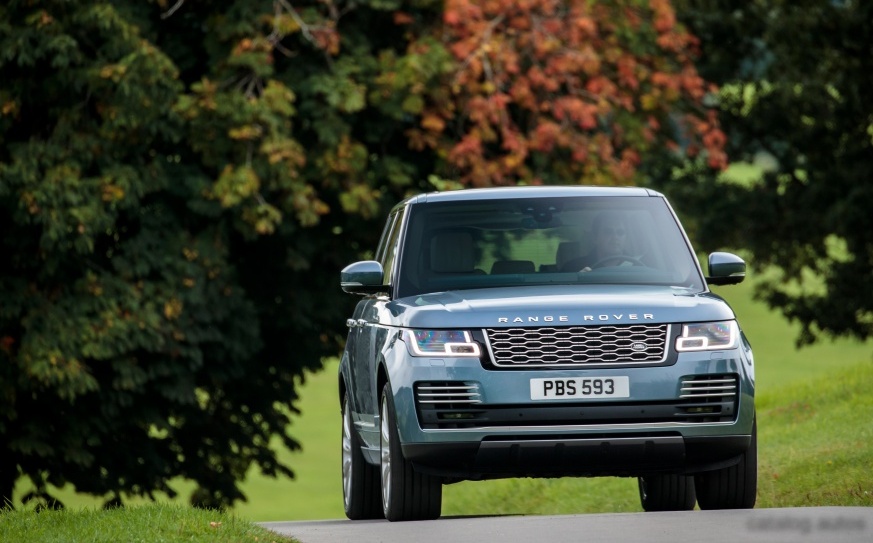
The Land Rover Range Rover IV (facelift, L405) 3.0 D250, produced from July 2020 to October 2021, represents a mid-range offering within the fourth generation of Land Rover’s flagship SUV. This variant combines a 3.0-liter inline-six diesel engine with a 48-volt mild hybrid system and an eight-speed automatic transmission, delivering a balance of performance, refinement, and fuel efficiency. Positioned between the lower-powered D200 and the higher-performance D300 models, the D250 aimed to appeal to buyers seeking a capable luxury SUV without the expense of the top-tier trims. It was primarily sold in European and global markets, including the United Kingdom, and offered as a five-seat, five-door SUV.
Technical Specifications
| Brand | Land Rover |
| Model | Range Rover |
| Generation | Range Rover IV (facelift 2017) |
| Type (Engine) | 3.0 D250 (249 Hp) Mild Hybrid AWD Automatic |
| Start of production | July, 2020 |
| End of production | October, 2021 |
| Powertrain Architecture | MHEV (Mild Hybrid Electric Vehicle) |
| Body type | SUV |
| Seats | 5 |
| Doors | 5 |
| Fuel consumption at Low speed (WLTP) | 13.4-14 l/100 km (17.6 – 16.8 US mpg) |
| Fuel consumption at Medium speed (WLTP) | 7.9-8.5 l/100 km (29.8 – 27.7 US mpg) |
| Fuel consumption at high speed (WLTP) | 6.9-7.6 l/100 km (34.1 – 30.9 US mpg) |
| Fuel consumption at very high speed (WLTP) | 8.4-9.1 l/100 km (28 – 25.8 US mpg) |
| Combined fuel consumption (WLTP) | 8.5-9.2 l/100 km (27.7 – 25.6 US mpg) |
| CO2 emissions (WLTP) | 223-242 g/km |
| Fuel consumption (economy) – urban (NEDC) | 10.7-10.9 l/100 km (22 – 21.6 US mpg) |
| Fuel consumption (economy) – extra urban (NEDC) | 6.1-6.2 l/100 km (38.6 – 37.9 US mpg) |
| Fuel consumption (economy) – combined (NEDC) | 7.8-7.9 l/100 km (30.2 – 29.8 US mpg) |
| CO2 emissions (NEDC) | 204-209 g/km |
| Fuel Type | Diesel |
| Acceleration 0 – 100 km/h | 8.6 sec |
| Acceleration 0 – 62 mph | 8.6 sec |
| Acceleration 0 – 60 mph | 8.2 sec |
| Maximum speed | 209 km/h (129.87 mph) |
| Emission standard | Euro 6d-TEMP-EVAP-ISC |
| Weight-to-power ratio | 9.1 kg/Hp |
| Weight-to-torque ratio | 3.8 kg/Nm |
| Power | 249 Hp @ 4000 rpm |
| Torque | 600 Nm @ 1250-2250 rpm (442.54 lb.-ft.) |
| Engine layout | Front, Longitudinal |
| Engine Model/Code | Ingenium / DT306 |
| Engine displacement | 2997 cm3 (182.89 cu. in.) |
| Number of cylinders | 6 |
| Engine configuration | Inline |
| Cylinder Bore | 83.01 mm (3.27 in.) |
| Piston Stroke | 92.33 mm (3.64 in.) |
| Compression ratio | 15.5:1 |
| Number of valves per cylinder | 4 |
| Fuel injection system | Diesel Commonrail |
| Engine oil capacity | 6 l (6.34 US qt | 5.28 UK qt) |
| Coolant | 8.93 l (9.44 US qt | 7.86 UK qt) |
| Kerb Weight | 2275 kg (5015.52 lbs.) |
| Max. weight | 3150 kg (6944.56 lbs.) |
| Max load | 875 kg (1929.04 lbs.) |
| Trunk (boot) space – minimum | 900 l (31.78 cu. ft.) |
| Trunk (boot) space – maximum | 2190 l (77.34 cu. ft.) |
| Fuel tank capacity | 86 l (22.72 US gal | 18.92 UK gal) |
| Max. roof load | 100 kg (220.46 lbs.) |
| Permitted trailer load with brakes (12%) | 3500 kg (7716.18 lbs.) |
| Permitted trailer load without brakes | 750 kg (1653.47 lbs.) |
| Permitted towbar download | 150 kg (330.69 lbs.) |
| Length | 5000 mm (196.85 in.) |
| Width with mirrors folded | 2073 mm (81.61 in.) |
| Width including mirrors | 2220 mm (87.4 in.) |
| Height | 1869 mm (73.58 in.) |
| Wheelbase | 2922 mm (115.04 in.) |
| Front track | 1693 mm (66.65 in.) |
| Rear (Back) track | 1685 mm (66.34 in.) |
| Ride height (ground clearance) | 220-297 mm (8.66 – 11.69 in.) |
| Minimum turning circle | 12.7 m (41.67 ft.) |
| Approach angle | 25.5-34.7° |
| Departure angle | 24.5-29.0° |
| Ramp-over angle | 21.5-28.2° |
| Wading depth | 900 mm (35.43 in.) |
| Drivetrain Architecture | ICE and electric motor, permanent AWD |
| Drive wheel | All wheel drive (4×4) |
| Number of gears | 8 |
| Gearbox type | Automatic transmission |
| Front brakes | Ventilated discs, 363 mm |
| Rear brakes | Ventilated discs, 350 mm |
INTRODUCTION
The Range Rover IV, launched in 2012, represented a significant leap forward in luxury and capability for Land Rover. The 2017 facelift brought updated styling, improved technology, and a new generation of Ingenium engines. The 3.0 D250, introduced in 2020, was a key part of this update, offering a compelling blend of performance and efficiency. Built on the L405 platform, this variant aimed to provide a refined driving experience while maintaining the Range Rover’s legendary off-road prowess. It served as a popular choice for buyers who desired a powerful yet relatively economical diesel engine in their luxury SUV.
Powertrain & Engine Architecture
The heart of the D250 is Land Rover’s Ingenium engine family, specifically the DT306, a 2.997-liter inline-six cylinder diesel. This engine utilizes a sophisticated diesel commonrail fuel injection system and a variable geometry turbocharger to deliver 249 horsepower at 4000 rpm and a substantial 600 Nm (442.54 lb-ft) of torque between 1250 and 2250 rpm. The high compression ratio of 15.5:1 contributes to its efficiency. The “mild hybrid” aspect comes from a 48-volt electrical system that incorporates a Belt-integrated Starter Generator (BSG). This BSG assists the engine during acceleration, allowing for smoother starts and stops, and enables a start-stop system that operates at lower speeds. The engine is longitudinally mounted at the front of the vehicle. The eight-speed automatic transmission, sourced from ZF, is a crucial component, providing smooth and responsive gear changes. It’s programmed to prioritize comfort and efficiency, with gear ratios optimized for both on-road cruising and off-road crawling.
Driving Characteristics
The D250 offers a composed and refined driving experience. While not as overtly sporty as the D300, it provides ample power for everyday driving and confident overtaking. The 600 Nm of torque is readily available, making it feel strong even at lower engine speeds. The eight-speed automatic transmission contributes to this, selecting the appropriate gear to maximize efficiency or provide quick acceleration. Compared to the D200, the D250 offers a noticeable performance boost, while remaining more economical than the D300. The mild hybrid system helps to smooth out the engine’s operation and reduce turbo lag. In real-world conditions, the D250 delivers a comfortable ride, absorbing bumps and imperfections in the road with ease. The all-wheel-drive system provides excellent traction in various conditions, making it a capable vehicle both on and off-road.
Equipment & Trim Levels
The D250 typically came well-equipped, reflecting the Range Rover’s luxury positioning. Standard features included leather upholstery, heated front seats, a touchscreen infotainment system with navigation, climate control, and a suite of safety features such as autonomous emergency braking and lane departure warning. Optional extras included upgraded leather trim, a panoramic sunroof, a premium sound system, and advanced driver-assistance systems like adaptive cruise control and a 360-degree camera. The interior design was characterized by its elegant simplicity and high-quality materials. Dashboard configuration was consistent across the facelifted Range Rover IV models, with a focus on user-friendliness and intuitive controls.
Chassis & Braking
The Range Rover IV’s chassis is built around a lightweight aluminum monocoque construction, contributing to its strength and rigidity. The D250 variant utilizes air suspension as standard, providing adjustable ride height and exceptional comfort. The suspension geometry is tuned to balance on-road handling with off-road capability. Braking duties are handled by ventilated discs on all four wheels, with the front discs measuring 363mm and the rear discs measuring 350mm. The braking system is assisted by ABS, electronic brakeforce distribution, and emergency brake assist. Stabilizer bars are fitted to both the front and rear axles to reduce body roll during cornering.
Market Reception & Comparison
The Range Rover IV (facelift) D250 was generally well-received by automotive critics. It was praised for its refined driving experience, comfortable ride, and strong engine performance. The mild hybrid system was seen as a positive addition, improving fuel efficiency and reducing emissions. Compared to the D200, the D250 offered a worthwhile performance upgrade, while the D300 provided even more power but at a higher price point and with slightly reduced fuel economy. Fuel economy figures, as measured by WLTP, ranged from 8.5 to 9.2 l/100 km (27.7 – 25.6 US mpg), making it a relatively efficient option for a large luxury SUV. Reliability was generally good, although, like all complex vehicles, the Range Rover IV could be prone to occasional electronic glitches.
Legacy
The Ingenium engine family, including the DT306 found in the D250, has proven to be a reliable and durable powertrain. While some early Ingenium engines experienced minor issues, these were largely addressed through software updates and design revisions. In the used car market, the Range Rover IV D250 represents a good value proposition, offering a luxurious and capable SUV at a more affordable price point than newer models. Its blend of performance, efficiency, and refinement continues to appeal to buyers seeking a high-end SUV with a proven track record. Regular maintenance, including oil changes and servicing of the mild hybrid system, is crucial to ensure the long-term reliability of this powertrain.