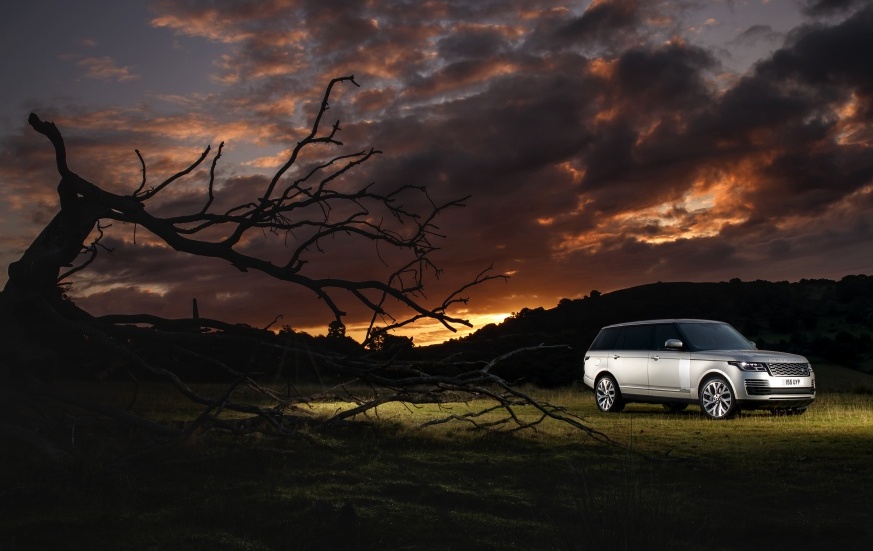
The Land Rover Range Rover IV (facelift, L405) Long 3.0 D350, produced from July 2020 to October 2021, represents a sophisticated iteration of the iconic luxury SUV. This variant, positioned as a high-end offering within the fourth-generation Range Rover lineup, combined a powerful diesel engine with mild-hybrid technology and a long wheelbase for enhanced passenger comfort. It catered to buyers seeking a blend of performance, refinement, and capability, particularly in markets where larger SUVs and diesel engines remained popular. The “Long” designation indicates an extended wheelbase, adding significant rear passenger legroom compared to the standard-wheelbase model.
| Brand | Land Rover |
| Model | Range Rover |
| Generation | Range Rover IV (facelift 2017) Long |
| Type (Engine) | 3.0 D350 (351 Hp) Mild Hybrid AWD Automatic |
| Start of production | July, 2020 |
| End of production | October, 2021 |
| Powertrain Architecture | MHEV (Mild Hybrid Electric Vehicle) |
| Body type | SUV |
| Seats | 5 |
| Doors | 5 |
| Fuel consumption at Low speed (WLTP) | 14.9-15.3 l/100 km (15.8 – 15.4 US mpg) |
| Fuel consumption at Medium speed (WLTP) | 8.6-8.9 l/100 km (27.4 – 26.4 US mpg) |
| Fuel consumption at high speed (WLTP) | 7.6-8.3 l/100 km (30.9 – 28.3 US mpg) |
| Fuel consumption at very high speed (WLTP) | 9-9.7 l/100 km (26.1 – 24.2 US mpg) |
| Combined fuel consumption (WLTP) | 9.3-9.9 l/100 km (25.3 – 23.8 US mpg) |
| CO2 emissions (WLTP) | 244-259 g/km |
| Fuel consumption (economy) – urban (NEDC) | 11.5-11.6 l/100 km (20.5 – 20.3 US mpg) |
| Fuel consumption (economy) – extra urban (NEDC) | 6.5-6.7 l/100 km (36.2 – 35.1 US mpg) |
| Fuel consumption (economy) – combined (NEDC) | 8.3-8.5 l/100 km (28.3 – 27.7 US mpg) |
| CO2 emissions (NEDC) | 220-225 g/km |
| Fuel Type | Diesel |
| Acceleration 0 – 100 km/h | 7.2 sec |
| Acceleration 0 – 62 mph | 7.2 sec |
| Acceleration 0 – 60 mph | 6.8 sec |
| Maximum speed | 225 km/h (139.81 mph) |
| Emission standard | Euro 6d-TEMP-EVAP-ISC |
| Weight-to-power ratio | 7 kg/Hp |
| Weight-to-torque ratio | 3.5 kg/Nm |
| Power | 351 Hp @ 4000 rpm |
| Torque | 700 Nm @ 1500-3000 rpm (516.29 lb.-ft.) |
| Engine layout | Front, Longitudinal |
| Engine Model/Code | Ingenium / DT306 |
| Engine displacement | 2997 cm3 (182.89 cu. in.) |
| Number of cylinders | 6 |
| Engine configuration | Inline |
| Cylinder Bore | 83.01 mm (3.27 in.) |
| Piston Stroke | 92.33 mm (3.64 in.) |
| Compression ratio | 15.5:1 |
| Number of valves per cylinder | 4 |
| Fuel injection system | Diesel Commonrail |
| Engine oil capacity | 6 l (6.34 US qt | 5.28 UK qt) |
| Coolant capacity | 8.93 l (9.44 US qt | 7.86 UK qt) |
| Kerb Weight | 2443 kg (5385.89 lbs.) |
| Max. weight | 3210 kg (7076.84 lbs.) |
| Max load | 767 kg (1690.95 lbs.) |
| Trunk (boot) space – minimum | 900 l (31.78 cu. ft.) |
| Trunk (boot) space – maximum | 2470 l (87.23 cu. ft.) |
| Fuel tank capacity | 86 l (22.72 US gal | 18.92 UK gal) |
| Max. roof load | 100 kg (220.46 lbs.) |
| Permitted trailer load with brakes (12%) | 3500 kg (7716.18 lbs.) |
| Permitted trailer load without brakes | 750 kg (1653.47 lbs.) |
| Permitted towbar download | 150 kg (330.69 lbs.) |
| Length | 5200 mm (204.72 in.) |
| Width with mirrors folded | 2073 mm (81.61 in.) |
| Width including mirrors | 2220 mm (87.4 in.) |
| Height | 1868 mm (73.54 in.) |
| Wheelbase | 3122 mm (122.91 in.) |
| Front track | 1693 mm (66.65 in.) |
| Rear track | 1685 mm (66.34 in.) |
| Ride height (ground clearance) | 220-297 mm (8.66 – 11.69 in.) |
| Minimum turning circle | 13.4 m (43.96 ft.) |
| Front brakes | Ventilated discs, 380 mm |
| Rear brakes | Ventilated discs, 365 mm |
| Number of gears | 8 |
| Type of gearbox | automatic transmission |
Powertrain & Engine Architecture
The heart of the Range Rover D350 is Land Rover’s Ingenium engine family, specifically the 2997cc inline-six cylinder diesel (DT306 code). This engine utilizes a sophisticated diesel commonrail fuel injection system, delivering precise fuel metering for optimal combustion. The engine boasts a high compression ratio of 15.5:1, contributing to its efficiency and power output. The mild-hybrid system incorporates a 48-volt electrical architecture and a Belt-integrated Starter Generator (BiSG). This system allows for smoother start-stop operation, regenerative braking to recoup energy, and a small power boost during acceleration. The eight-speed automatic transmission, sourced from ZF, is known for its smooth shifts and wide gear ratio spread. It’s programmed to prioritize comfort and refinement, with gear changes largely imperceptible during normal driving.
Driving Characteristics
The 351 horsepower and 700 Nm (516 lb-ft) of torque provide ample power for effortless cruising and confident overtaking. While not as overtly sporty as some of its competitors, the D350 delivers strong acceleration – 0 to 60 mph in approximately 6.8 seconds. The long wheelbase contributes to a remarkably comfortable ride, absorbing bumps and imperfections in the road with ease. The automatic transmission is well-matched to the engine’s torque curve, providing smooth and responsive power delivery. Compared to the higher-output petrol variants, the D350 offers superior fuel economy and a more relaxed driving experience. However, it lacks the immediate responsiveness and aural excitement of the supercharged gasoline engines.
Equipment & Trim Levels
The Range Rover IV facelift, even in the D350 configuration, offered a high level of standard equipment. This included leather upholstery, heated and ventilated front seats, a premium sound system, a touchscreen infotainment system with navigation, and a comprehensive suite of safety features. The “Long” wheelbase version prioritized rear passenger comfort, often featuring executive rear seating with individual climate control and entertainment options. Optional extras could include massaging seats, a panoramic sunroof, and advanced driver-assistance systems like adaptive cruise control and a 360-degree camera. Trim levels varied by market, but generally offered increasing levels of luxury and technology.
Chassis & Braking
The Range Rover IV utilizes a robust aluminum monocoque chassis, contributing to its strength and relatively low weight. The suspension system employs air suspension with adaptive dampers, providing a customizable ride quality. The D350 variant typically featured ventilated disc brakes on all four wheels, providing ample stopping power. The braking system is augmented by ABS, electronic brake-force distribution, and brake assist. Stabilizer bars are fitted front and rear to minimize body roll during cornering. The long wheelbase and increased weight of the “Long” variant necessitated slightly stiffer spring rates compared to the standard wheelbase model.
Market Reception & Comparison
The Range Rover IV facelift, including the D350 Mild Hybrid, was generally well-received by automotive critics. It was praised for its luxurious interior, comfortable ride, and capable performance. The diesel engine was noted for its refinement and fuel efficiency, although some reviewers expressed concerns about the ongoing scrutiny of diesel emissions. Compared to the petrol-powered Range Rovers, the D350 offered a more economical option without sacrificing too much performance. Against competitors like the BMW X7 and Mercedes-Benz GLS, the Range Rover stood out for its off-road capability and distinctive British character.
Legacy
The Ingenium diesel engine has proven to be a reliable and durable powertrain, although, like all modern diesel engines, it requires diligent maintenance, particularly regarding the diesel particulate filter (DPF). The mild-hybrid system adds a layer of complexity but has generally proven to be robust. In the used car market, the Range Rover IV facelift D350 Long holds its value well, appealing to buyers seeking a luxurious and capable SUV with reasonable running costs. However, potential buyers should be aware of the potential for expensive repairs associated with the vehicle’s complex systems and ensure a thorough inspection before purchase.