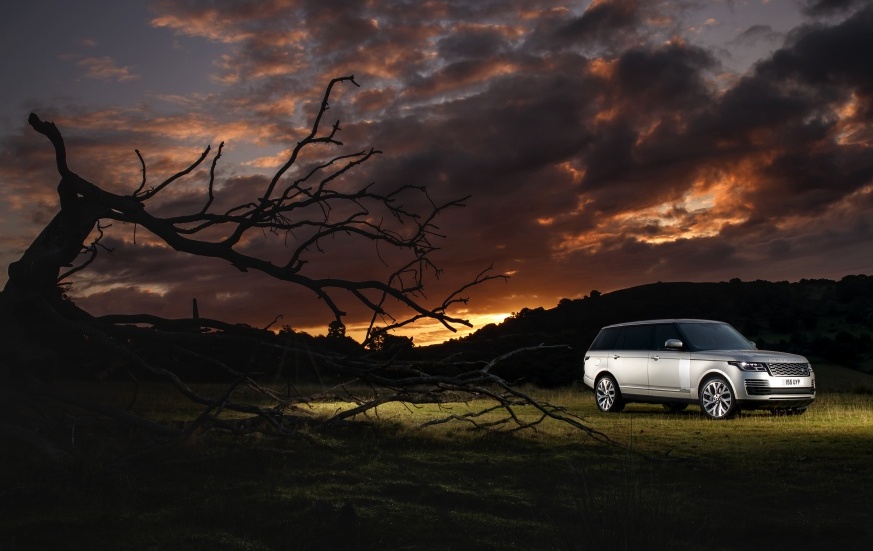
The Land Rover Range Rover IV (facelift 2017) Long 3.0 P360, produced from 2019 to October 2021, represents a sophisticated iteration of Land Rover’s flagship SUV. This variant, positioned within the mid-to-upper range of the fourth-generation Range Rover lineup (the L405 series), combined a 3.0-liter inline-six gasoline engine with mild hybrid technology and an eight-speed automatic transmission, offering a blend of performance, luxury, and efficiency. The “Long” designation indicates an extended wheelbase, providing increased rear passenger space, a key feature for markets prioritizing chauffeur-driven comfort and family transport. This model was primarily aimed at buyers seeking a refined and capable SUV with a focus on long-distance cruising and all-terrain capability.
Technical Specifications
| Brand | Land Rover |
| Model | Range Rover |
| Generation | Range Rover IV (facelift 2017) Long |
| Type (Engine) | 3.0 P360 (360 Hp) Mild Hybrid AWD Automatic |
| Start of production | 2019 |
| End of production | October, 2021 |
| Powertrain Architecture | MHEV (Mild Hybrid Electric Vehicle) |
| Body type | SUV |
| Seats | 5 |
| Doors | 5 |
| Fuel consumption (urban) | 12.1 l/100 km (19.4 US mpg, 23.3 UK mpg, 8.3 km/l) |
| Fuel consumption (extra urban) | 7.6 l/100 km (30.9 US mpg, 37.2 UK mpg, 13.2 km/l) |
| Fuel consumption (combined) | 9.2 l/100 km (25.6 US mpg, 30.7 UK mpg, 10.9 km/l) |
| CO2 emissions | 215 g/km |
| Fuel Type | Petrol (Gasoline) |
| Acceleration 0 – 100 km/h | 7.1 sec |
| Acceleration 0 – 62 mph | 7.1 sec |
| Acceleration 0 – 60 mph | 6.7 sec |
| Maximum speed | 209 km/h (129.87 mph) |
| Emission standard | Euro 6d-TEMP-EVAP-ISC |
| Weight-to-power ratio | 6.6 kg/Hp, 151.6 Hp/tonne |
| Weight-to-torque ratio | 4.8 kg/Nm, 208.4 Nm/tonne |
| Power | 360 Hp @ 5500-6500 rpm |
| Power per litre | 120.2 Hp/l |
| Torque | 495 Nm @ 2000-5000 rpm (365.09 lb.-ft. @ 2000-5000 rpm) |
| Engine layout | Front, Longitudinal |
| Engine Model/Code | PT306 |
| Engine displacement | 2996 cm3 (182.83 cu. in.) |
| Number of cylinders | 6 |
| Engine configuration | Inline |
| Cylinder Bore | 83 mm (3.27 in.) |
| Piston Stroke | 92.29 mm (3.63 in.) |
| Compression ratio | 10.5:1 |
| Number of valves per cylinder | 4 |
| Fuel injection system | Direct injection |
| Engine oil capacity | 8 l (8.45 US qt | 7.04 UK qt) |
| Coolant capacity | 8.05 l (8.51 US qt | 7.08 UK qt) |
| Kerb Weight | 2375 kg (5235.98 lbs.) |
| Max. weight | 3170 kg (6988.65 lbs.) |
| Max load | 795 kg (1752.67 lbs.) |
| Trunk (boot) space – minimum | 900 l (31.78 cu. ft.) |
| Trunk (boot) space – maximum | 2470 l (87.23 cu. ft.) |
| Fuel tank capacity | 104 l (27.47 US gal | 22.88 UK gal) |
| Max. roof load | 100 kg (220.46 lbs.) |
| Permitted trailer load with brakes (12%) | 3500 kg (7716.18 lbs.) |
| Permitted trailer load without brakes | 750 kg (1653.47 lbs.) |
| Permitted towbar download | 150 kg (330.69 lbs.) |
| Length | 5200 mm (204.72 in.) |
| Width with mirrors folded | 2073 mm (81.61 in.) |
| Width including mirrors | 2220 mm (87.4 in.) |
| Height | 1868 mm (73.54 in.) |
| Wheelbase | 3122 mm (122.91 in.) |
| Front track | 1693 mm (66.65 in.) |
| Rear (Back) track | 1685 mm (66.34 in.) |
| Ride height (ground clearance) | 220-297 mm (8.66 – 11.69 in.) |
| Minimum turning circle | 13.4 m (43.96 ft.) |
| Front brakes | Ventilated discs, 380 mm |
| Rear brakes | Ventilated discs, 365 mm |
| Number of gears | 8 |
| Type of gearbox | automatic transmission |
Powertrain & Engine Architecture
The heart of the 3.0 P360 is Land Rover’s Ingenium engine family, specifically the PT306 2.9-liter inline-six. This engine utilizes a combination of turbocharging and direct fuel injection to deliver a substantial 360 horsepower and 495 Nm (365 lb-ft) of torque. The mild hybrid system, incorporating a 48-volt electrical architecture, adds a belt-integrated starter generator (BiSG) that assists the engine during acceleration and enables smoother start-stop functionality, improving fuel economy. The engine’s design prioritizes refinement and efficiency, with features like split-second fuel injection and low-friction components. The eight-speed automatic transmission, sourced from ZF, is known for its smooth shifts and wide gear ratio spread, contributing to both performance and fuel efficiency. This transmission is electronically controlled and adapts to driving conditions and driver input.
Driving Characteristics
The 3.0 P360 offers a compelling driving experience, balancing performance with the Range Rover’s inherent comfort. Acceleration from 0-60 mph takes approximately 6.7 seconds, making it adequately quick for most driving situations. The mild hybrid system provides a noticeable boost during initial acceleration, minimizing turbo lag. The eight-speed transmission is well-tuned, providing seamless gear changes and keeping the engine within its optimal power band. Compared to the supercharged V6 models, the 3.0 P360 offers a more linear power delivery and slightly better fuel economy. While not as overtly sporty as some competitors, the Range Rover’s air suspension provides a remarkably comfortable ride, even on rough surfaces. The all-wheel-drive system ensures confident traction in various conditions.
Equipment & Trim Levels
The Range Rover IV (facelift 2017) Long 3.0 P360 typically came standard with a high level of equipment, reflecting its premium positioning. Standard features included leather upholstery, heated front and rear seats, a panoramic sunroof, a premium sound system, and a comprehensive suite of driver-assistance technologies such as adaptive cruise control, lane departure warning, and automatic emergency braking. Optional extras included upgraded leather trims, rear-seat entertainment systems, massaging seats, and a variety of exterior styling enhancements. The “Long” wheelbase version specifically prioritized rear passenger comfort, often featuring executive rear seating with individual climate control and entertainment options.
Chassis & Braking
The Range Rover IV utilizes a robust aluminum monocoque chassis, contributing to its strength and relatively low weight. The air suspension system, adjustable ride height, and Terrain Response system provide exceptional off-road capability. The 3.0 P360 variant typically featured ventilated disc brakes on all four wheels, providing ample stopping power. Front brake rotors measured 380mm, while rear rotors were 365mm. The electronic stability control system and anti-lock braking system (ABS) further enhance safety and control.
Market Reception & Comparison
The Range Rover IV (facelift 2017) Long 3.0 P360 was generally well-received by automotive critics. It was praised for its luxurious interior, comfortable ride, and capable all-terrain performance. The mild hybrid system was seen as a positive step towards improved fuel efficiency, although real-world fuel economy figures varied depending on driving style and conditions. Compared to the more powerful supercharged V6 and V8 models, the 3.0 P360 offered a more balanced combination of performance and economy, appealing to buyers who prioritized refinement over outright speed. Reliability was generally good, although some owners reported minor issues with the infotainment system and electronic components.
Legacy
The Land Rover Range Rover IV (facelift 2017) Long 3.0 P360 represents a significant step in the evolution of the Range Rover, blending traditional luxury with modern technology. The Ingenium engine and mild hybrid system demonstrated Land Rover’s commitment to improving fuel efficiency and reducing emissions. On the used car market, these models hold their value relatively well, particularly those with low mileage and a comprehensive service history. The combination of luxury, capability, and relative reliability makes the 3.0 P360 a desirable option for buyers seeking a premium SUV.