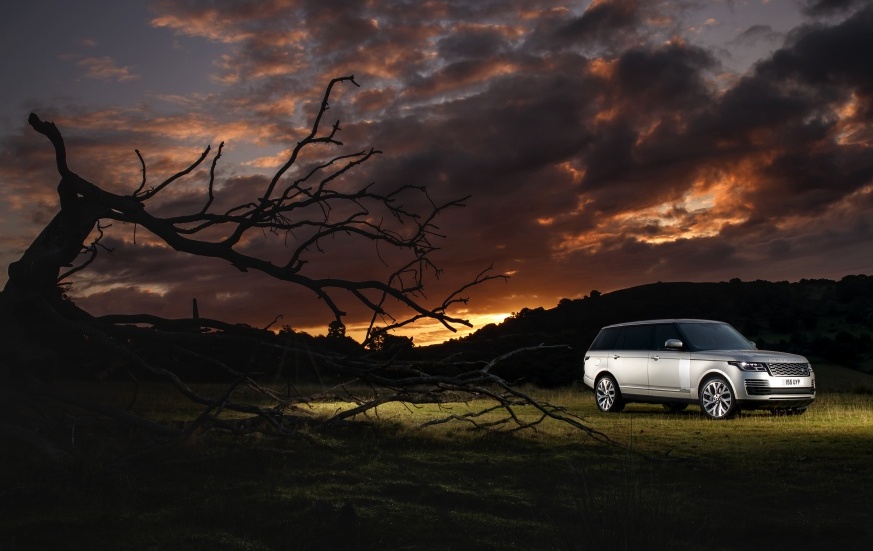
The Land Rover Range Rover IV (facelift, specifically the LWB – Long Wheelbase – model) powered by the 3.0-liter V6 diesel engine producing 258 horsepower and paired with an eight-speed automatic transmission, represented a significant offering in the luxury SUV segment from 2017 to 2018. This variant occupied a middle ground within the fourth-generation Range Rover lineup, positioned between the entry-level TD6 models and the higher-performance SDV8 variants. It aimed to balance fuel efficiency, refinement, and capable performance for buyers prioritizing a comfortable and luxurious driving experience. The facelift brought updated styling cues, enhanced technology, and improved efficiency compared to pre-facelift models.
Technical Specifications
| Brand | Land Rover |
| Model | Range Rover |
| Generation | Range Rover IV (facelift 2017) Long |
| Type (Engine) | 3.0 V6 (258 Hp) AWD Automatic |
| Start of production | 2017 |
| End of production | 2018 |
| Powertrain Architecture | Internal Combustion engine |
| Body type | SUV |
| Seats | 5 |
| Doors | 5 |
| Fuel consumption (urban) | 7.8 l/100 km (30.2 US mpg, 36.2 UK mpg, 12.8 km/l) |
| Fuel consumption (extra urban) | 6.4 l/100 km (36.8 US mpg, 44.1 UK mpg, 15.6 km/l) |
| Fuel consumption (combined) | 6.9 l/100 km (34.1 US mpg, 40.9 UK mpg, 14.5 km/l) |
| CO2 emissions | 182 g/km |
| Fuel Type | Diesel |
| Acceleration 0 – 100 km/h | 8.3 sec |
| Acceleration 0 – 62 mph | 8.3 sec |
| Acceleration 0 – 60 mph | 7.9 sec |
| Maximum speed | 209 km/h (129.87 mph) |
| Emission standard | Euro 6 |
| Weight-to-power ratio | 9.3 kg/Hp, 108.1 Hp/tonne |
| Weight-to-torque ratio | 4 kg/Nm, 251.4 Nm/tonne |
| Power | 258 Hp |
| Power per litre | 86.2 Hp/l |
| Torque | 600 Nm (442.54 lb.-ft.) |
| Engine layout | Front, Longitudinal |
| Engine Model/Code | 306DT |
| Engine displacement | 2993 cm3 (182.64 cu. in.) |
| Number of cylinders | 6 |
| Engine configuration | V-engine |
| Cylinder Bore | 84 mm (3.31 in.) |
| Piston Stroke | 90 mm (3.54 in.) |
| Compression ratio | 16:1 |
| Number of valves per cylinder | 4 |
| Fuel injection system | Diesel Commonrail |
| Engine aspiration | BiTurbo, Intercooler |
| Engine oil capacity | 6 l (6.34 US qt | 5.28 UK qt) |
| Coolant | 8.93 l (9.44 US qt | 7.86 UK qt) |
| Kerb Weight | 2387 kg (5262.43 lbs.) |
| Trunk (boot) space – minimum | 900 l (31.78 cu. ft.) |
| Fuel tank capacity | 86 l (22.72 US gal | 18.92 UK gal) |
| Max. roof load | 100 kg (220.46 lbs.) |
| Permitted trailer load with brakes (12%) | 3500 kg (7716.18 lbs.) |
| Permitted trailer load without brakes | 750 kg (1653.47 lbs.) |
| Length | 5200 mm (204.72 in.) |
| Width with mirrors folded | 2073 mm (81.61 in.) |
| Width including mirrors | 2220 mm (87.4 in.) |
| Height | 1868 mm (73.54 in.) |
| Wheelbase | 3120 mm (122.83 in.) |
| Front track | 1693 mm (66.65 in.) |
| Rear (Back) track | 1685 mm (66.34 in.) |
| Ride height (ground clearance) | 220 mm (8.66 in.) |
| Drag coefficient (Cd) | 0.34 |
| Minimum turning circle (turning diameter) | 13.1 m (42.98 ft.) |
| Approach angle | 26° |
| Departure angle | 24.6° |
| Ramp-over (brakeover) angle | 18.3° |
| Wading depth | 900 mm (35.43 in.) |
| Drive wheel | All wheel drive (4×4) |
| Number of gears and type of gearbox | 8 gears, automatic transmission |
| Front suspension | Wishbone, Air suspension |
| Rear suspension | Independent multi-link suspension, Air suspension |
| Front brakes | Ventilated discs |
| Rear brakes | Ventilated discs |
Powertrain & Engine Architecture
The heart of this Range Rover variant is the 306DT, a 3.0-liter V6 turbodiesel engine. This engine utilizes a sequential twin-turbocharger setup, with a smaller turbo providing boost at low engine speeds for improved responsiveness and a larger turbo taking over at higher RPMs for increased power. The engine employs a common-rail direct injection system, delivering fuel at extremely high pressure for efficient combustion. The cylinder head features four valves per cylinder, enhancing breathing and contributing to the engine’s power output. The eight-speed automatic transmission, sourced from ZF, is a crucial component, offering smooth and quick shifts. It’s programmed for both comfort and efficiency, with adaptive shift patterns based on driving style and terrain. The transmission’s wide gear ratio spread helps to optimize fuel economy while still providing ample torque for off-road capability and towing.
Driving Characteristics
The 258 hp and 600 Nm (442 lb-ft) of torque delivered by this powertrain configuration provide a comfortable and capable driving experience. Acceleration from 0-60 mph takes approximately 7.9 seconds, which is respectable for a large, luxurious SUV. While not as overtly sporty as the SDV8 models, the 3.0 V6 offers ample power for everyday driving and highway overtaking. The automatic transmission contributes to a relaxed driving experience, particularly in urban environments. The gear ratios are tuned for smooth transitions and efficient cruising. Compared to the manual transmission versions, the automatic prioritizes convenience and ease of use, though it may slightly diminish fuel economy. The air suspension provides a remarkably smooth ride, absorbing bumps and imperfections in the road surface effectively.
Equipment & Trim Levels
The Range Rover IV facelift with the 3.0 V6 and automatic transmission typically came well-equipped as standard. Features included leather upholstery, heated front seats, a touchscreen infotainment system with navigation, automatic climate control, and a suite of safety features like ABS, traction control, and stability control. The Long Wheelbase (LWB) configuration added extra rear legroom, enhancing passenger comfort. Optional extras included features like a panoramic sunroof, upgraded audio systems (Meridian), adaptive cruise control, and a variety of interior trim options. Trim levels varied by market, but generally, this engine/transmission combination was offered in mid-range trims, allowing buyers to add options to personalize their vehicle.
Chassis & Braking
The Range Rover IV utilizes a robust chassis construction, combining aluminum and high-strength steel for optimal strength and weight reduction. The air suspension system is a key feature, providing adjustable ride height and damping characteristics. This allows the vehicle to adapt to various terrains and driving conditions. The braking system consists of ventilated discs on all four wheels, providing ample stopping power. ABS (Anti-lock Braking System) and electronic brake-force distribution are standard features. The suspension geometry is tuned to balance on-road comfort with off-road capability. Stabilizer bars help to minimize body roll during cornering.
Market Reception & Comparison
The 3.0 V6 diesel with the automatic transmission was generally well-received by automotive critics. It was praised for its blend of performance, refinement, and fuel efficiency. Compared to the more powerful SDV8 models, it offered a more economical option without sacrificing too much in terms of driving experience. Against the entry-level TD6 variants, the 258 hp version provided a noticeable performance upgrade. Fuel economy figures of around 34.1 US mpg combined were competitive for a vehicle of this size and capability. Reliability reports suggest that the 306DT engine is generally robust, although like any complex diesel engine, it requires regular maintenance.
Legacy
The 3.0 V6 diesel engine became a mainstay in the Range Rover lineup for several years, proving to be a popular choice among buyers. In the used car market, these models offer a good balance of luxury, capability, and value. While diesel engines have faced increased scrutiny in recent years due to emissions concerns, the 306DT, particularly those equipped with a particulate filter (as standard on Euro 6 compliant models), remains a viable option for those seeking a capable and comfortable luxury SUV. Regular maintenance, including oil changes and filter replacements, is crucial to ensure the long-term reliability of this powertrain.