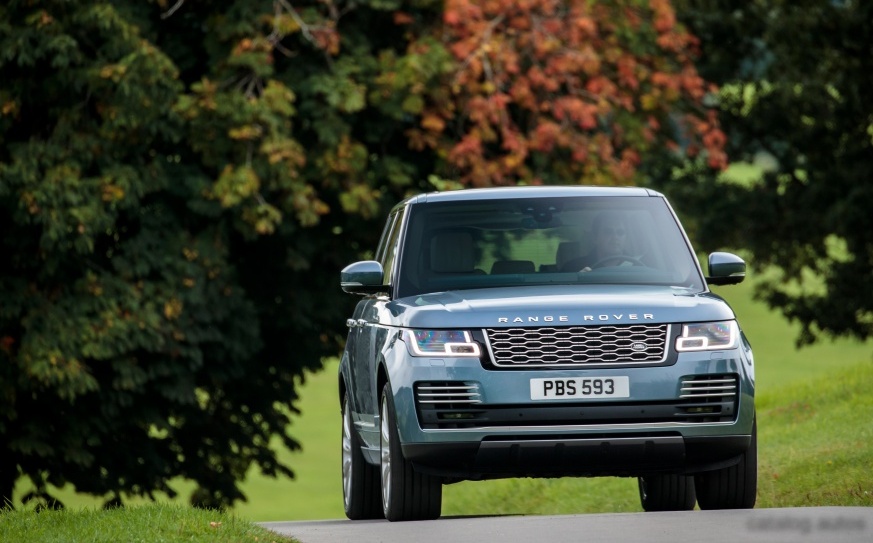
The Land Rover Range Rover IV (facelift, L405) P400 3.0, produced from July 2019 to October 2021, represents a significant evolution of the fourth-generation Range Rover. This variant, equipped with a 3.0-liter inline-six cylinder engine producing 400 horsepower and incorporating mild hybrid technology, occupied a sweet spot in the Range Rover lineup, offering a blend of performance, refinement, and efficiency. It was positioned as a mid-to-high range offering, appealing to buyers seeking substantial power without the full commitment – and price tag – of the supercharged V8 models. The P400 was a key component of Land Rover’s strategy to modernize its powertrain offerings and meet increasingly stringent emissions regulations.
Technical Specifications
| Brand | Land Rover |
| Model | Range Rover |
| Generation | Range Rover IV (facelift 2017) |
| Type (Engine) | P400 3.0 (400 Hp) Mild Hybrid AWD Automatic |
| Start of production | July, 2019 |
| End of production | October, 2021 |
| Powertrain Architecture | MHEV (Mild Hybrid Electric Vehicle) |
| Body type | SUV |
| Seats | 5 |
| Doors | 5 |
| Fuel consumption (combined) | 10.6-11.3 l/100 km (22.2 – 20.8 US mpg) |
| CO2 emissions | 212-216 g/km |
| Fuel Type | Petrol (Gasoline) |
| Acceleration 0 – 100 km/h | 6.3 sec |
| Acceleration 0 – 62 mph | 6.3 sec |
| Acceleration 0 – 60 mph | 6 sec |
| Maximum speed | 225 km/h (139.81 mph) |
| Weight-to-power ratio | 5.7 kg/Hp |
| Weight-to-torque ratio | 4.1 kg/Nm |
| Power | 400 Hp @ 5500-6500 rpm |
| Torque | 550 Nm @ 2000-5000 rpm (405.66 lb.-ft.) |
| Engine layout | Front, Longitudinal |
| Engine Model/Code | PT306 |
| Engine displacement | 2996 cm3 (182.83 cu. in.) |
| Number of cylinders | 6 |
| Engine configuration | Inline |
| Cylinder Bore | 83 mm (3.27 in.) |
| Piston Stroke | 92.3 mm (3.63 in.) |
| Compression ratio | 10.5:1 |
| Number of valves per cylinder | 4 |
| Engine aspiration | Twin-Turbo and Electric Powered Compressor, Intercooler |
| Engine oil capacity | 8 l (8.45 US qt | 7.04 UK qt) |
| Coolant capacity | 8.05 l (8.51 US qt | 7.08 UK qt) |
| Kerb Weight | 2267 kg (4997.88 lbs.) |
| Max. weight | 3140 kg (6922.52 lbs.) |
| Max load | 873 kg (1924.64 lbs.) |
| Trunk (boot) space – minimum | 1694 l (59.82 cu. ft.) |
| Trunk (boot) space – maximum | 1943 l (68.62 cu. ft.) |
| Fuel tank capacity | 104 l (27.47 US gal | 22.88 UK gal) |
| Max. roof load | 100 kg (220.46 lbs.) |
| Permitted trailer load with brakes (12%) | 3500 kg (7716.18 lbs.) |
| Permitted trailer load without brakes | 750 kg (1653.47 lbs.) |
| Length | 5000 mm (196.85 in.) |
| Width with mirrors folded | 2073 mm (81.61 in.) |
| Width including mirrors | 2220 mm (87.4 in.) |
| Height | 1869 mm (73.58 in.) |
| Wheelbase | 2922 mm (115.04 in.) |
| Front track | 1693 mm (66.65 in.) |
| Rear track | 1685 mm (66.34 in.) |
| Ride height (ground clearance) | 220-297 mm (8.66 – 11.69 in.) |
| Minimum turning circle | 12.3 m (40.35 ft.) |
| Approach angle | 25.5-34.7° |
| Departure angle | 24.5-29.0° |
| Ramp-over angle | 21.5-28.2° |
| Wading depth | 900 mm (35.43 in.) |
| Drive wheel | All wheel drive (4×4) |
| Number of gears | 8 |
| Gearbox type | Automatic transmission |
| Front brakes | Ventilated discs, 380 mm |
| Rear brakes | Ventilated discs, 365 mm |
| Steering type | Steering rack and pinion |
| Power steering | Electric |
| Wheel rims size | 19; 20; 21; 22 |
INTRODUCTION
The Range Rover IV (L405) facelift, introduced in 2017, brought a host of updates to Land Rover’s flagship SUV, including revised styling, upgraded technology, and a new generation of engines. The P400 3.0, launched in 2019, was a key part of this refresh. It utilized Land Rover’s Ingenium engine family, specifically a 3.0-liter inline-six cylinder engine boosted by both a twin-scroll turbocharger and an electric supercharger. This combination, coupled with a 48V mild hybrid system, aimed to deliver both strong performance and improved fuel economy. The P400 was offered with a standard eight-speed automatic transmission and Land Rover’s sophisticated all-wheel-drive system.
Powertrain & Engine Architecture
The heart of the P400 is the PT306 engine, a 2996cc inline-six cylinder petrol engine. This engine is notable for its use of both a conventional twin-scroll turbocharger and an electric supercharger. The electric supercharger provides near-instant boost at low engine speeds, eliminating turbo lag and improving throttle response. The turbocharger takes over at higher speeds, providing sustained power. The mild hybrid system, utilizing a Belt-integrated Starter Generator (BiSG), assists the engine during acceleration and allows for smoother start-stop operation. The engine employs direct fuel injection and variable valve timing for optimized efficiency and performance. The eight-speed automatic transmission, sourced from ZF, is known for its smooth shifts and wide gear ratio spread. It’s programmed to prioritize comfort and refinement, but also offers a Sport mode for more aggressive shifting.
Driving Characteristics
The P400 delivers a refined and capable driving experience. The combination of the inline-six engine and the eight-speed automatic provides ample power for everyday driving and confident overtaking. While not as overtly sporty as some competitors, the P400 offers a strong 0-60 mph time of around 6 seconds. The mild hybrid system contributes to a smooth and responsive feel, particularly during initial acceleration. The automatic transmission is well-matched to the engine’s characteristics, providing seamless gear changes. Compared to the supercharged V6 models, the P400 offers a more linear power delivery and slightly better fuel economy. It also feels less stressed during prolonged highway cruising. Compared to the diesel variants, the P400 provides a more responsive and refined driving experience, albeit with slightly higher fuel consumption.
Equipment & Trim Levels
The P400 typically came well-equipped, reflecting the Range Rover’s luxury positioning. Standard features included leather upholstery, heated front seats, a touchscreen infotainment system with navigation, a premium sound system, and a comprehensive suite of safety features. Optional extras included upgraded leather trim, a panoramic sunroof, adaptive cruise control, a head-up display, and a rear-seat entertainment system. Trim levels varied depending on the market, but generally included SE, HSE, and Autobiography, with each step up offering more luxurious appointments and advanced technology.
Chassis & Braking
The Range Rover IV utilizes an aluminum-intensive monocoque chassis, contributing to its relatively low weight for a vehicle of its size. The suspension system features air suspension with adaptive dampers, providing a comfortable ride and the ability to adjust ride height for off-road capability. The P400 typically came equipped with ventilated disc brakes on all four wheels, providing ample stopping power. ABS, electronic stability control, and traction control are standard features. The steering is electrically assisted, offering a precise and responsive feel.
Market Reception & Comparison
The Range Rover P400 was generally well-received by automotive critics. It was praised for its refined engine, comfortable ride, and luxurious interior. Critics noted the improved fuel economy compared to the older supercharged V6 engines, while still delivering ample performance. Some reviewers found the steering a bit numb, but overall, the P400 was considered a compelling option in the luxury SUV segment. Compared to rivals like the Porsche Cayenne and BMW X5, the Range Rover P400 offered a unique blend of luxury, off-road capability, and British charm.
Legacy
The P400 powertrain has proven to be relatively reliable, although, as with any complex modern engine, preventative maintenance is crucial. The mild hybrid system has generally been trouble-free. On the used car market, the P400 represents a good value proposition, offering a significant amount of luxury and performance for the price. However, potential buyers should be aware of the potential for higher maintenance costs associated with a luxury SUV and ensure a thorough inspection is conducted before purchase. The Ingenium engine family, as showcased in the P400, has become a cornerstone of Land Rover’s powertrain strategy, and its success has paved the way for further electrification and hybridization.