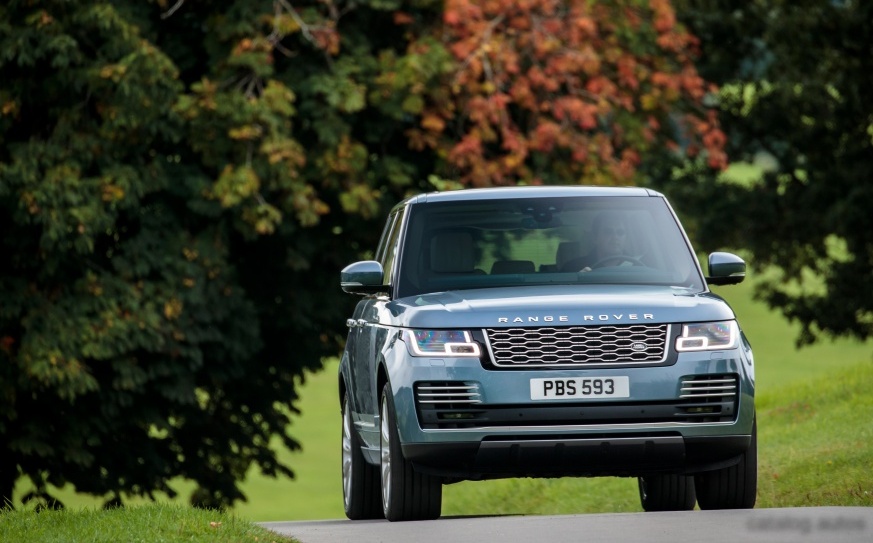
The Land Rover Range Rover IV (facelift, introduced in 2017) P400e represents a significant step in the iconic British SUV’s evolution, integrating plug-in hybrid technology into the luxury off-road vehicle. Produced from 2017 through October 2021, this variant combined a 2.0-liter turbocharged inline-four gasoline engine with an electric motor, delivering a total system output of 404 horsepower. Positioned as a premium offering within the fourth-generation Range Rover lineup (the L405 series), the P400e aimed to provide a balance of performance, efficiency, and reduced emissions, appealing to environmentally conscious luxury buyers. It was a key component of Jaguar Land Rover’s strategy to electrify its range and meet increasingly stringent emissions regulations.
Technical Specifications
| Brand | Land Rover |
| Model | Range Rover |
| Generation | Range Rover IV (facelift 2017) |
| Type (Engine) | P400e (404 Hp) Plug-in Hybrid AWD Automatic |
| Start of production | 2017 |
| End of production | October, 2021 |
| Powertrain Architecture | PHEV (Plug-in Hybrid Electric Vehicle) |
| Body type | SUV |
| Seats | 5 |
| Doors | 5 |
| Combined fuel consumption (WLTP) | 3.3-3.7 l/100 km (71.3 – 63.6 US mpg, 85.6 – 76.3 UK mpg, 30.3 – 27 km/l) |
| Fuel consumption (economy) – combined | 2.8 l/100 km (84 US mpg, 100.9 UK mpg, 35.7 km/l) |
| CO2 emissions | 64 g/km |
| Fuel Type | Petrol / electricity |
| Acceleration 0 – 100 km/h | 6.8 sec |
| Acceleration 0 – 62 mph | 6.8 sec |
| Acceleration 0 – 60 mph | 6.4 sec |
| Maximum speed | 220 km/h (136.7 mph) |
| Emission standard | Euro 6 |
| Weight-to-power ratio | 6.2 kg/Hp, 161.5 Hp/tonne |
| Weight-to-torque ratio | 3.9 kg/Nm, 255.8 Nm/tonne |
| Gross battery capacity | 13 kWh |
| Battery technology | Lithium-ion (Li-Ion) |
| Battery location | Inside the trunk |
| All-electric range (WLTP) | 40 km (24.85 mi) |
| All-electric range | 42-46 km (26.1 – 28.58 mi) |
| Average Energy consumption (WLTP) | 25.8 kWh/100 km (41.52 kWh/100 mi, 81 MPGe, 3.9 km/kWh, 2.4 mi/kWh) |
| Average Energy consumption | 22.5-23.1 kWh/100 km (36.21 – 37.18 kWh/100 mi, 93 – 91 MPGe, 4.4 – 4.3 km/kWh, 2.8 – 2.7 mi/kWh) |
| Max speed (electric) | 137 km/h (85.13 mph) |
| Electric motor power | 143 Hp |
| Electric motor Torque | 275 Nm (202.83 lb.-ft.) |
| Electric motor location | Between the combustion engine and the transmission |
| System power | 404 Hp @ 5500 rpm |
| System torque | 640 Nm @ 1500-4000 rpm (472.04 lb.-ft. @ 1500-4000 rpm) |
| Power | 300 Hp |
| Power per litre | 150.2 Hp/l |
| Engine layout | Front, Transverse |
| Engine Model/Code | PT204 |
| Engine displacement | 1997 cm3 (121.86 cu. in.) |
| Number of cylinders | 4 |
| Engine configuration | Inline |
| Cylinder Bore | 83 mm (3.27 in.) |
| Piston Stroke | 92 mm (3.62 in.) |
| Compression ratio | 9.5:1 |
| Number of valves per cylinder | 4 |
| Fuel injection system | Direct injection |
| Engine aspiration | Turbocharger, Intercooler |
| Valvetrain | DOHC |
| Engine oil capacity | 7 l (7.4 US qt | 6.16 UK qt) |
| Coolant | 11.2 l (11.83 US qt | 9.85 UK qt) |
| Kerb Weight | 2502 kg (5515.97 lbs.) |
| Max. weight | 3210 kg (7076.84 lbs.) |
| Max load | 708 kg (1560.87 lbs.) |
| Trunk (boot) space – minimum | 802 l (28.32 cu. ft.) |
| Trunk (boot) space – maximum | 1943 l (68.62 cu. ft.) |
| Fuel tank capacity | 90 l (23.78 US gal | 19.8 UK gal) |
| Max. roof load | 100 kg (220.46 lbs.) |
| Permitted trailer load with brakes (12%) | 2500 kg (5511.56 lbs.) |
| Permitted trailer load without brakes | 750 kg (1653.47 lbs.) |
| Permitted towbar download | 100 kg (220.46 lbs.) |
| Length | 5000 mm (196.85 in.) |
| Width with mirrors folded | 2073 mm (81.61 in.) |
| Width including mirrors | 2220 mm (87.4 in.) |
| Height | 1869 mm (73.58 in.) |
| Wheelbase | 2922 mm (115.04 in.) |
| Front track | 1693 mm (66.65 in.) |
| Rear (Back) track | 1685 mm (66.34 in.) |
| Front overhang | 883 mm (34.76 in.) |
| Rear overhang | 1195 mm (47.05 in.) |
| Ride height (ground clearance) | 220 mm (8.66 in.) |
| Drag coefficient (Cd) | 0.34 |
| Minimum turning circle (turning diameter) | 12.33 m (40.45 ft.) |
| Approach angle | 26° |
| Departure angle | 24.6° |
| Ramp-over (brakeover) angle | 20.1° |
| Wading depth | 900 mm (35.43 in.) |
| Drivetrain Architecture | The Internal combustion engine (ICE) and the electric motor permanently drive the four wheels of the car with the ability to work in full electric or mixed mode. |
| Drive wheel | All wheel drive (4×4) |
| Number of gears and type of gearbox | 8 gears, automatic transmission |
| Front suspension | Double wishbone, Air suspension |
| Rear suspension | Independent multi-link suspension, Air suspension |
| Front brakes | Ventilated discs, 380 mm |
| Rear brakes | Ventilated discs, 365 mm |
| Steering type | Steering rack and pinion |
| Power steering | Electric Steering |
| Tires size | 255/55 R20; 275/45 R21; 275/40 R22 |
| Wheel rims size | 8.5J x 20; 9.5J x 21; 9.5J x 22 |
INTRODUCTION
The Land Rover Range Rover IV (facelift) P400e, launched in 2017, marked a pivotal moment for the Range Rover line. It was one of the first plug-in hybrid options offered in the Range Rover family, designed to appeal to buyers seeking the luxury and capability of the Range Rover with improved fuel efficiency and reduced environmental impact. Built on the L405 platform, which underpinned the fourth-generation Range Rover, the P400e distinguished itself through its sophisticated powertrain and commitment to sustainable luxury. The facelift brought updated styling cues and technological enhancements to the entire Range Rover IV range, further solidifying its position as a leader in the luxury SUV segment.
Powertrain & Engine Architecture
At the heart of the P400e lies a 2.0-liter Ingenium inline-four cylinder gasoline engine, designated as the PT204. This engine utilizes direct injection and a single twin-scroll turbocharger to produce 300 horsepower. The engine’s relatively small displacement is compensated for by the addition of an 85kW (143 hp) electric motor integrated between the engine and the eight-speed automatic transmission. The electric motor draws power from a 13 kWh lithium-ion battery pack located under the boot floor, slightly reducing cargo capacity compared to non-hybrid models. The combined system output is a substantial 404 horsepower and 640 Nm (472 lb-ft) of torque. The transmission is a ZF 8HP70 eight-speed automatic, known for its smooth shifting and efficiency. The powertrain allows for all-electric driving for up to 40 km (25 miles) under WLTP testing, and the vehicle can operate in various modes, including pure electric, hybrid, and save (which prioritizes engine use to preserve battery charge).
Driving Characteristics
The P400e delivers a unique driving experience. In electric mode, it offers near-silent operation and instant torque, providing brisk acceleration around town. When the gasoline engine engages, the combined power output results in strong performance, with a 0-60 mph time of around 6.4 seconds. The eight-speed automatic transmission is well-tuned to the hybrid powertrain, providing seamless gear changes. Compared to the Range Rover’s more powerful six and eight-cylinder engines, the P400e feels slightly less effortless in wide-open throttle situations, but the readily available torque from the electric motor compensates for this. The added weight of the battery pack, approximately 300 kg (660 lbs), is noticeable, particularly in handling, but the air suspension system helps to mitigate body roll and maintain a comfortable ride. The gear ratios are optimized for both electric and hybrid operation, providing a balance of acceleration and efficiency.
Equipment & Trim Levels
The P400e was typically offered with a high level of standard equipment, reflecting its premium positioning. Standard features included leather upholstery, heated and ventilated front seats, a touchscreen infotainment system with navigation, a premium sound system, and a comprehensive suite of safety features. Optional extras included upgraded leather trims, rear seat entertainment, adaptive cruise control, and a panoramic sunroof. The interior design mirrored that of other Range Rover IV models, with a focus on luxury and craftsmanship. Trim levels were generally aligned with the broader Range Rover range, offering various levels of customization and personalization.
Chassis & Braking
The P400e utilizes the Range Rover’s sophisticated chassis technology, featuring a double-wishbone front suspension and an independent multi-link rear suspension, both equipped with air suspension. The air suspension provides adjustable ride height and damping, allowing the vehicle to adapt to various terrains and driving conditions. Brakes consist of ventilated discs all around, with larger front discs (380mm) than the rear (365mm). The braking system is assisted by ABS, electronic brake-force distribution, and brake assist. Stabilizer bars are fitted front and rear to reduce body roll during cornering. The weight distribution is carefully managed to maintain stability and handling balance.
Market Reception & Comparison
The Range Rover P400e received generally positive reviews from automotive critics. It was praised for its refined driving experience, luxurious interior, and impressive fuel efficiency for a vehicle of its size and capability. However, some critics noted the reduced cargo space due to the battery pack and the slightly higher price compared to non-hybrid models. Compared to the Range Rover’s 3.0-liter SDV6 diesel and 5.0-liter supercharged V6 and V8 gasoline engines, the P400e offered a different proposition – prioritizing efficiency and reduced emissions over outright performance. The P400e appealed to buyers who valued environmental responsibility and were willing to pay a premium for a plug-in hybrid luxury SUV.
Legacy
The Range Rover P400e played a crucial role in establishing Land Rover as a leader in plug-in hybrid technology. The powertrain proved to be relatively reliable, with the Ingenium engine and ZF transmission demonstrating good durability. On the used car market, the P400e holds its value well, attracting buyers who appreciate its unique combination of luxury, capability, and efficiency. The lessons learned from the development of the P400e informed Land Rover’s subsequent electrification efforts, paving the way for the fully electric Range Rover models that followed. The P400e remains a significant milestone in the Range Rover’s history, representing a bold step towards a more sustainable future.