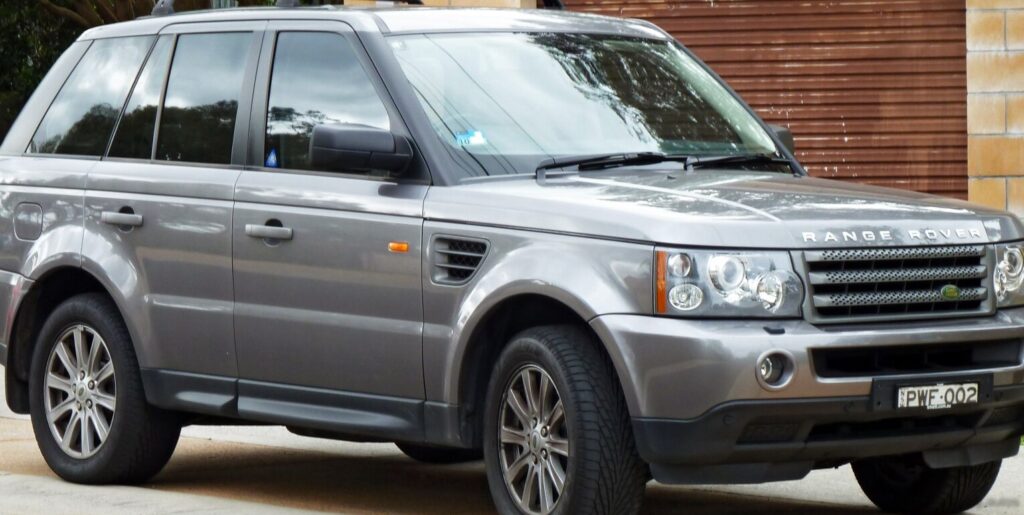
The Land Rover Range Rover Sport I 3.6 TDV8, produced from 2007 to 2009, represented a compelling blend of luxury, performance, and off-road capability within the first generation (2005-2013) of the Range Rover Sport lineage. Positioned as a more dynamically focused alternative to the full-size Range Rover, the Sport aimed to attract buyers seeking a more engaging driving experience without sacrificing the brand’s hallmark refinement. This particular variant, equipped with the 3.6-liter TDV8 diesel engine and a six-speed automatic transmission, was a popular choice in European and international markets, offering a balance of power, fuel efficiency, and towing capacity. It sat in the mid-range of the Sport lineup, offering a step up in performance from the base models while remaining more accessible than the supercharged petrol variants.
Technical Specifications
| Brand | Land Rover |
| Model | Range Rover Sport |
| Generation | Range Rover Sport I |
| Type (Engine) | 3.6 TDV8 (272 Hp) AWD Automatic |
| Start of production | 2007 |
| End of production | 2009 |
| Powertrain Architecture | Internal Combustion engine |
| Body type | SUV |
| Seats | 5 |
| Doors | 5 |
| Fuel consumption (urban) | 14.7 l/100 km (16 US mpg, 19.2 UK mpg, 6.8 km/l) |
| Fuel consumption (extra urban) | 9 l/100 km (26.1 US mpg, 31.4 UK mpg, 11.1 km/l) |
| Fuel consumption (combined) | 11.1 l/100 km (21.2 US mpg, 25.4 UK mpg, 9 km/l) |
| CO2 emissions | 294 g/km |
| Fuel Type | Diesel |
| Acceleration 0 – 100 km/h | 9.2 sec |
| Acceleration 0 – 62 mph | 9.2 sec |
| Acceleration 0 – 60 mph | 8.7 sec |
| Maximum speed | 209 km/h (129.87 mph) |
| Emission standard | Euro 4 |
| Weight-to-power ratio | 9.8 kg/Hp, 101.7 Hp/tonne |
| Weight-to-torque ratio | 4.2 kg/Nm, 239.3 Nm/tonne |
| Power | 272 Hp @ 4000 rpm |
| Power per litre | 75 Hp/l |
| Torque | 640 Nm @ 2000 rpm (472.04 lb.-ft. @ 2000 rpm) |
| Engine layout | Front, Longitudinal |
| Engine Model/Code | 368DT |
| Engine displacement | 3628 cm3 (221.39 cu. in.) |
| Number of cylinders | 8 |
| Engine configuration | V-engine |
| Cylinder Bore | 81 mm (3.19 in.) |
| Piston Stroke | 88 mm (3.46 in.) |
| Compression ratio | 17.3:1 |
| Number of valves per cylinder | 4 |
| Fuel injection system | Diesel Commonrail |
| Engine aspiration | Twin-Turbo, Intercooler |
| Valvetrain | DOHC |
| Engine oil capacity | 9.5 l (10.04 US qt, 8.36 UK qt) |
| Coolant | 12.7 l (13.42 US qt, 11.17 UK qt) |
| Kerb Weight | 2675 kg (5897.37 lbs.) |
| Max. weight | 3175 kg (6999.68 lbs.) |
| Max load | 500 kg (1102.31 lbs.) |
| Trunk (boot) space – minimum | 958 l (33.83 cu. ft.) |
| Trunk (boot) space – maximum | 2013 l (71.09 cu. ft.) |
| Fuel tank capacity | 84.1 l (22.22 US gal, 18.5 UK gal) |
| Permitted trailer load with brakes (12%) | 3500 kg (7716.18 lbs.) |
| Permitted trailer load without brakes | 750 kg (1653.47 lbs.) |
| Length | 4788 mm (188.5 in.) |
| Width with mirrors folded | 1983 mm (78.07 in.) |
| Width including mirrors | 2170 mm (85.43 in.) |
| Height | 1762-1812 mm (69.37 – 71.34 in.) |
| Wheelbase | 2745 mm (108.07 in.) |
| Front track | 1605 mm (63.19 in.) |
| Rear (Back) track | 1612 mm (63.46 in.) |
| Ride height (ground clearance) | 172-227 mm (6.77 – 8.94 in.) |
| Minimum turning circle (turning diameter) | 11.9 m (39.04 ft.) |
| Approach angle | 30.2-34° |
| Departure angle | 20-25° |
| Ramp-over (brakeover) angle | 26-29° |
| Wading depth | 700 mm (27.56 in.) |
| Drivetrain Architecture | The Internal combustion engine (ICE) drives permanently the four wheels of the vehicle. |
| Drive wheel | All wheel drive (4×4) |
| Number of gears and type of gearbox | 6 gears, automatic transmission |
| Front suspension | Air suspension |
| Rear suspension | Air suspension |
| Front brakes | Ventilated discs, 360 mm |
| Rear brakes | Ventilated discs, 350 mm |
| Assisting systems | ABS (Anti-lock braking system) |
| Steering type | Steering rack and pinion |
| Power steering | Hydraulic Steering |
| Tires size | 255/50 R19 |
| Wheel rims size | 9J x 19 |
Powertrain & Engine Architecture
The heart of this Range Rover Sport variant is the 3.6-liter TDV8 diesel engine, designated as the 368DT. This engine is a V8 configuration, utilizing a common rail direct injection system and twin turbochargers with an intercooler. The twin-turbo setup was crucial for mitigating turbo lag and delivering a broad torque curve. The engine boasts a high compression ratio of 17.3:1, contributing to its efficiency and power output. The engine’s DOHC (Double Overhead Camshaft) valvetrain further enhances its breathing and performance. The six-speed automatic transmission, sourced from ZF, was a key component in delivering smooth and refined gear changes. This transmission was known for its durability and ability to handle the engine’s substantial torque.
Driving Characteristics
The 3.6 TDV8 automatic Range Rover Sport offered a distinctly different driving experience compared to its petrol-powered siblings or manual diesel variants. While not as overtly sporty as the supercharged models, the TDV8 provided ample torque – 472 lb-ft – readily available from 2000 rpm, making it a capable performer in everyday driving and when towing. The automatic transmission, while smooth, did slightly diminish the sense of driver engagement compared to the six-speed manual option. Acceleration from 0-60 mph took approximately 8.7 seconds, respectable for a vehicle of its size and weight. The air suspension system provided a comfortable ride, absorbing bumps and imperfections in the road effectively. However, the weight of the vehicle was noticeable, particularly during spirited driving.
Equipment & Trim Levels
The 3.6 TDV8 automatic typically came equipped with a generous level of standard features. These included leather upholstery, climate control, a premium audio system, and parking sensors. Optional extras included heated seats, a sunroof, upgraded navigation system, and various exterior styling enhancements. Interior trim options varied, with wood veneer and aluminum accents available. The dashboard layout was functional and well-designed, prioritizing ease of use and a sense of luxury.
Chassis & Braking
The Range Rover Sport I utilized a robust chassis designed to handle both on-road and off-road conditions. The suspension system featured air springs, allowing for adjustable ride height and improved off-road capability. The braking system consisted of ventilated discs on all four wheels, providing ample stopping power. The front discs measured 360mm, while the rear discs were 350mm. An Anti-lock Braking System (ABS) was standard, enhancing safety and control during emergency braking situations.
Market Reception & Comparison
The 3.6 TDV8 automatic Range Rover Sport was generally well-received by automotive critics. It was praised for its comfortable ride, refined interior, and strong diesel engine. Fuel economy was a significant advantage over the petrol models, with combined figures around 21.2 US mpg. However, some critics noted that the automatic transmission could feel slightly sluggish at times, and the vehicle’s weight impacted its handling agility. Compared to the 2.7 TDV6 models, the 3.6 TDV8 offered a substantial performance upgrade, justifying its higher price point. Against the supercharged petrol variants, it provided a more economical option without sacrificing too much in terms of luxury or capability.
Legacy
The 3.6 TDV8 engine proved to be a relatively reliable powertrain, although like any complex diesel engine, it is susceptible to certain issues with age. Common concerns include turbocharger wear, injector problems, and potential issues with the diesel particulate filter (DPF). However, with regular maintenance and preventative care, these engines can provide many years of reliable service. In the used car market today, the 3.6 TDV8 Range Rover Sport represents a compelling value proposition for buyers seeking a luxurious and capable SUV at a more affordable price point. Its blend of performance, comfort, and off-road ability continues to make it a desirable vehicle for those who appreciate the Range Rover brand.