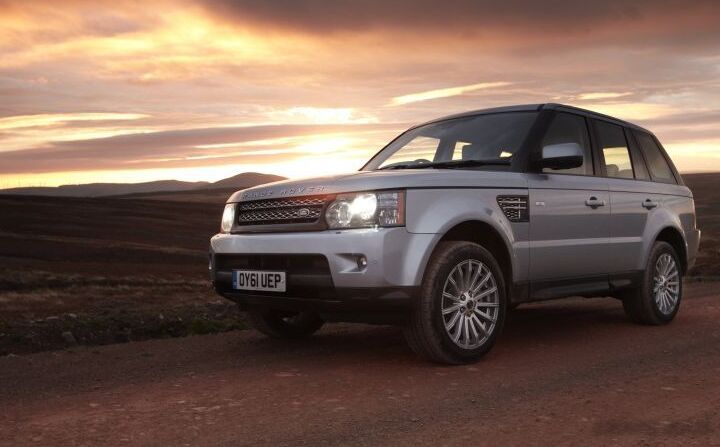
The Land Rover Range Rover Sport I, specifically the facelifted version introduced in 2009, represented a more accessible entry point into the Range Rover luxury SUV segment. Production of the 3.0 LR-TD V6 (211 hp) AWD Automatic variant ran from 2012 to 2013. This model aimed to balance the Range Rover Sport’s iconic styling and off-road capability with improved fuel efficiency and a lower price point compared to the supercharged V8 options. It occupied a mid-range position in the lineup, appealing to buyers seeking a premium SUV experience without the higher running costs associated with the more powerful engines.
Technical Specifications
| Brand | Land Rover |
| Model | Range Rover Sport |
| Generation | Range Rover Sport I (facelift 2009) |
| Type (Engine) | 3.0 LR-TD V6 (211 Hp) AWD Automatic |
| Start of production | 2012 |
| End of production | 2013 |
| Powertrain Architecture | Internal Combustion engine |
| Body type | SUV |
| Seats | 5 |
| Doors | 5 |
| Fuel consumption (urban) | 9.7 l/100 km (24.2 US mpg, 29.1 UK mpg, 10.3 km/l) |
| Fuel consumption (extra urban) | 7.8 l/100 km (30.2 US mpg, 36.2 UK mpg, 12.8 km/l) |
| Fuel consumption (combined) | 8.5 l/100 km (27.7 US mpg, 33.2 UK mpg, 11.8 km/l) |
| CO2 emissions | 224 g/km |
| Fuel Type | Diesel |
| Acceleration 0 – 100 km/h | 10.3 sec |
| Acceleration 0 – 62 mph | 10.3 sec |
| Acceleration 0 – 60 mph | 9.8 sec |
| Maximum speed | 193 km/h (119.92 mph) |
| Emission standard | Euro 5 |
| Weight-to-power ratio | 12 kg/Hp, 83.2 Hp/tonne |
| Weight-to-torque ratio | 4.9 kg/Nm, 205.1 Nm/tonne |
| Power | 211 Hp @ 4000 rpm |
| Power per litre | 70.5 Hp/l |
| Torque | 520 Nm @ 2000 rpm (383.53 lb.-ft. @ 2000 rpm) |
| Engine layout | Front, Longitudinal |
| Engine Model/Code | 306DT |
| Engine displacement | 2993 cm3 (182.64 cu. in.) |
| Number of cylinders | 6 |
| Engine configuration | V-engine |
| Cylinder Bore | 84 mm (3.31 in.) |
| Piston Stroke | 90 mm (3.54 in.) |
| Compression ratio | 16.1:1 |
| Number of valves per cylinder | 4 |
| Fuel injection system | Diesel Commonrail |
| Engine aspiration | BiTurbo, Intercooler |
| Valvetrain | OHC |
| Engine oil capacity | 5.9 l (6.23 US qt | 5.19 UK qt) |
| Coolant | 11.5 l (12.15 US qt | 10.12 UK qt) |
| Kerb Weight | 2535-2670 kg (5588.72 – 5886.34 lbs.) |
| Fuel tank capacity | 84.1 l (22.22 US gal | 18.5 UK gal) |
| Length | 4783 mm (188.31 in.) |
| Width including mirrors | 2158 mm (84.96 in.) |
| Height | 1784 mm (70.24 in.) |
| Wheelbase | 2745 mm (108.07 in.) |
| Drag coefficient (Cd) | 0.37 |
| Minimum turning circle | 11.9 m (39.04 ft.) |
| Drive wheel | All wheel drive (4×4) |
| Number of gears | 8 |
| Gearbox type | automatic transmission |
| Front suspension | Double wishbone |
| Rear suspension | Double wishbone |
| Front brakes | Ventilated discs |
| Rear brakes | Ventilated discs |
| Assisting systems | ABS (Anti-lock braking system) |
| Steering type | Steering rack and pinion |
| Power steering | Electric Steering |
Powertrain & Engine Architecture
The heart of this Range Rover Sport variant is the 3.0-liter LR-TD V6 diesel engine, designated as the 306DT. This engine is a member of the Ford/PSA joint venture’s ‘Lion’ engine family, known for its robust construction and relatively advanced technology for its time. The engine utilizes a common rail direct injection system, delivering fuel at extremely high pressures for optimized combustion. Crucially, it features a sequential bi-turbocharger setup. A smaller turbocharger provides quick response at low engine speeds, minimizing turbo lag, while a larger turbocharger kicks in at higher RPMs to deliver sustained power. An intercooler further enhances performance by cooling the compressed intake air. The engine employs an overhead camshaft (OHC) valvetrain with four valves per cylinder. Paired with the engine is an eight-speed automatic transmission, a ZF 8HP series gearbox, known for its smooth shifting and efficiency. This transmission offered a wide range of gear ratios, contributing to both fuel economy and performance.
Driving Characteristics
The 211 horsepower and 383 lb-ft of torque produced by the 3.0 LR-TD V6, combined with the eight-speed automatic, provided a comfortable and capable driving experience. Acceleration from 0-60 mph took around 9.8 seconds, which was respectable for a large SUV, but noticeably slower than the supercharged V8 models. The automatic transmission was well-tuned for everyday driving, offering smooth gear changes and a responsive kickdown. While not a sports car, the Range Rover Sport with this engine configuration offered sufficient power for highway cruising and overtaking. The all-wheel-drive system provided excellent traction in various conditions, making it a capable off-roader, though many owners primarily used it on paved roads. Compared to the manual transmission versions (available in other markets), the automatic prioritized ease of use over outright driver engagement.
Equipment & Trim Levels
The 3.0 LR-TD V6 Automatic typically came equipped with a generous level of standard features. These included leather upholstery, dual-zone climate control, a premium audio system, and parking sensors. Exterior features generally included alloy wheels, xenon headlights, and a power tailgate. Optional extras included a panoramic sunroof, upgraded navigation system, heated seats, and various cosmetic enhancements. The trim level often dictated the specific leather color and wood veneer options available. This variant generally sat between the base models (often with smaller engines) and the higher-spec supercharged versions in terms of luxury and features.
Chassis & Braking
The Range Rover Sport I utilized a robust body-on-frame construction, providing a solid and durable platform. The suspension system consisted of double wishbones at both the front and rear, offering a good balance between ride comfort and handling. The 3.0 LR-TD V6 models typically featured ventilated disc brakes on all four wheels, providing ample stopping power. Anti-lock Braking System (ABS) was standard. Stabilizer bars were fitted front and rear to reduce body roll during cornering. The suspension was tuned to provide a comfortable ride, prioritizing isolation from road imperfections over sporty handling.
Market Reception & Comparison
The 3.0 LR-TD V6 Automatic Range Rover Sport was generally well-received by critics as a sensible and practical option within the lineup. It offered a significant improvement in fuel economy compared to the V8 models, without sacrificing too much in terms of performance or luxury. However, some reviewers noted that the engine lacked the outright punch of the supercharged variants. Compared to the 3.6L V8 petrol models, the diesel offered superior fuel economy and torque, making it a better choice for long-distance driving and towing. Reliability was generally good, although diesel particulate filter (DPF) issues could arise with infrequent long journeys.
Legacy
The 3.0 LR-TD V6 engine proved to be a reliable and durable powerplant. On the used car market, these Range Rover Sport models represent a good value proposition, offering a blend of luxury, capability, and relatively reasonable running costs. The ZF 8HP transmission is particularly well-regarded for its longevity. However, potential buyers should be aware of the potential for DPF issues and the importance of regular maintenance. The 3.0 LR-TD V6 variant helped broaden the appeal of the Range Rover Sport, attracting buyers who prioritized fuel efficiency and practicality alongside the brand’s iconic image and off-road prowess.