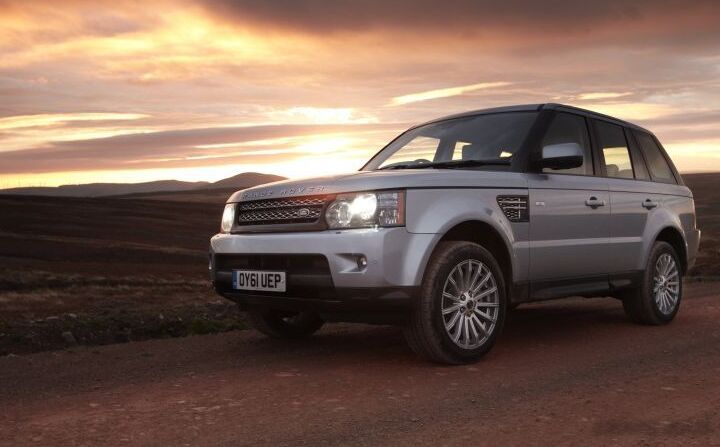
The Land Rover Range Rover Sport I, specifically the facelifted version introduced in 2009, represented a significant step in broadening the Range Rover brand’s appeal. The 3.0 LR-TD V6 AWD Automatic variant, produced from 2012 to 2013, occupied a crucial mid-range position within the lineup, offering a balance of performance, fuel efficiency, and luxury. This model aimed to attract buyers seeking the Range Rover Sport’s capabilities and prestige without the higher price tag and running costs associated with the supercharged V8 options. It was positioned as a more sensible, everyday option compared to its more potent siblings, while still delivering a premium driving experience.
Technical Specifications
| Brand | Land Rover |
| Model | Range Rover Sport |
| Generation | Range Rover Sport I (facelift 2009) |
| Type (Engine) | 3.0 LR-TD V6 (256 Hp) AWD Automatic |
| Start of production | 2012 |
| End of production | 2013 |
| Powertrain Architecture | Internal Combustion engine |
| Body type | SUV |
| Seats | 5 |
| Doors | 5 |
| Fuel consumption (urban) | 9.8 l/100 km (24 US mpg, 28.8 UK mpg, 10.2 km/l) |
| Fuel consumption (extra urban) | 8.1 l/100 km (29 US mpg, 34.9 UK mpg, 12.3 km/l) |
| Fuel consumption (combined) | 8.8 l/100 km (26.7 US mpg, 32.1 UK mpg, 11.4 km/l) |
| CO2 emissions | 230 g/km |
| Fuel Type | Diesel |
| Acceleration 0 – 100 km/h | 8.9 sec |
| Acceleration 0 – 62 mph | 8.9 sec |
| Acceleration 0 – 60 mph | 8.5 sec |
| Maximum speed | 200 km/h (124.27 mph) |
| Emission standard | Euro 5 |
| Weight-to-power ratio | 9.9 kg/Hp, 101 Hp/tonne |
| Weight-to-torque ratio | 4.2 kg/Nm, 236.7 Nm/tonne |
| Power | 256 Hp @ 4000 rpm |
| Power per litre | 85.5 Hp/l |
| Torque | 600 Nm @ 2000 rpm (442.54 lb.-ft. @ 2000 rpm) |
| Engine layout | Front, Longitudinal |
| Engine Model/Code | 306DT |
| Engine displacement | 2993 cm3 (182.64 cu. in.) |
| Number of cylinders | 6 |
| Engine configuration | V-engine |
| Cylinder Bore | 84 mm (3.31 in.) |
| Piston Stroke | 90 mm (3.54 in.) |
| Compression ratio | 16.1:1 |
| Number of valves per cylinder | 4 |
| Fuel injection system | Diesel Commonrail |
| Engine aspiration | BiTurbo, Intercooler |
| Valvetrain | OHC |
| Engine oil capacity | 5.9 l (6.23 US qt | 5.19 UK qt) |
| Coolant | 11.5 l (12.15 US qt | 10.12 UK qt) |
| Kerb Weight | 2535-2670 kg (5588.72 – 5886.34 lbs.) |
| Fuel tank capacity | 84.1 l (22.22 US gal | 18.5 UK gal) |
| Length | 4783 mm (188.31 in.) |
| Width including mirrors | 2158 mm (84.96 in.) |
| Height | 1784 mm (70.24 in.) |
| Wheelbase | 2745 mm (108.07 in.) |
| Drag coefficient (Cd) | 0.37 |
| Minimum turning circle | 11.9 m (39.04 ft.) |
| Drive wheel | All wheel drive (4×4) |
| Number of gears | 8 |
| Gearbox type | automatic transmission |
| Front suspension | Double wishbone |
| Rear suspension | Double wishbone |
| Front brakes | Ventilated discs |
| Rear brakes | Ventilated discs |
| Assisting systems | ABS (Anti-lock braking system) |
| Steering type | Steering rack and pinion |
| Power steering | Electric Steering |
Powertrain & Engine Architecture
The heart of this Range Rover Sport variant is the 3.0-liter LR-TD V6 diesel engine, designated as the 306DT. This engine is a member of the Ford/PSA joint venture’s ‘Lion’ engine family, known for its robust construction and relatively sophisticated technology. The engine utilizes a common rail direct injection system, delivering fuel at extremely high pressures for optimized combustion. Crucially, it features a sequential twin-turbocharger setup. A smaller turbocharger provides quick response at low engine speeds, minimizing turbo lag, while a larger turbocharger kicks in at higher RPMs to deliver sustained power. An intercooler further enhances performance by cooling the compressed intake air. The engine employs an overhead camshaft (OHC) valvetrain with four valves per cylinder. Paired with the engine is an eight-speed automatic transmission, a ZF 8HP series gearbox, renowned for its smooth shifting and efficiency. This transmission offers a wide range of gear ratios, contributing to both fuel economy and performance.
Driving Characteristics
The 256 horsepower and 442 lb-ft of torque produced by the 3.0 LR-TD V6, combined with the eight-speed automatic, provide a capable and refined driving experience. Acceleration from 0-60 mph takes around 8.5 seconds, which is respectable for a vehicle of this size and weight. While not as exhilarating as the supercharged V8 models, the diesel offers ample power for everyday driving and towing. The automatic transmission is well-tuned, providing smooth and almost imperceptible gear changes. The gear ratios are optimized for both on-road cruising and off-road capability. Compared to the manual transmission options available on other Range Rover Sport models, the automatic prioritizes convenience and ease of use, making it ideal for urban driving and long journeys. The diesel engine’s torque curve is relatively flat, providing strong pulling power across a wide RPM range. This makes overtaking and climbing hills effortless.
Equipment & Trim Levels
The 3.0 LR-TD V6 Automatic typically came equipped with a generous level of standard features. Interior appointments generally included leather upholstery, power-adjustable front seats, dual-zone climate control, and a premium audio system. Standard safety features included ABS, traction control, stability control, and multiple airbags. Optional extras commonly included a panoramic sunroof, upgraded navigation system, rear-seat entertainment, and various cosmetic enhancements. Trim levels varied slightly depending on the market, but generally, this engine configuration was offered in HSE trim, representing a step up from the base model but below the top-of-the-line Autobiography trim.
Chassis & Braking
The Range Rover Sport I utilizes a robust chassis designed for both on-road comfort and off-road capability. The suspension system consists of double wishbones at both the front and rear, providing a comfortable ride and good handling characteristics. The vehicle features full-time all-wheel drive, enhancing traction in all conditions. Braking duties are handled by ventilated discs on all four wheels, providing ample stopping power. An anti-lock braking system (ABS) is standard, along with electronic brake-force distribution and brake assist. Stabilizer bars are fitted front and rear to reduce body roll during cornering.
Market Reception & Comparison
The 3.0 LR-TD V6 Automatic variant was generally well-received by automotive critics. It was praised for its blend of performance, fuel efficiency, and refinement. Fuel economy figures of around 26.7 US mpg combined were considered competitive for a vehicle of this size and class. Compared to the 5.0-liter supercharged V8 models, the diesel offered significantly better fuel economy, albeit with slightly reduced performance. The diesel also proved to be more reliable than the early iterations of the supercharged engines. Compared to the 2.7-liter diesel, the 3.0 LR-TD V6 offered a substantial power and torque increase, resulting in a more enjoyable driving experience.
Legacy
The 3.0 LR-TD V6 engine proved to be a reliable and durable powertrain. While, like any vehicle, these Range Rover Sports require regular maintenance, the engine itself is generally considered robust. In the used car market, this variant represents a good value proposition, offering a taste of Range Rover luxury and capability at a more affordable price point. However, potential buyers should be aware of the potential for expensive repairs associated with any complex luxury SUV, and a thorough pre-purchase inspection is highly recommended. The 306DT engine continues to be a popular choice for those seeking a capable and efficient diesel engine in a luxury SUV.