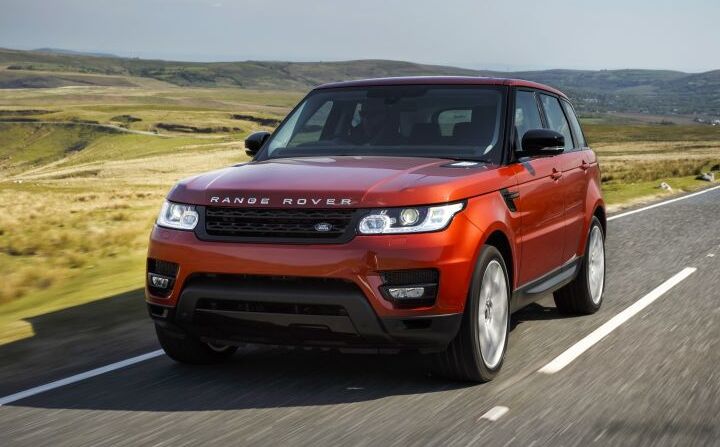
The Land Rover Range Rover Sport II 4.4 V8, produced from 2014 to 2015, represented a significant iteration of Land Rover’s performance-oriented SUV. Positioned as a premium offering within the second-generation Range Rover Sport (L494) lineup, this variant combined a powerful diesel V8 engine with a sophisticated all-wheel-drive system and an eight-speed automatic transmission. It aimed to deliver a blend of luxury, on-road performance, and off-road capability, appealing to buyers seeking a high-end SUV experience. The Range Rover Sport II series, built on the aluminum-intensive chassis, represented a substantial weight reduction compared to its predecessor, enhancing both performance and fuel efficiency.
Technical Specifications
| Brand | Land Rover |
| Model | Range Rover Sport |
| Generation | Range Rover Sport II |
| Type (Engine) | 4.4 V8 (339 Hp) AWD Automatic |
| Start of production | 2014 |
| End of production | 2015 |
| Powertrain Architecture | Internal Combustion engine |
| Body type | SUV |
| Seats | 5 |
| Doors | 5 |
| Fuel consumption (combined) | 8.6 l/100 km (27.4 US mpg, 32.8 UK mpg, 11.6 km/l) |
| CO2 emissions | 229 g/km |
| Fuel Type | Diesel |
| Acceleration 0 – 100 km/h | 6.9 sec |
| Acceleration 0 – 62 mph | 6.9 sec |
| Acceleration 0 – 60 mph | 6.6 sec |
| Maximum speed | 225 km/h (139.81 mph) |
| Emission standard | Euro 5 |
| Weight-to-power ratio | 7.1 kg/Hp, 141.4 Hp/tonne |
| Weight-to-torque ratio | 3.4 kg/Nm, 291.9 Nm/tonne |
| Power | 339 Hp |
| Power per litre | 77.6 Hp/l |
| Torque | 700 Nm @ 1750-3500 rpm (516.29 lb.-ft. @ 1750-3500 rpm) |
| Engine layout | Front, Longitudinal |
| Engine Model/Code | 448DT |
| Engine displacement | 4367 cm3 (266.49 cu. in.) |
| Number of cylinders | 8 |
| Engine configuration | V-engine |
| Cylinder Bore | 84 mm (3.31 in.) |
| Piston Stroke | 98.5 mm (3.88 in.) |
| Compression ratio | 16.1:1 |
| Number of valves per cylinder | 4 |
| Fuel injection system | Diesel Commonrail |
| Engine aspiration | BiTurbo, Intercooler |
| Engine oil capacity | 9.4 l (9.93 US qt | 8.27 UK qt) |
| Coolant | 7.13 l (7.53 US qt | 6.27 UK qt) |
| Kerb Weight | 2398 kg (5286.69 lbs.) |
| Fuel tank capacity | 105 l (27.74 US gal | 23.1 UK gal) |
| Length | 4850 mm (190.94 in.) |
| Width | 1983 mm (78.07 in.) |
| Width with mirrors folded | 2073 mm (81.61 in.) |
| Height | 1780 mm (70.08 in.) |
| Wheelbase | 2923 mm (115.08 in.) |
| Drag coefficient (Cd) | 0.36 |
| Minimum turning circle | 12.6 m (41.34 ft.) |
| Approach angle | 33.0° |
| Departure angle | 31.0° |
| Drive wheel | All wheel drive (4×4) |
| Number of gears | 8 |
| Gearbox type | automatic transmission |
| Front suspension | Air suspension |
| Rear suspension | Air suspension |
| Front brakes | Ventilated discs |
| Rear brakes | Ventilated discs |
| Assisting systems | ABS (Anti-lock braking system) |
| Steering type | Steering rack and pinion |
| Power steering | Electric Steering |
Powertrain & Engine Architecture
At the heart of the Range Rover Sport II 4.4 V8 was the 448DT engine, a 4.4-liter turbocharged diesel V8. This engine, developed in collaboration with PSA Peugeot Citroën, utilized a common-rail direct injection system and a sequential twin-turbocharger setup. The twin-turbo configuration was designed to minimize turbo lag and provide a broad torque curve. The engine featured a cast iron block with aluminum cylinder heads, and four valves per cylinder. The 16.1:1 compression ratio was typical for a diesel engine, optimizing combustion efficiency. The eight-speed automatic transmission, sourced from ZF, was a crucial component of the powertrain. Its wide gear ratio spread allowed for both strong acceleration and efficient cruising. The transmission featured a torque converter lock-up clutch to improve fuel economy at highway speeds.
Driving Characteristics
The 339 horsepower and 516 lb-ft of torque delivered by the 4.4 V8 diesel engine provided robust performance. Acceleration from 0-60 mph was achieved in approximately 6.6 seconds, making it one of the quicker diesel SUVs of its time. The eight-speed automatic transmission contributed to smooth and relatively quick gear changes. While not as overtly sporty as some of its gasoline-powered siblings, the 4.4 V8 offered ample power for overtaking and towing. The automatic transmission, while refined, didn’t offer the same level of driver engagement as a manual gearbox. The all-wheel-drive system provided excellent traction in various conditions, enhancing both on-road stability and off-road capability. The air suspension system provided a comfortable ride quality, absorbing bumps and irregularities in the road surface effectively.
Equipment & Trim Levels
The Range Rover Sport II 4.4 V8 typically came well-equipped as standard. Interior features included leather upholstery, heated front seats, a premium audio system, and a touchscreen infotainment system. Standard safety features included multiple airbags, ABS, traction control, and stability control. Optional extras included adaptive cruise control, a panoramic sunroof, upgraded leather trim, and rear-seat entertainment systems. Trim levels varied depending on the market, but generally offered increasing levels of luxury and technology. The 4.4 V8 was often positioned as a mid-to-high-range trim, offering a balance of performance and luxury features.
Chassis & Braking
The Range Rover Sport II utilized an aluminum monocoque chassis, contributing to its relatively low weight for a vehicle of its size. The front and rear suspension systems employed air suspension with electronic dampers, providing adjustable ride height and damping characteristics. This allowed drivers to tailor the suspension to suit different driving conditions. The braking system consisted of ventilated discs on all four wheels, providing ample stopping power. ABS (Anti-lock Braking System) and electronic brake-force distribution were standard features, enhancing safety and stability during braking maneuvers.
Market Reception & Comparison
The Range Rover Sport II 4.4 V8 received generally positive reviews from automotive critics. It was praised for its powerful engine, comfortable ride, and luxurious interior. However, some critics noted that the diesel engine, while potent, lacked the refinement and sound of a gasoline V8. Compared to the gasoline-powered Range Rover Sport variants, the 4.4 V8 offered superior fuel economy and torque. Compared to the lower-powered diesel variants (such as the 3.0-liter SDV6), the 4.4 V8 provided significantly more performance. Reliability was generally good, although diesel particulate filter issues could occur with infrequent long-distance driving.
Legacy
The 448DT engine proved to be a robust and reliable powerplant, and examples of the Range Rover Sport II 4.4 V8 continue to be sought after in the used car market. The combination of performance, luxury, and capability has ensured its enduring appeal. While modern SUVs offer even greater levels of technology and efficiency, the Range Rover Sport II 4.4 V8 remains a desirable vehicle for those seeking a capable and refined luxury SUV with a strong diesel engine. Maintenance costs can be higher than some competitors due to the complexity of the vehicle and the cost of parts, but the overall ownership experience is generally positive for well-maintained examples.