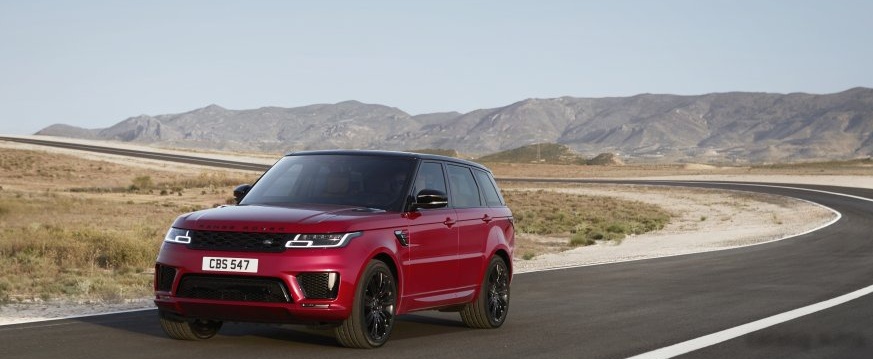
The Land Rover Range Rover Sport II 2.0 P300 AWD Automatic, produced from September 2019 to May 2022, represents an interesting entry point into the Range Rover Sport lineup. Positioned as a more accessible option within the second-generation (facelifted 2017) Range Rover Sport (L494) series, it offered a blend of luxury, capability, and a relatively efficient powertrain. This variant utilized Land Rover’s Ingenium engine family, marking a shift towards smaller displacement, turbocharged engines in a vehicle traditionally known for larger, naturally aspirated powerplants. It was designed to appeal to buyers seeking the Range Rover Sport aesthetic and features without the higher price tag and running costs associated with the more powerful six and eight-cylinder models.
Technical Specifications
| Brand | Land Rover |
| Model | Range Rover Sport |
| Generation | Range Rover Sport II (facelift 2017) |
| Type (Engine) | 2.0 P300 (301 Hp) AWD Automatic |
| Start of production | September, 2019 |
| End of production | May, 2022 |
| Powertrain Architecture | Internal Combustion engine |
| Body type | SUV |
| Seats | 5 |
| Doors | 5 |
| Fuel consumption at Low speed (WLTP) | 15.3-15.9 l/100 km (15.4 – 14.8 US mpg, 18.5 – 17.8 UK mpg, 6.5 – 6.3 km/l) |
| Fuel consumption at Medium speed (WLTP) | 10.4-11.5 l/100 km (22.6 – 20.5 US mpg, 27.2 – 24.6 UK mpg, 9.6 – 8.7 km/l) |
| Fuel consumption at high speed (WLTP) | 9.1-10.0 l/100 km (25.8 – 23.5 US mpg, 31 – 28.2 UK mpg, 11 – 10 km/l) |
| Fuel consumption at very high speed (WLTP) | 10.9-12.0 l/100 km (21.6 – 19.6 US mpg, 25.9 – 23.5 UK mpg, 9.2 – 8.3 km/l) |
| Combined fuel consumption (WLTP) | 10.8-11.8 l/100 km (21.8 – 19.9 US mpg, 26.2 – 23.9 UK mpg, 9.3 – 8.5 km/l) |
| CO2 emissions (WLTP) | 245-266 g/km |
| Fuel consumption (economy) – urban (NEDC, WLTP equivalent) | 11.9-12.0 l/100 km (19.8 – 19.6 US mpg, 23.7 – 23.5 UK mpg, 8.4 – 8.3 km/l) |
| Fuel consumption (economy) – extra urban (NEDC, WLTP equivalent) | 8.1-8.2 l/100 km (29 – 28.7 US mpg, 34.9 – 34.4 UK mpg, 12.3 – 12.2 km/l) |
| Fuel consumption (economy) – combined (NEDC, WLTP equivalent) | 9.5-9.6 l/100 km (24.8 – 24.5 US mpg, 29.7 – 29.4 UK mpg, 10.5 – 10.4 km/l) |
| CO2 emissions (NEDC, WLTP equivalent) | 217-219 g/km |
| Fuel Type | Petrol (Gasoline) |
| Acceleration 0 – 100 km/h | 7.3 sec |
| Acceleration 0 – 62 mph | 7.3 sec |
| Acceleration 0 – 60 mph | 7.0 sec |
| Maximum speed | 201 km/h (124.9 mph) |
| Emission standard | Euro 6d-TEMP-EVAP-ISC |
| Weight-to-power ratio | 6.9 kg/Hp, 145 Hp/tonne |
| Weight-to-torque ratio | 5.2 kg/Nm, 192.7 Nm/tonne |
| Power | 301 Hp @ 5500 rpm |
| Power per litre | 150.7 Hp/l |
| Torque | 400 Nm @ 1500-4000 rpm (295.02 lb.-ft. @ 1500-4000 rpm) |
| Engine layout | Front, Longitudinal |
| Engine Model/Code | Ingenium / PT204 |
| Engine displacement | 1997 cm3 (121.86 cu. in.) |
| Number of cylinders | 4 |
| Engine configuration | Inline |
| Cylinder Bore | 83 mm (3.27 in.) |
| Piston Stroke | 92 mm (3.62 in.) |
| Compression ratio | 9.5:1 |
| Number of valves per cylinder | 4 |
| Fuel injection system | Direct injection |
| Engine aspiration | Turbocharger, Intercooler |
| Engine oil capacity | 7 l (7.4 US qt | 6.16 UK qt) |
| Coolant | 11.2 l (11.83 US qt | 9.85 UK qt) |
| Kerb Weight | 2076 kg (4576.8 lbs.) |
| Max. weight | 2900 kg (6393.41 lbs.) |
| Max load | 824 kg (1816.61 lbs.) |
| Trunk (boot) space – minimum | 780 l (27.55 cu. ft.) |
| Trunk (boot) space – maximum | 1686 l (59.54 cu. ft.) |
| Fuel tank capacity | 104 l (27.47 US gal | 22.88 UK gal) |
| Max. roof load | 100 kg (220.46 lbs.) |
| Permitted trailer load with brakes (12%) | 3000 kg (6613.87 lbs.) |
| Permitted trailer load without brakes | 750 kg (1653.47 lbs.) |
| Permitted towbar download | 120 kg (264.55 lbs.) |
| Length | 4879 mm (192.09 in.) |
| Width with mirrors folded | 2073 mm (81.61 in.) |
| Width including mirrors | 2220 mm (87.4 in.) |
| Height | 1803 mm (70.98 in.) |
| Wheelbase | 2923 mm (115.08 in.) |
| Front track | 1692 mm (66.61 in.) |
| Rear (Back) track | 1686 mm (66.38 in.) |
| Ride height (ground clearance) | 213-278 mm (8.39 – 10.94 in.) |
| Minimum turning circle (turning diameter) | 12.5 m (41.01 ft.) |
| Approach angle | 26.0-33.0° |
| Departure angle | 26.2-30.0° |
| Ramp-over (brakeover) angle | 21.2-25.7° |
| Wading depth | 850 mm (33.46 in.) |
| Drivetrain Architecture | The Internal combustion engine (ICE) drives permanently the four wheels of the vehicle. |
| Drive wheel | All wheel drive (4×4) |
| Number of gears and type of gearbox | 8 gears, automatic transmission |
| Front brakes | Ventilated discs, 349 mm |
| Rear brakes | Ventilated discs, 325 mm |
Powertrain & Engine Architecture
The heart of the 2.0 P300 is Land Rover’s Ingenium engine family, specifically the PT204 code. This is a 1997cc inline-four cylinder engine featuring direct injection and a single twin-scroll turbocharger. The engine produces 301 horsepower at 5500 rpm and 400 Nm (295 lb-ft) of torque between 1500 and 4000 rpm. The Ingenium engines were designed for modularity and efficiency, utilizing a low-friction design and advanced combustion strategies. The engine is longitudinally mounted in the front of the vehicle. The transmission is an eight-speed automatic gearbox, sourced from ZF. This transmission is known for its smooth shifts and wide gear ratio spread, contributing to both performance and fuel economy. The automatic transmission was calibrated to provide a balance between responsiveness and comfort, suiting the Range Rover Sport’s luxury character.
Driving Characteristics
The 2.0 P300 offers a different driving experience compared to the higher-powered Range Rover Sport variants. While it doesn’t deliver the same exhilarating acceleration as the supercharged V6 or V8 models, it provides adequate performance for everyday driving and even some spirited driving. The 0-60 mph sprint takes around 7.0 seconds. The eight-speed automatic transmission helps to keep the engine in its optimal power band, and the all-wheel-drive system provides excellent traction in various conditions. However, the engine can feel strained when fully loaded or during aggressive acceleration, and the sound is less characterful than the larger engines. The gear ratios are tuned for a balance of acceleration and fuel efficiency, with taller gearing in higher gears for relaxed cruising.
Equipment & Trim Levels
The 2.0 P300 typically came equipped with a generous level of standard features, including leather upholstery, a touchscreen infotainment system with navigation, climate control, and a suite of driver-assistance systems such as emergency braking and lane departure warning. Optional extras included a panoramic sunroof, upgraded sound systems, adaptive cruise control, and various cosmetic enhancements. Trim levels varied by market, but generally offered increasing levels of luxury and technology. The base trim focused on providing essential features, while higher trims added more premium materials and advanced equipment.
Chassis & Braking
The Range Rover Sport II utilizes an aluminum-intensive chassis, contributing to its relatively low weight for a vehicle of its size. The suspension system consists of double-wishbone front suspension and multi-link rear suspension, providing a comfortable ride and good handling characteristics. The 2.0 P300 typically featured ventilated disc brakes on all four wheels, with diameters of 349mm at the front and 325mm at the rear. Anti-lock braking system (ABS) and electronic stability control (ESC) were standard features, enhancing safety and control.
Market Reception & Comparison
The 2.0 P300 was generally well-received as an entry-level option in the Range Rover Sport lineup. Critics praised its fuel efficiency and relatively affordable price point, but some noted that it lacked the performance and refinement of the higher-powered models. Compared to the 3.0-liter V6, the 2.0 P300 offered better fuel economy but significantly less power and acceleration. The V6 was often considered the sweet spot in the range, offering a good balance of performance and efficiency. The 2.0 P300 appealed to buyers who prioritized fuel economy and a lower purchase price over outright performance.
Legacy
The Ingenium engine family has proven to be relatively reliable, although some owners have reported issues with the timing chain and oil leaks. The eight-speed ZF automatic transmission is also known for its durability. On the used car market, the 2.0 P300 represents a more affordable way to enter Range Rover Sport ownership. However, potential buyers should be aware of the potential maintenance costs associated with a luxury SUV and carefully inspect the vehicle’s service history. The 2.0 P300 demonstrated Land Rover’s commitment to improving fuel efficiency and reducing emissions, paving the way for further adoption of smaller displacement engines in its lineup.