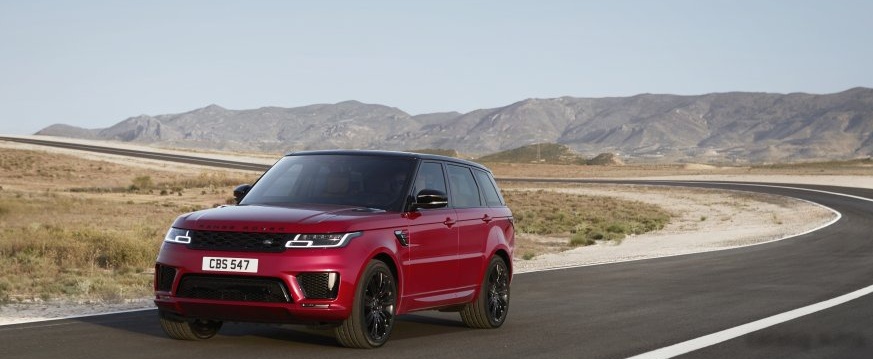
The Land Rover Range Rover Sport II, specifically the 2.0 SD4 AWD Automatic variant produced from 2017 to May 2018, represented a significant shift in the model line’s strategy. Introduced as part of the facelift for the second-generation Range Rover Sport (L494), this version aimed to broaden the vehicle’s appeal by offering a more fuel-efficient and accessible entry point into the luxury SUV segment. Positioned as a mid-range offering, it slotted below the higher-powered six and eight-cylinder options, targeting buyers prioritizing economy without sacrificing the Range Rover Sport’s core capabilities. This model was primarily sold in European and global markets, with limited availability in the United States due to emissions regulations and consumer preferences.
Technical Specifications
| Brand | Land Rover |
| Model | Range Rover Sport |
| Generation | Range Rover Sport II (facelift 2017) |
| Type (Engine) | 2.0 SD4 (240 Hp) AWD Automatic |
| Start of production | 2017 |
| End of production | May, 2018 |
| Powertrain Architecture | Internal Combustion engine |
| Body type | SUV |
| Seats | 5 |
| Doors | 5 |
| Fuel consumption (urban) | 7.5-7.9 l/100 km (31.4 – 29.8 US mpg) |
| Fuel consumption (extra urban) | 5.5-5.7 l/100 km (42.8 – 41.3 US mpg) |
| Fuel consumption (combined) | 6.2-6.5 l/100 km (37.9 – 36.2 US mpg) |
| CO2 emissions | 164-172 g/km |
| Fuel Type | Diesel |
| Acceleration 0 – 100 km/h | 8.3 sec |
| Acceleration 0 – 62 mph | 8.3 sec |
| Acceleration 0 – 60 mph | 7.9 sec |
| Maximum speed | 206 km/h (128 mph) |
| Emission standard | Euro 6 |
| Weight-to-power ratio | 8.8 kg/Hp |
| Weight-to-torque ratio | 5.3 kg/Nm |
| Power | 240 Hp @ 4000 rpm |
| Torque | 400 Nm @ 1500-4000 rpm (295.02 lb.-ft. @ 1500-4000 rpm) |
| Engine layout | Front, Longitudinal |
| Engine displacement | 1997 cm3 (121.86 cu. in.) |
| Number of cylinders | 4 |
| Engine configuration | Inline |
| Cylinder Bore | 83 mm (3.27 in.) |
| Piston Stroke | 92.4 mm (3.64 in.) |
| Compression ratio | 15.5:1 |
| Number of valves per cylinder | 4 |
| Fuel injection system | Diesel Commonrail |
| Engine aspiration | Turbocharger, Intercooler |
| Engine oil capacity | 6.5 l (6.87 US qt | 5.72 UK qt) |
| Coolant | 11 l (11.62 US qt | 9.68 UK qt) |
| Kerb Weight | 2111 kg (4653.96 lbs.) |
| Max. weight | 2950 kg (6503.64 lbs.) |
| Max load | 839 kg (1849.68 lbs.) |
| Trunk (boot) space – minimum | 780 l (27.55 cu. ft.) |
| Trunk (boot) space – maximum | 1686 l (59.54 cu. ft.) |
| Fuel tank capacity | 74 l (19.55 US gal | 16.28 UK gal) |
| Max. roof load | 100 kg (220.46 lbs.) |
| Permitted trailer load with brakes (12%) | 3500 kg (7716.18 lbs.) |
| Permitted trailer load without brakes | 750 kg (1653.47 lbs.) |
| Permitted towbar download | 150 kg (330.69 lbs.) |
| Length | 4879 mm (192.09 in.) |
| Width with mirrors folded | 2073 mm (81.61 in.) |
| Width including mirrors | 2220 mm (87.4 in.) |
| Height | 1803 mm (70.98 in.) |
| Wheelbase | 2923 mm (115.08 in.) |
| Front track | 1693 mm (66.65 in.) |
| Rear (Back) track | 1686 mm (66.38 in.) |
| Ride height (ground clearance) | 213-278 mm (8.39 – 10.94 in.) |
| Drag coefficient (Cd) | 0.34 |
| Minimum turning circle (turning diameter) | 12.5 m (41.01 ft.) |
| Approach angle | 24.3-33.0° |
| Departure angle | 24.9-31.0° |
| Ramp-over (brakeover) angle | 19.4-27.2° |
| Wading depth | 800-850 mm (31.5 – 33.46 in.) |
| Drivetrain Architecture | The Internal combustion engine (ICE) drives permanently the four wheels of the vehicle. |
| Drive wheel | All wheel drive (4×4) |
| Number of gears and type of gearbox | 8 gears, automatic transmission |
| Front suspension | Air suspension |
| Rear suspension | Air suspension |
| Front brakes | Ventilated discs |
| Rear brakes | Ventilated discs |
| Assisting systems | ABS (Anti-lock braking system) |
| Steering type | Steering rack and pinion |
| Power steering | Electric Steering |
Powertrain & Engine Architecture
The 2.0 SD4 variant utilizes the Ingenium engine family developed in-house by Jaguar Land Rover. Specifically, it employs a 2.0-liter four-cylinder diesel engine, designated as the 204D. This engine features a cast aluminum block with a closed-deck design for enhanced strength, and a twin-cam four-valve-per-cylinder cylinder head. The engine utilizes a sophisticated common-rail direct injection system, operating at pressures up to 2,200 bar, for optimized fuel atomization and combustion efficiency. A single variable geometry turbocharger (VGT) with an intercooler provides forced induction, delivering 240 horsepower at 4,000 rpm and 400 Nm (295 lb-ft) of torque between 1,500 and 4,000 rpm. The engine is longitudinally mounted, contributing to the vehicle’s balanced weight distribution. The powertrain is paired with an eight-speed automatic transmission (ZF 8HP45), known for its smooth shifting and efficiency. This transmission offers both manual and sport modes, allowing the driver to tailor the driving experience.
Driving Characteristics
The 2.0 SD4 Automatic offers a comfortable and refined driving experience, prioritizing smoothness and fuel economy over outright performance. Acceleration from 0-60 mph takes approximately 7.9 seconds, which is respectable for a vehicle of this size and weight, but noticeably slower than the six and eight-cylinder Range Rover Sport models. The eight-speed automatic transmission is well-matched to the engine’s torque curve, providing adequate power for everyday driving and highway cruising. Gear changes are generally seamless, although occasional hesitation can be observed during quick downshifts. The air suspension system contributes to a comfortable ride, effectively absorbing bumps and imperfections in the road surface. While capable off-road, the 2.0 SD4 is primarily geared towards on-road comfort and efficiency.
Equipment & Trim Levels
The 2.0 SD4 typically came equipped with a generous level of standard features, including leather upholstery, dual-zone climate control, a touchscreen infotainment system with navigation, and a suite of safety features such as autonomous emergency braking and lane departure warning. Optional extras included a panoramic sunroof, upgraded sound system, adaptive cruise control, and various cosmetic enhancements. Trim levels varied by market, but generally offered options for upgraded interior finishes and exterior styling cues.
Chassis & Braking
The Range Rover Sport II utilizes a robust chassis construction, incorporating high-strength steel and aluminum components. The suspension system features air suspension on both the front and rear axles, providing adjustable ride height and damping characteristics. Braking duties are handled by ventilated discs on all four wheels, coupled with an anti-lock braking system (ABS) and electronic brake-force distribution (EBD). The vehicle’s all-wheel-drive system provides excellent traction in various conditions, enhancing stability and control.
Market Reception & Comparison
The 2.0 SD4 variant received mixed reviews. Critics praised its fuel efficiency and comfortable ride, but some found the engine lacking in outright power compared to the larger-displacement options. Compared to the 3.0 SDV6, the 2.0 SD4 offered significantly better fuel economy but sacrificed performance. Maintenance costs were generally lower for the 2.0 SD4 due to its simpler engine design, but the Ingenium engine family did experience some early reliability issues related to oil leaks and timing chain tensioners.
Legacy
The 2.0 SD4 Range Rover Sport II represents a pivotal moment in the model’s history, demonstrating Land Rover’s commitment to improving fuel efficiency and expanding its customer base. While not as sought-after as the higher-performance variants, the 2.0 SD4 remains a viable option in the used car market, offering a blend of luxury, capability, and affordability. The Ingenium engine family has since been refined and improved, addressing many of the early reliability concerns. Today, well-maintained examples of the 2.0 SD4 can provide years of reliable service, making them an attractive choice for buyers seeking a premium SUV experience without the high running costs of larger engines.