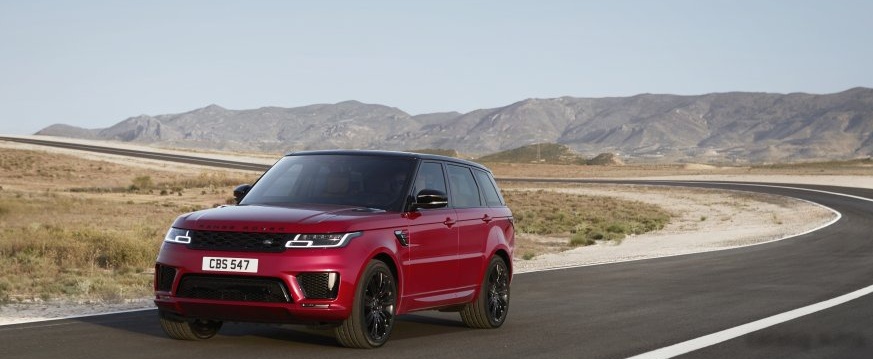
The Land Rover Range Rover Sport II 2.0 Si4, produced from 2017 to February 2021, represented a significant shift in the Range Rover Sport lineup. This variant, equipped with a 2.0-liter turbocharged inline-four engine producing 300 horsepower and paired with an eight-speed automatic transmission, was introduced as a more fuel-efficient and accessible entry point into the Range Rover Sport range, particularly in markets with high vehicle taxation based on engine displacement. It falls within the L494 generation of the Range Rover Sport, benefitting from the 2017 facelift which brought updated styling and technology. The 2.0 Si4 aimed to broaden the appeal of the Sport, attracting buyers who prioritized efficiency and refinement over outright performance, while still retaining the core Range Rover luxury and capability.
Technical Specifications
| Brand | Land Rover |
| Model | Range Rover Sport |
| Generation | Range Rover Sport II (facelift 2017) |
| Type (Engine) | 2.0 Si4 (300 Hp) AWD Automatic |
| Start of production | 2017 |
| End of production | February, 2021 |
| Powertrain Architecture | Internal Combustion engine |
| Body type | SUV |
| Seats | 5 |
| Doors | 5 |
| Fuel consumption (urban) | 11.2-11.4 l/100 km (21 – 20.6 US mpg) |
| Fuel consumption (extra urban) | 8.1-8.2 l/100 km (29 – 28.7 US mpg) |
| Fuel consumption (combined) | 9.2-9.4 l/100 km (25.6 – 25 US mpg) |
| CO2 emissions | 211-214 g/km |
| Fuel Type | Petrol (Gasoline) |
| Acceleration 0 – 100 km/h | 7.3 sec |
| Acceleration 0 – 62 mph | 7.3 sec |
| Acceleration 0 – 60 mph | 6.9 sec |
| Maximum speed | 201 km/h (124.9 mph) |
| Emission standard | Euro 6 |
| Weight-to-power ratio | 6.9 kg/Hp, 144 Hp/tonne |
| Weight-to-torque ratio | 5.2 kg/Nm, 192 Nm/tonne |
| Power | 300 Hp @ 5500 rpm |
| Power per litre | 150.2 Hp/l |
| Torque | 400 Nm @ 1500-4000 rpm (295.02 lb.-ft. @ 1500-4000 rpm) |
| Engine layout | Front, Longitudinal |
| Engine Model/Code | Ingenium / PT204 |
| Engine displacement | 1997 cm3 (121.86 cu. in.) |
| Number of cylinders | 4 |
| Engine configuration | Inline |
| Cylinder Bore | 83 mm (3.27 in.) |
| Piston Stroke | 92 mm (3.62 in.) |
| Compression ratio | 9.5:1 |
| Number of valves per cylinder | 4 |
| Fuel injection system | Direct injection |
| Engine aspiration | Turbocharger, Intercooler |
| Engine oil capacity | 7 l (7.4 US qt | 6.16 UK qt) |
| Coolant | 11.2 l (11.83 US qt | 9.85 UK qt) |
| Kerb Weight | 2083 kg (4592.23 lbs.) |
| Max. weight | 2900 kg (6393.41 lbs.) |
| Max load | 817 kg (1801.18 lbs.) |
| Trunk (boot) space – minimum | 780 l (27.55 cu. ft.) |
| Trunk (boot) space – maximum | 1686 l (59.54 cu. ft.) |
| Fuel tank capacity | 104 l (27.47 US gal | 22.88 UK gal) |
| Max. roof load | 100 kg (220.46 lbs.) |
| Permitted trailer load with brakes (12%) | 3000 kg (6613.87 lbs.) |
| Permitted trailer load without brakes | 750 kg (1653.47 lbs.) |
| Permitted towbar download | 120 kg (264.55 lbs.) |
| Length | 4879 mm (192.09 in.) |
| Width with mirrors folded | 2073 mm (81.61 in.) |
| Width including mirrors | 2220 mm (87.4 in.) |
| Height | 1803 mm (70.98 in.) |
| Wheelbase | 2923 mm (115.08 in.) |
| Front track | 1693 mm (66.65 in.) |
| Rear (Back) track | 1686 mm (66.38 in.) |
| Ride height (ground clearance) | 213-278 mm (8.39 – 10.94 in.) |
| Drag coefficient (Cd) | 0.35 |
| Minimum turning circle (turning diameter) | 12.5 m (41.01 ft.) |
| Approach angle | 24.3-33.0° |
| Departure angle | 24.9-31.0° |
| Ramp-over (brakeover) angle | 19.4-27.2° |
| Wading depth | 800-850 mm (31.5 – 33.46 in.) |
| Drivetrain Architecture | The Internal combustion engine (ICE) drives permanently the four wheels of the vehicle. |
| Drive wheel | All wheel drive (4×4) |
| Number of gears and type of gearbox | 8 gears, automatic transmission |
| Front suspension | Air suspension |
| Rear suspension | Air suspension |
| Front brakes | Ventilated discs |
| Rear brakes | Ventilated discs |
Powertrain & Engine Architecture
The heart of the 2.0 Si4 is Land Rover’s Ingenium engine family, specifically the PT204 code. This 1997cc inline-four cylinder engine utilizes direct injection and a single twin-scroll turbocharger with an intercooler. The Ingenium engines were designed for modularity and efficiency, featuring a lightweight aluminum block and cylinder head. The 9.5:1 compression ratio strikes a balance between performance and fuel economy. The engine produces peak torque of 400 Nm (295 lb-ft) between 1500 and 4000 rpm, providing a broad powerband. The eight-speed automatic transmission, sourced from ZF, is a crucial component, offering smooth shifts and contributing to the vehicle’s overall efficiency. This transmission is known for its responsiveness and ability to adapt to driving conditions.
Driving Characteristics
The 2.0 Si4 Range Rover Sport delivers a comfortable and refined driving experience. While not as overtly sporty as the higher-powered six-cylinder variants, it provides adequate performance for everyday driving and even some spirited acceleration. The 0-60 mph time of around 6.9 seconds is respectable for a vehicle of this size and weight. The eight-speed automatic transmission is well-tuned, providing smooth gear changes and keeping the engine in its optimal powerband. Compared to the supercharged V6 models, the 2.0 Si4 feels less urgent off the line, but the readily available torque mitigates this somewhat. The gear ratios are optimized for both fuel efficiency and responsiveness, allowing for relaxed cruising on the highway and sufficient power for overtaking maneuvers.
Equipment & Trim Levels
The 2.0 Si4 typically came equipped with a generous level of standard features, reflecting the Range Rover brand’s emphasis on luxury. Standard equipment included leather upholstery, a touchscreen infotainment system with navigation, climate control, parking sensors, and a suite of safety features. Optional extras included a panoramic sunroof, upgraded sound systems (Meridian), adaptive cruise control, and various interior trim options. Trim levels varied by market, but generally, the 2.0 Si4 served as the entry-level model, with higher trims offering more luxurious appointments and advanced technology.
Chassis & Braking
The Range Rover Sport II utilizes an aluminum-intensive chassis, contributing to its relatively low weight for a vehicle of its size. The suspension system features air suspension on both the front and rear axles, providing a comfortable ride and the ability to adjust ride height for off-road capability. Braking duties are handled by ventilated discs on all four wheels, providing ample stopping power. The electronic stability control system and various other driver assistance features enhance safety and control. The suspension setup is tuned to prioritize comfort and composure, rather than outright sportiness, but still offers a secure and planted feel on the road.
Market Reception & Comparison
The 2.0 Si4 Range Rover Sport was generally well-received by critics as a sensible and efficient option within the lineup. It was praised for its refinement, comfortable ride, and relatively low running costs compared to the more powerful engines. However, some reviewers noted that the engine lacked the character and performance of the V6 and V8 options. Compared to the 3.0-liter V6, the 2.0 Si4 offered better fuel economy (around 25 mpg combined versus 22 mpg for the V6) but slower acceleration. The 2.0 Si4 appealed to buyers who prioritized fuel efficiency and refinement over outright performance, making it a popular choice in markets with high fuel prices and vehicle taxation.
Legacy
The Ingenium engine family has proven to be relatively reliable, and the 2.0 Si4 powertrain has a good reputation for durability. However, as with any modern vehicle, regular maintenance is crucial to ensure long-term reliability. On the used car market, the 2.0 Si4 Range Rover Sport represents a more affordable entry point into Range Rover ownership. Its lower running costs and comfortable ride make it an attractive option for buyers seeking a luxurious and capable SUV without the expense of the higher-powered models. The 2.0 Si4 demonstrated Land Rover’s commitment to improving fuel efficiency and reducing emissions, paving the way for further development of the Ingenium engine family.