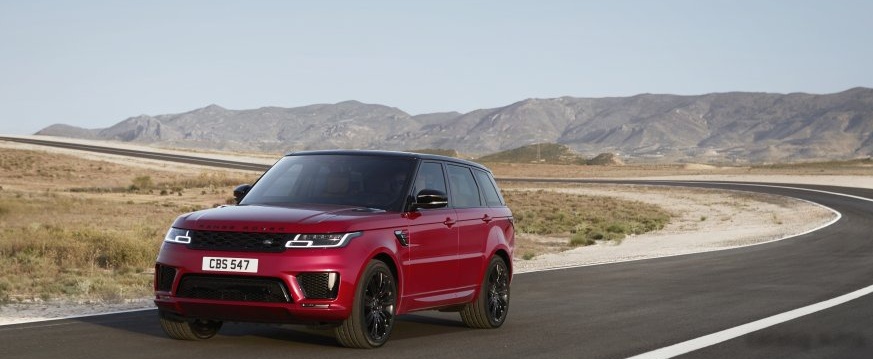
The Land Rover Range Rover Sport II (facelift 2017) 3.0 P400, produced from May 2019 to May 2022, represents a significant iteration of Land Rover’s performance-oriented SUV. This variant, equipped with a 3.0-liter inline-six engine producing 400 horsepower and incorporating mild hybrid technology, occupied a sweet spot in the Range Rover Sport lineup, offering a blend of performance, refinement, and efficiency. It falls within the L494 generation of the Range Rover Sport, benefitting from the mid-life facelift that brought styling updates and technological enhancements. The P400 trim aimed to appeal to buyers seeking a powerful and capable SUV without the outright expense of the supercharged V8 models.
Technical Specifications
| Brand | Land Rover |
| Model | Range Rover Sport |
| Generation | Range Rover Sport II (facelift 2017) |
| Type (Engine) | 3.0 P400 (400 Hp) Mild Hybrid AWD Automatic |
| Start of production | May, 2019 |
| End of production | May, 2022 |
| Powertrain Architecture | MHEV (Mild Hybrid Electric Vehicle) |
| Body type | SUV |
| Seats | 5 |
| Doors | 5 |
| Fuel consumption at Low speed (WLTP) | 15.2-16.1 l/100 km (15.5 – 14.6 US mpg, 18.6 – 17.5 UK mpg, 6.6 – 6.2 km/l) |
| Fuel consumption at Medium speed (WLTP) | 10.1-10.9 l/100 km (23.3 – 21.6 US mpg, 28 – 25.9 UK mpg, 9.9 – 9.2 km/l) |
| Fuel consumption at high speed (WLTP) | 8.5-9.5 l/100 km (27.7 – 24.8 US mpg, 33.2 – 29.7 UK mpg, 11.8 – 10.5 km/l) |
| Fuel consumption at very high speed (WLTP) | 10.2-11.5 l/100 km (23.1 – 20.5 US mpg, 27.7 – 24.6 UK mpg, 9.8 – 8.7 km/l) |
| Combined fuel consumption (WLTP) | 10.3-11.4 l/100 km (22.8 – 20.6 US mpg, 27.4 – 24.8 UK mpg, 9.7 – 8.8 km/l) |
| CO2 emissions (WLTP) | 234-258 g/km |
| Fuel consumption (urban – NEDC) | 11.7 l/100 km (20.1 US mpg, 24.1 UK mpg, 8.5 km/l) |
| Fuel consumption (extra urban – NEDC) | 7.7 l/100 km (30.5 US mpg, 36.7 UK mpg, 13 km/l) |
| Fuel consumption (combined – NEDC) | 9.2 l/100 km (25.6 US mpg, 30.7 UK mpg, 10.9 km/l) |
| CO2 emissions (NEDC) | 209 g/km |
| Fuel Type | Petrol (Gasoline) |
| Acceleration 0 – 100 km/h | 5.9 sec |
| Acceleration 0 – 62 mph | 5.9 sec |
| Acceleration 0 – 60 mph | 5.6 sec |
| Maximum speed | 225 km/h (139.81 mph) |
| Emission standard | Euro 6d-TEMP-EVAP-ISC |
| Weight-to-power ratio | 5.5 kg/Hp, 181 Hp/tonne |
| Weight-to-torque ratio | 4 kg/Nm, 248.9 Nm/tonne |
| Power | 400 Hp @ 5500-6500 rpm |
| Power per litre | 133.5 Hp/l |
| Torque | 550 Nm @ 2000-5000 rpm (405.66 lb.-ft. @ 2000-5000 rpm) |
| Engine layout | Front, Longitudinal |
| Engine Model/Code | Ingenium / PT306 |
| Engine displacement | 2996 cm3 (182.83 cu. in.) |
| Number of cylinders | 6 |
| Engine configuration | Inline |
| Cylinder Bore | 83.01 mm (3.27 in.) |
| Piston Stroke | 92 mm (3.62 in.) |
| Compression ratio | 10.5:1 |
| Number of valves per cylinder | 4 |
| Fuel injection system | Direct injection |
| Engine aspiration | Turbocharger, Intercooler |
| Engine oil capacity | 8.8 l (9.3 US qt | 7.74 UK qt) |
| Coolant capacity | 14.2 l (15 US qt | 12.49 UK qt) |
| Kerb Weight | 2210 kg (4872.22 lbs.) |
| Max. weight | 3050 kg (6724.1 lbs.) |
| Max load | 840 kg (1851.88 lbs.) |
| Trunk (boot) space – minimum | 780 l (27.55 cu. ft.) |
| Trunk (boot) space – maximum | 1686 l (59.54 cu. ft.) |
| Fuel tank capacity | 104 l (27.47 US gal | 22.88 UK gal) |
| Max. roof load | 100 kg (220.46 lbs.) |
| Permitted trailer load (braked) | 3500 kg (7716.18 lbs.) |
| Permitted trailer load (unbraked) | 750 kg (1653.47 lbs.) |
| Permitted towbar download | 150 kg (330.69 lbs.) |
| Length | 4879 mm (192.09 in.) |
| Width (with mirrors folded) | 2073 mm (81.61 in.) |
| Width (including mirrors) | 2220 mm (87.4 in.) |
| Height | 1803 mm (70.98 in.) |
| Wheelbase | 2923 mm (115.08 in.) |
| Front track | 1692 mm (66.61 in.) |
| Rear track | 1686 mm (66.38 in.) |
| Ride height (ground clearance) | 213-278 mm (8.39 – 10.94 in.) |
| Minimum turning circle | 12.5 m (41.01 ft.) |
| Approach angle | 26.0-33.0° |
| Departure angle | 26.2-30.0° |
| Ramp-over angle | 21.2-25.7° |
| Wading depth | 850 mm (33.46 in.) |
| Drivetrain | All wheel drive (4×4) with MHEV |
| Gearbox | 8 gears, automatic transmission |
| Front brakes | Ventilated discs, 380 mm |
| Rear brakes | Ventilated discs, 365 mm |
INTRODUCTION
The Range Rover Sport II, particularly the facelifted models from 2017 onwards, represented a refinement of the original’s formula. The 3.0 P400 variant, introduced in May 2019, was a key component of this update. Built on the aluminum-intensive PL494 platform (shared with the Jaguar F-Pace), the Sport aimed to deliver a more dynamic driving experience than its larger, more luxurious Range Rover sibling. The P400 trim level positioned itself as a performance-focused option, bridging the gap between the entry-level diesel models and the high-performance supercharged V8 variants. It was designed to appeal to buyers who desired strong acceleration and all-weather capability without sacrificing everyday usability.
Powertrain & Engine Architecture
At the heart of the 3.0 P400 lies Land Rover’s Ingenium engine family, specifically the PT306 inline-six cylinder engine. This engine utilizes a combination of direct injection and a twin-scroll turbocharger to produce 400 horsepower at 5500-6500 rpm and 550 Nm (405.66 lb.-ft.) of torque between 2000-5000 rpm. The ‘mild hybrid’ aspect comes from a 48-volt electrical system that incorporates a Belt integrated Starter Generator (BiSG). This system allows for smoother start-stop operation, regenerative braking to recoup energy, and a small boost in power during acceleration. The engine’s architecture is notable for its compact design and lightweight construction, contributing to the vehicle’s overall efficiency. The P400 exclusively paired with an eight-speed automatic transmission, known for its smooth shifts and responsive performance. This transmission is electronically controlled and adapts to driving conditions, optimizing gear selection for both performance and fuel economy.
Driving Characteristics
The 3.0 P400 offers a compelling driving experience. The combination of the turbocharged inline-six and the eight-speed automatic delivers strong acceleration, achieving 0-60 mph in around 5.6 seconds. While not as brutally fast as the supercharged V8 models, the P400 provides ample power for everyday driving and confident overtaking. The mild hybrid system contributes to a more refined and responsive feel, particularly during initial acceleration. The automatic transmission is well-tuned, providing smooth and seamless gear changes. The gear ratios are optimized for a balance of performance and fuel efficiency. Compared to the diesel variants, the P400 offers a more eager and responsive engine character. Compared to the higher-output supercharged V8, the P400 feels less aggressive but more manageable and fuel-efficient.
Equipment & Trim Levels
The Range Rover Sport P400 came well-equipped as standard. Typical features included leather upholstery, a touchscreen infotainment system with navigation, climate control, parking sensors, and a suite of safety features. Higher trim levels, such as HSE and Autobiography, added features like premium leather, upgraded audio systems, adaptive cruise control, and a panoramic sunroof. Optional extras included a head-up display, massaging seats, and various exterior styling enhancements. Interior color options were extensive, allowing buyers to personalize their vehicle. The dashboard layout was modern and driver-focused, with a focus on intuitive controls and a high-quality finish.
Chassis & Braking
The Range Rover Sport II utilizes an all-aluminum monocoque chassis, contributing to its relatively low weight. The suspension system consists of double-wishbones at the front and a multi-link setup at the rear, providing a comfortable ride and good handling characteristics. Air suspension was standard on many P400 models, allowing for adjustable ride height and improved off-road capability. Braking duties are handled by ventilated discs on all four wheels, with larger discs at the front. The braking system is assisted by ABS, electronic brake-force distribution, and brake assist. Stabilizer bars are fitted front and rear to reduce body roll during cornering.
Market Reception & Comparison
The Range Rover Sport P400 was generally well-received by automotive critics. It was praised for its strong performance, refined ride, and luxurious interior. Fuel economy, while not exceptional, was considered reasonable for a vehicle of its size and performance. Compared to the diesel variants, the P400 offered a more engaging driving experience, albeit with slightly higher fuel consumption. Against the supercharged V8 models, it provided a more balanced combination of performance and efficiency. Reliability reports have been mixed, with some owners reporting issues with the infotainment system and electrical components. However, the Ingenium engine itself has proven to be relatively robust.
Legacy
The Land Rover Range Rover Sport II 3.0 P400 has established itself as a desirable used car option. Its blend of performance, luxury, and capability continues to appeal to buyers. The mild hybrid technology, while not as advanced as full hybrid systems, provides a small but noticeable improvement in fuel efficiency and refinement. The Ingenium engine has proven to be relatively reliable, although regular maintenance is essential. As with any luxury SUV, potential buyers should be aware of the potential for higher repair costs. The P400’s position in the Range Rover Sport lineup as a performance-oriented yet practical option ensures its continued popularity in the used car market.