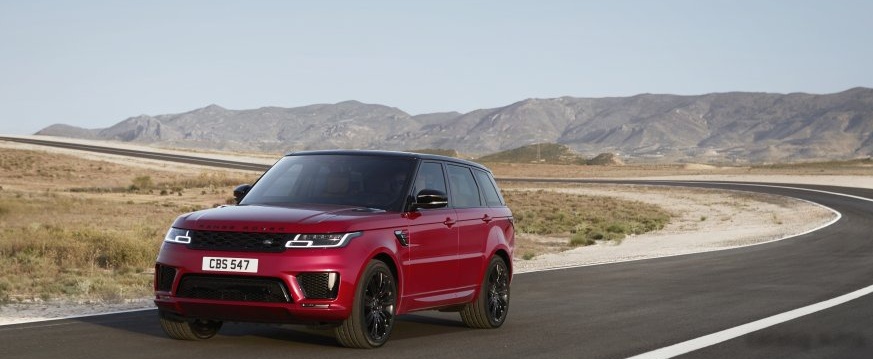
The Land Rover Range Rover Sport II P400e, a plug-in hybrid variant of the second-generation Range Rover Sport (L494 series, facelifted in 2017), represents a significant step towards electrification for the iconic British brand. Introduced in 2017 and continuing in production through May 2022, this model combined a 2.0-liter turbocharged inline-four gasoline engine with an electric motor, offering a blend of performance, efficiency, and all-terrain capability characteristic of the Range Rover lineage. The P400e occupied a unique position in the Range Rover Sport lineup, appealing to buyers seeking a premium SUV with reduced emissions and the flexibility of electric-only driving for shorter commutes.
Technical Specifications
| Brand | Land Rover |
| Model | Range Rover Sport |
| Generation | Range Rover Sport II (facelift 2017) |
| Type (Engine) | P400e (404 Hp) Plug-in Hybrid AWD Automatic |
| Start of production | 2017 |
| End of production | May, 2022 |
| Powertrain Architecture | PHEV (Plug-in Hybrid Electric Vehicle) |
| Body type | SUV |
| Seats | 5 |
| Doors | 5 |
| Fuel consumption (combined) | 2.8 l/100 km (84 US mpg, 100.9 UK mpg, 35.7 km/l) |
| CO2 emissions | 64 g/km |
| Fuel Type | Petrol / electricity |
| Acceleration 0 – 100 km/h | 6.7 sec |
| Acceleration 0 – 62 mph | 6.7 sec |
| Acceleration 0 – 60 mph | 6.4 sec |
| Maximum speed | 220 km/h (136.7 mph) |
| Emission standard | Euro 6 |
| Weight-to-power ratio | 6.1 kg/Hp, 163.5 Hp/tonne |
| Weight-to-torque ratio | 3.9 kg/Nm, 259 Nm/tonne |
| Gross battery capacity | 13.1 kWh |
| Battery technology | Lithium-ion (Li-Ion) |
| Battery location | Inside the trunk |
| All-electric range (WLTP) | 39-41 km (24.23 – 25.48 mi) |
| All-electric range | 42-48 km (26.1 – 29.83 mi) |
| Average Energy consumption (WLTP) | 25.5-27 kWh/100 km (41.04 – 43.45 kWh/100 mi, 82 – 78 MPGe, 3.9 – 3.7 km/kWh, 2.4 – 2.3 mi/kWh) |
| Average Energy consumption | 22.5-23.1 kWh/100 km (36.21 – 37.18 kWh/100 mi, 93 – 91 MPGe, 4.4 – 4.3 km/kWh, 2.8 – 2.7 mi/kWh) |
| Max speed (electric) | 137 km/h (85.13 mph) |
| Electric motor power | 116 Hp |
| Electric motor Torque | 275 Nm (202.83 lb.-ft.) |
| Electric motor location | Between the combustion engine and the transmission |
| System power | 404 Hp @ 5500 rpm |
| System torque | 640 Nm @ 1500-4000 rpm (472.04 lb.-ft. @ 1500-4000 rpm) |
| Power | 300 Hp @ 5500 rpm |
| Torque | 400 Nm @ 1500-4000 rpm (295.02 lb.-ft. @ 1500-4000 rpm) |
| Engine layout | Front, Longitudinal |
| Engine Model/Code | Ingenium / PT204 |
| Engine displacement | 1997 cm3 (121.86 cu. in.) |
| Number of cylinders | 4 |
| Engine configuration | Inline |
| Cylinder Bore | 83 mm (3.27 in.) |
| Piston Stroke | 92.4 mm (3.64 in.) |
| Compression ratio | 15.5:1 |
| Number of valves per cylinder | 4 |
| Fuel injection system | Direct injection |
| Engine aspiration | Turbocharger, Intercooler |
| Engine oil capacity | 7 l (7.4 US qt | 6.16 UK qt) |
| Coolant | 11.2 l (11.83 US qt | 9.85 UK qt) |
| Kerb Weight | 2471 kg (5447.62 lbs.) |
| Max. weight | 3200 kg (7054.79 lbs.) |
| Max load | 729 kg (1607.17 lbs.) |
| Trunk (boot) space – minimum | 780 l (27.55 cu. ft.) |
| Trunk (boot) space – maximum | 1686 l (59.54 cu. ft.) |
| Fuel tank capacity | 90 l (23.78 US gal | 19.8 UK gal) |
| Max. roof load | 100 kg (220.46 lbs.) |
| Permitted trailer load with brakes (12%) | 2500 kg (5511.56 lbs.) |
| Permitted trailer load without brakes | 750 kg (1653.47 lbs.) |
| Permitted towbar download | 100 kg (220.46 lbs.) |
| Length | 4879 mm (192.09 in.) |
| Width with mirrors folded | 2073 mm (81.61 in.) |
| Width including mirrors | 2220 mm (87.4 in.) |
| Height | 1803 mm (70.98 in.) |
| Wheelbase | 2923 mm (115.08 in.) |
| Front track | 1693 mm (66.65 in.) |
| Rear (Back) track | 1686 mm (66.38 in.) |
| Ride height (ground clearance) | 213-278 mm (8.39 – 10.94 in.) |
| Drag coefficient (Cd) | 0.35 |
| Minimum turning circle (turning diameter) | 12.5 m (41.01 ft.) |
| Approach angle | 24.3-33.0° |
| Departure angle | 24.9-31.0° |
| Ramp-over (brakeover) angle | 19.4-27.2° |
| Wading depth | 800-850 mm (31.5 – 33.46 in.) |
| Drivetrain Architecture | The Internal combustion engine (ICE) and the electric motor permanently drive the four wheels of the car with the ability to work in full electric or mixed mode. |
| Drive wheel | All wheel drive (4×4) |
| Number of gears and type of gearbox | 8 gears, automatic transmission |
| Front suspension | Air suspension |
| Rear suspension | Air suspension |
| Front brakes | Ventilated discs |
| Rear brakes | Ventilated discs |
INTRODUCTION
The Range Rover Sport II P400e, produced from 2017 to 2022, was a pivotal model in Land Rover’s transition towards electrified vehicles. Built on the L494 platform – the second generation of the Range Rover Sport – the P400e distinguished itself with its plug-in hybrid powertrain. This configuration allowed for a limited all-electric range, appealing to environmentally conscious buyers and those seeking to reduce their fuel consumption in urban environments. Positioned as a mid-to-high range trim, it offered a balance between performance, luxury, and efficiency within the broader Range Rover Sport lineup. It was a direct response to tightening emissions regulations and growing consumer demand for sustainable luxury vehicles.
Powertrain & Engine Architecture
At the heart of the P400e lies Land Rover’s Ingenium engine family, specifically the PT204, a 2.0-liter turbocharged inline-four cylinder gasoline engine. This engine produces 300 horsepower and 295 lb-ft of torque. Crucially, it’s paired with an 116 horsepower electric motor integrated into the eight-speed automatic transmission. The combined system output is a substantial 404 horsepower and 472 lb-ft of torque. The engine utilizes direct fuel injection and a single twin-scroll turbocharger for enhanced responsiveness. The 13.1 kWh lithium-ion battery pack is located under the boot floor, slightly reducing cargo capacity compared to non-hybrid models. The eight-speed automatic transmission, sourced from ZF, is calibrated to work seamlessly with both the gasoline engine and the electric motor, providing smooth and efficient power delivery. The electric motor isn’t simply bolted on; it’s integrated within the transmission housing, allowing for direct drive and maximizing efficiency.
Driving Characteristics
The P400e offers a unique driving experience. In electric-only mode, it provides near-silent operation and instant torque, making it ideal for city driving. The all-electric range, while limited to around 25-30 miles in real-world conditions, is sufficient for many daily commutes. When the gasoline engine kicks in, the combined power output delivers brisk acceleration – 0-60 mph in approximately 6.4 seconds. Compared to the supercharged V6 models, the P400e feels slightly less raw in terms of outright performance, but the readily available torque from the electric motor compensates for this. The eight-speed automatic transmission shifts smoothly and intelligently, optimizing for both efficiency and performance. The weight of the battery pack does add to the overall vehicle weight, which can be felt in cornering, but the air suspension system effectively mitigates body roll.
Equipment & Trim Levels
The P400e typically came well-equipped, reflecting its position as a premium trim level. Standard features included leather upholstery, heated front seats, a touchscreen infotainment system with navigation, a panoramic sunroof, and a suite of advanced driver-assistance systems (ADAS) such as adaptive cruise control, lane departure warning, and automatic emergency braking. Optional extras included upgraded leather trim, premium audio systems (Meridian), rear-seat entertainment, and various cosmetic enhancements. The interior design mirrored that of other Range Rover Sport models, with a focus on luxury and comfort. The dashboard layout was relatively straightforward, with intuitive controls and a high-quality finish.
Chassis & Braking
The P400e utilizes Land Rover’s renowned air suspension system, providing a comfortable ride and adjustable ride height for off-road capability. The suspension is electronically controlled, adapting to road conditions and driving style. Braking duties are handled by ventilated discs on all four wheels, providing ample stopping power. The electronic stability control (ESC) system is integrated with the hybrid powertrain, optimizing braking performance and ensuring stability. The P400e’s chassis is reinforced to accommodate the added weight of the battery pack, maintaining the Range Rover Sport’s robust build quality.
Market Reception & Comparison
The Range Rover Sport P400e received generally positive reviews from automotive critics. It was praised for its blend of performance, efficiency, and luxury. However, some reviewers noted the reduced cargo capacity due to the battery pack and the relatively limited all-electric range compared to some competitors. Compared to the Range Rover Sport SDV6 (diesel) and the supercharged V6 models, the P400e offered a more environmentally friendly alternative without sacrificing too much performance. Fuel economy was significantly better than the gasoline-only models, particularly for drivers who frequently utilized the electric-only mode. Reliability reports have been mixed, with some owners experiencing issues with the hybrid system, while others have reported trouble-free ownership.
Legacy
The Range Rover Sport P400e represents an important step in Land Rover’s electrification strategy. It demonstrated the feasibility of combining hybrid technology with the brand’s signature luxury and off-road capability. While the P400e has been superseded by newer plug-in hybrid models with increased battery capacity and electric range, it remains a desirable vehicle in the used car market. Its combination of performance, efficiency, and prestige continues to appeal to buyers seeking a premium SUV with a reduced environmental impact. The powertrain, while not without its complexities, has proven relatively durable with proper maintenance, and parts availability remains good. The P400e paved the way for Land Rover’s current range of plug-in hybrid and fully electric vehicles, solidifying its commitment to a sustainable future.