
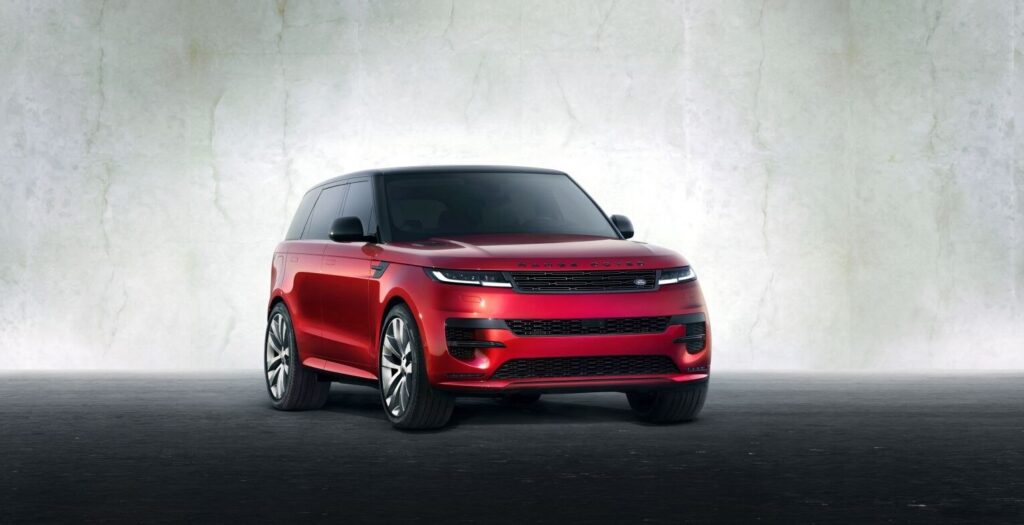
The Land Rover Range Rover Sport III 3.0 D350, launched in May 2022, represents the third generation of Land Rover’s performance-oriented SUV. Positioned as a mid-to-high range offering within the broader Range Rover Sport lineup, this variant combines a 3.0-liter inline-six diesel engine with mild hybrid technology and a sophisticated all-wheel-drive system. It’s built on the MLA (Modular Longitudinal Architecture) platform, shared with the latest Range Rover, emphasizing luxury, capability, and modern technology. The D350 trim aims to balance performance with efficiency, appealing to buyers seeking a powerful and refined SUV experience.
Technical Specifications
| Brand | Land Rover |
| Model | Range Rover Sport |
| Generation | Range Rover Sport III |
| Type (Engine) | 3.0 D350 (351 Hp) Mild Hybrid iAWD Automatic |
| Start of production | May, 2022 |
| Powertrain Architecture | MHEV (Mild Hybrid Electric Vehicle) |
| Body type | SUV |
| Seats | 5 |
| Doors | 5 |
| Fuel consumption at Low speed (WLTP) | 11-12.3 l/100 km (21.4 – 19.1 US mpg) |
| Fuel consumption at Medium speed (WLTP) | 7.7-8.1 l/100 km (30.5 – 29 US mpg) |
| Fuel consumption at high speed (WLTP) | 5.9-6.3 l/100 km (39.9 – 37.3 US mpg) |
| Fuel consumption at very high speed (WLTP) | 7.2-7.9 l/100 km (32.7 – 29.8 US mpg) |
| Combined fuel consumption (WLTP) | 7.4-8 l/100 km (31.8 – 29.4 US mpg) |
| CO2 emissions (WLTP) | 195-211 g/km |
| Fuel Type | Diesel |
| Acceleration 0 – 100 km/h | 5.9 sec |
| Acceleration 0 – 62 mph | 5.9 sec |
| Acceleration 0 – 60 mph | 5.6 sec |
| Maximum speed | 234 km/h (145.4 mph) |
| Emission standard | Euro 6d |
| Weight-to-power ratio | 6.7 kg/Hp, 148.7 Hp/tonne |
| Weight-to-torque ratio | 3.4 kg/Nm, 296.6 Nm/tonne |
| Battery voltage | 48 V |
| Power | 351 Hp @ 4000 rpm |
| Torque | 700 Nm @ 1500-3000 rpm (516.29 lb.-ft. @ 1500-3000 rpm) |
| Engine layout | Front, Longitudinal |
| Engine Model/Code | Ingenium / DT306 |
| Engine displacement | 2997 cm3 (182.89 cu. in.) |
| Number of cylinders | 6 |
| Engine configuration | Inline |
| Cylinder Bore | 83 mm (3.27 in.) |
| Piston Stroke | 92.31 mm (3.63 in.) |
| Compression ratio | 15.5:1 |
| Number of valves per cylinder | 4 |
| Fuel injection system | Diesel Commonrail |
| Engine aspiration | Turbocharger, Intercooler |
| Engine oil capacity | 10.4 l (10.99 US qt | 9.15 UK qt) |
| Kerb Weight | 2360 kg (5202.91 lbs.) |
| Max. weight | 3220 kg (7098.88 lbs.) |
| Max load | 860 kg (1895.98 lbs.) |
| Trunk (boot) space – minimum | 450 l (15.89 cu. ft.) |
| Trunk (boot) space – maximum | 1860 l (65.69 cu. ft.) |
| Fuel tank capacity | 80 l (21.13 US gal | 17.6 UK gal) |
| AdBlue tank | 20 l (5.28 US gal | 4.4 UK gal) |
| Max. roof load | 100 kg (220.46 lbs.) |
| Permitted trailer load with brakes (12%) | 3500 kg (7716.18 lbs.) |
| Permitted trailer load without brakes | 750 kg (1653.47 lbs.) |
| Permitted towbar download | 150 kg (330.69 lbs.) |
| Length | 4946 mm (194.72 in.) |
| Width with mirrors folded | 2043 mm (80.43 in.) |
| Width including mirrors | 2209 mm (86.97 in.) |
| Height | 1820 mm (71.65 in.) |
| Wheelbase | 2997 mm (117.99 in.) |
| Front track | 1702 mm (67.01 in.) |
| Rear (Back) track | 1704 mm (67.09 in.) |
| Ride height (ground clearance) | 281 mm (11.06 in.) |
| Drag coefficient (Cd) | 0.29 |
| Minimum turning circle (turning diameter) | 12.53 m (41.11 ft.) |
| Approach angle | 33° |
| Departure angle | 30° |
| Ramp-over (brakeover) angle | 26.9° |
| Wading depth | 900 mm (35.43 in.) |
| Drivetrain Architecture | ICE and electric motor drive rear wheels, front wheels engaged via clutch. |
| Drive wheel | All wheel drive (4×4) |
| Number of gears and type of gearbox | 8 gears, automatic transmission ZF |
| Front suspension | Double wishbone |
| Rear suspension | Independent multi-link suspension |
| Front brakes | Ventilated discs, 380 mm |
| Rear brakes | Ventilated discs, 355 mm |
| Steering type | Steering rack and pinion |
| Power steering | Electric Steering |
Powertrain & Engine Architecture
The heart of the D350 is Land Rover’s Ingenium 3.0-liter inline-six diesel engine, designated DT306. This engine utilizes a sophisticated diesel commonrail fuel injection system and a single turbocharger with an intercooler to deliver a potent 351 horsepower at 4,000 rpm and a substantial 700 Nm (516 lb-ft) of torque between 1,500 and 3,000 rpm. The engine features a high compression ratio of 15.5:1 and 4 valves per cylinder. The mild hybrid system, operating at 48V, employs a Belt-integrated Starter Generator (BiSG) to provide power assistance during acceleration, enabling smoother starts and improved fuel economy. The BiSG also facilitates a more refined stop/start system. The engine is longitudinally mounted in the front of the vehicle. Power is transmitted to all four wheels via an eight-speed automatic transmission sourced from ZF, known for its smooth shifting and responsiveness.
Driving Characteristics
The 3.0 D350 offers a compelling blend of performance and refinement. The readily available torque from the diesel engine provides strong acceleration, with a 0-60 mph time of around 5.6 seconds. The eight-speed automatic transmission is well-tuned, offering seamless gear changes and contributing to a relaxed driving experience. While not as overtly sporty as some of its competitors, the D350 delivers ample power for confident overtaking and effortless cruising. Compared to lower-powered Range Rover Sport variants, the D350 provides a noticeable performance upgrade. The iAWD system intelligently distributes torque between the front and rear axles, optimizing traction in various conditions. The mild hybrid system further enhances responsiveness by filling in torque gaps during acceleration.
Equipment & Trim Levels
The Range Rover Sport III D350 typically comes well-equipped as standard. Key features include premium leather upholstery, a 13.1-inch Pivi Pro infotainment touchscreen, a digital instrument cluster, and a comprehensive suite of advanced driver-assistance systems (ADAS). Optional extras include features like adaptive cruise control, a head-up display, a panoramic sunroof, and upgraded audio systems. Trim levels beyond the base D350 often add cosmetic enhancements, such as unique exterior styling elements and interior trim finishes. The interior design emphasizes luxury and modernity, with high-quality materials and a focus on user-friendly technology.
Chassis & Braking
The Range Rover Sport III utilizes a double-wishbone front suspension and an independent multi-link rear suspension, providing a comfortable and controlled ride. Air suspension is standard, allowing for adjustable ride height and further enhancing off-road capability. The D350 is equipped with ventilated disc brakes on all four wheels, with larger discs at the front (380mm) compared to the rear (355mm). The braking system incorporates ABS (Anti-lock Braking System) and other electronic stability control features. The vehicle’s robust chassis and sophisticated suspension system contribute to its confident handling and stability, both on and off-road.
Market Reception & Comparison
The Range Rover Sport III D350 has been generally well-received by automotive critics. Reviewers praise its powerful engine, refined ride quality, and luxurious interior. The mild hybrid system is also noted for its contribution to improved fuel economy and reduced emissions. Compared to other trims in the Range Rover Sport lineup, the D350 offers a compelling balance between performance and efficiency. While the petrol-powered variants may offer slightly more outright performance, the D350 provides superior fuel economy and torque. Competitors in this segment include the Porsche Cayenne, BMW X5, and Mercedes-Benz GLE, all of which offer similar levels of luxury and performance.
Legacy
The Ingenium engine family, including the DT306 found in the D350, has proven to be relatively reliable in early reports. The mild hybrid system adds a layer of complexity, but Land Rover has gained experience with this technology in other models. The Range Rover Sport III, as a whole, is still a relatively new vehicle, so long-term reliability data is still emerging. However, the combination of a robust powertrain, a well-engineered chassis, and a luxurious interior suggests that the D350 will hold its value well in the used car market. Its blend of performance, refinement, and capability makes it a desirable SUV for buyers seeking a premium driving experience.


