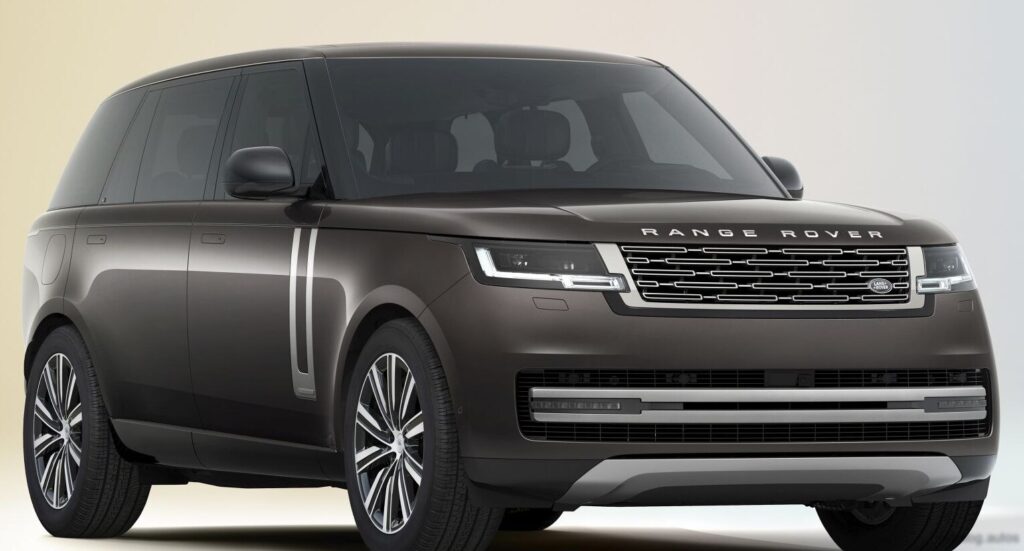
The Land Rover Range Rover V LWB 3.0 D350, introduced in October 2021, represents the fifth generation of the iconic Range Rover, specifically the long-wheelbase (LWB) variant. This model is positioned as a luxury, full-size SUV, offering a blend of off-road capability, opulent comfort, and modern technology. The “D350” designation signifies its 3.0-liter inline-six diesel engine producing 351 horsepower, coupled with a mild-hybrid system and an eight-speed automatic transmission. The LWB configuration prioritizes rear passenger space, making it a popular choice for chauffeur-driven executives and families desiring maximum comfort. This variant is a key offering in the Range Rover lineup, bridging the gap between the standard wheelbase models and the higher-performance, more expensive trims.
Technical Specifications
| Brand | Land Rover |
| Model | Range Rover |
| Generation | Range Rover V LWB |
| Type | 3.0 D350 (351 Hp) Mild Hybrid AWD Automatic 7 Seat |
| Start of production | October, 2021 |
| Powertrain Architecture | MHEV (Mild Hybrid Electric Vehicle) |
| Body type | SUV |
| Seats | 7 |
| Doors | 5 |
| Combined fuel consumption (WLTP) | 7.8-8.3 l/100 km (30.2 – 28.3 US mpg) |
| CO2 emissions (WLTP) | 204-217 g/km |
| Fuel Type | Diesel |
| Acceleration 0 – 100 km/h | 6.4 sec |
| Acceleration 0 – 62 mph | 6.4 sec |
| Acceleration 0 – 60 mph | 6.1 sec |
| Maximum speed | 234 km/h (145.4 mph) |
| Emission standard | Euro 6d Final |
| Weight-to-power ratio | 7.4 kg/Hp |
| Weight-to-torque ratio | 3.7 kg/Nm |
| Power | 351 Hp |
| Torque | 700 Nm (516.29 lb.-ft.) |
| Engine layout | Front, Longitudinal |
| Engine displacement | 2997 cm3 (182.89 cu. in.) |
| Number of cylinders | 6 |
| Engine configuration | Inline |
| Cylinder Bore | 83 mm (3.27 in.) |
| Piston Stroke | 92.31 mm (3.63 in.) |
| Compression ratio | 15.5:1 |
| Number of valves per cylinder | 4 |
| Fuel injection system | Diesel Commonrail |
| Engine aspiration | Turbocharger, Intercooler |
| Engine oil capacity | 10.4 l (10.99 US qt | 9.15 UK qt) |
| Kerb Weight | 2591 kg (5712.18 lbs.) |
| Trunk (boot) space – minimum | 229 l (8.09 cu. ft.) |
| Trunk (boot) space – maximum | 2601 l (91.85 cu. ft.) |
| Fuel tank capacity | 80 l (21.13 US gal | 17.6 UK gal) |
| AdBlue tank | 20 l (5.28 US gal | 4.4 UK gal) |
| Permitted trailer load with brakes (12%) | 3500 kg (7716.18 lbs.) |
| Permitted trailer load without brakes | 750 kg (1653.47 lbs.) |
| Length | 5252 mm (206.77 in.) |
| Width with mirrors folded | 2047 mm (80.59 in.) |
| Width including mirrors | 2209 mm (86.97 in.) |
| Height | 1870 mm (73.62 in.) |
| Wheelbase | 3197 mm (125.87 in.) |
| Front track | 1702 mm (67.01 in.) |
| Rear track | 1704 mm (67.09 in.) |
| Ride height (ground clearance) | 294-295 mm (11.57 – 11.61 in.) |
| Drag coefficient (Cd) | 0.31 |
| Minimum turning circle | 11.96 m (39.24 ft.) |
| Front suspension | Double wishbone |
| Rear suspension | Independent multi-link suspension |
| Front brakes | Ventilated discs, 380 mm |
| Rear brakes | Ventilated discs, 355 mm |
| Number of gears | 8 |
| Type of gearbox | Automatic transmission |
Powertrain & Engine Architecture
The heart of the Range Rover D350 is the Ingenium 3.0-liter inline-six diesel engine, designated as a member of the JLR Ingenium engine family. This engine utilizes a sophisticated diesel commonrail fuel injection system, delivering precise fuel metering for optimal combustion. The engine benefits from a single turbocharger with an intercooler, boosting power and efficiency. The mild-hybrid system, incorporating a 48V electric motor, provides a power assist during acceleration and enables smoother start-stop functionality, contributing to improved fuel economy. The engine produces 351 horsepower and a substantial 700 Nm (516 lb-ft) of torque. This power is channeled through a ZF-sourced eight-speed automatic transmission, known for its smooth shifts and wide gear ratio spread. The transmission is calibrated to prioritize comfort and refinement, while still providing responsive performance.
Driving Characteristics
The D350 LWB offers a refined and comfortable driving experience. The mild-hybrid system effectively mitigates turbo lag, providing a near-instantaneous response to throttle inputs. While not as overtly sporty as the higher-powered Range Rover variants, the D350 delivers ample power for effortless cruising and confident overtaking. The eight-speed automatic transmission seamlessly manages gear changes, contributing to a relaxed driving experience. The long wheelbase enhances ride comfort, absorbing bumps and imperfections in the road surface effectively. Compared to the six-cylinder petrol models, the D350 offers superior fuel economy and a broader torque curve, making it ideal for long-distance journeys. Against the four-cylinder diesel options, the D350 provides a significant power upgrade and a more refined driving experience, justifying its higher price point.
Equipment & Trim Levels
The Range Rover V LWB D350 comes standard with a comprehensive suite of luxury features. Interior appointments typically include premium leather upholstery, heated and ventilated front and rear seats, a panoramic sunroof, and a high-end Meridian sound system. Standard technology features include a Pivi Pro infotainment system with a large touchscreen display, Apple CarPlay and Android Auto integration, and a suite of advanced driver-assistance systems (ADAS) such as adaptive cruise control, lane-keeping assist, and automatic emergency braking. Optional extras include executive rear seating with massage functions, rear-seat entertainment systems, and a variety of bespoke interior trim options.
Chassis & Braking
The Range Rover V LWB utilizes a robust aluminum monocoque chassis, providing a strong yet lightweight foundation. The suspension system features double-wishbone front suspension and an independent multi-link rear suspension, optimized for both on-road comfort and off-road capability. Air suspension is standard, allowing for adjustable ride height and improved off-road performance. The braking system consists of ventilated discs on all four wheels, providing ample stopping power. The front brakes measure 380mm, while the rear brakes are 355mm. ABS (Anti-lock Braking System) and electronic stability control are standard safety features.
Market Reception & Comparison
The Range Rover V LWB D350 has been well-received by automotive critics and consumers alike. It is praised for its luxurious interior, comfortable ride, and refined driving experience. The diesel engine offers a good balance of performance and fuel economy, making it a practical choice for those who cover long distances. Compared to the petrol-powered Range Rovers, the D350 offers significantly better fuel efficiency. However, some critics note that the diesel engine lacks the outright performance and aural excitement of the petrol alternatives. In terms of reliability, the Ingenium engine family has generally proven to be robust, although some early models experienced minor software glitches.
Legacy
The Range Rover V LWB D350 represents a significant step forward in luxury SUV technology. Its combination of a powerful diesel engine, mild-hybrid system, and sophisticated chassis technology delivers a refined and capable driving experience. The Ingenium engine, while relatively new, has established a reputation for reliability and efficiency. On the used car market, well-maintained examples of the D350 LWB are highly sought after, commanding premium prices due to their luxurious appointments and long-distance comfort. As Land Rover continues to evolve its lineup, the D350 LWB will likely be remembered as a benchmark for luxury and capability in the full-size SUV segment.