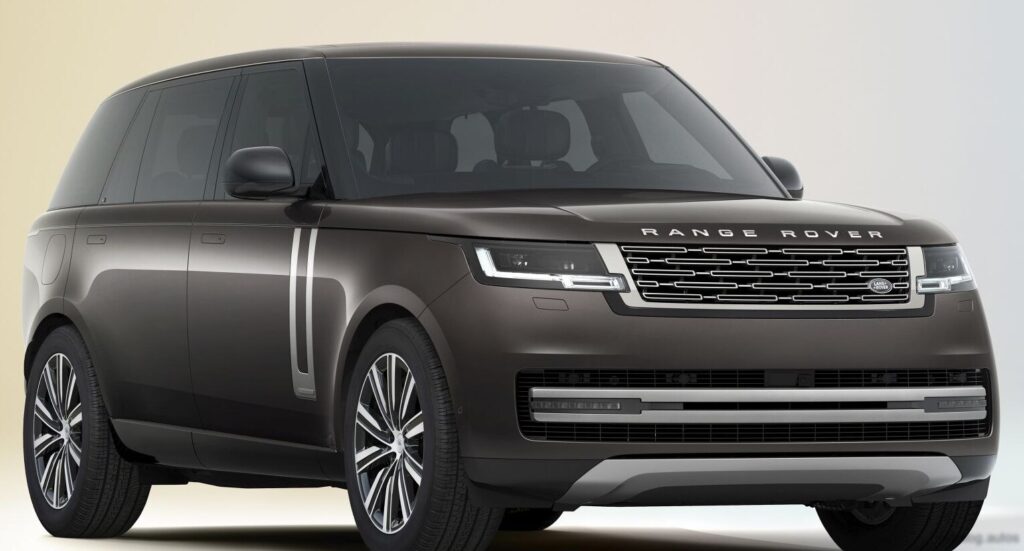
The Land Rover Range Rover V LWB 3.0 P400, introduced in October 2021, represents the fifth generation of the iconic Range Rover, specifically the long-wheelbase (LWB) variant. This model occupies a premium position within the Range Rover lineup, offering enhanced rear passenger space and a sophisticated blend of luxury, performance, and off-road capability. The “P400” designation signifies its powertrain: a 3.0-liter inline-six cylinder engine producing 400 horsepower, coupled with a mild-hybrid electric vehicle (MHEV) system and an eight-speed automatic transmission, delivering all-wheel drive. It’s positioned as a high-end offering, appealing to buyers seeking a luxurious and capable SUV with a modern powertrain.
Technical Specifications
| Brand | Land Rover |
| Model | Range Rover |
| Generation | Range Rover V LWB |
| Type (Engine) | 3.0 P400 (400 Hp) Mild Hybrid AWD Automatic |
| Start of production | October, 2021 |
| Powertrain Architecture | MHEV (Mild Hybrid Electric Vehicle) |
| Body type | SUV |
| Seats | 5 |
| Doors | 5 |
| Combined fuel consumption (WLTP) | 9.6-10.2 l/100 km (24.5 – 23.1 US mpg) |
| CO2 emissions (WLTP) | 217-232 g/km |
| CO2 emissions (NEDC, WLTP equivalent) | 213 g/km |
| Fuel Type | Petrol (Gasoline) |
| Acceleration 0 – 100 km/h | 5.9 sec |
| Acceleration 0 – 62 mph | 5.9 sec |
| Acceleration 0 – 60 mph | 5.6 sec |
| Maximum speed | 242 km/h (150.37 mph) |
| Emission standard | Euro 6d Final |
| Weight-to-power ratio | 6.1 kg/Hp, 163.7 Hp/tonne |
| Weight-to-torque ratio | 4.4 kg/Nm, 225 Nm/tonne |
| Power | 400 Hp |
| Power per litre | 133.5 Hp/l |
| Torque | 550 Nm (405.66 lb.-ft.) |
| Engine layout | Front, Longitudinal |
| Engine displacement | 2996 cm3 (182.83 cu. in.) |
| Number of cylinders | 6 |
| Engine configuration | Inline |
| Cylinder Bore | 83 mm (3.27 in.) |
| Piston Stroke | 92.29 mm (3.63 in.) |
| Compression ratio | 10.5:1 |
| Number of valves per cylinder | 4 |
| Fuel injection system | Direct injection |
| Engine aspiration | Turbocharger, Intercooler |
| Engine oil capacity | 9.4 l (9.93 US qt | 8.27 UK qt) |
| Kerb Weight | 2444 kg (5388.1 lbs.) |
| Trunk (boot) space – minimum | 725 l (25.6 cu. ft.) |
| Trunk (boot) space – maximum | 2727 l (96.3 cu. ft.) |
| Fuel tank capacity | 90 l (23.78 US gal | 19.8 UK gal) |
| Permitted trailer load with brakes (12%) | 3500 kg (7716.18 lbs.) |
| Permitted trailer load without brakes | 750 kg (1653.47 lbs.) |
| Length | 5252 mm (206.77 in.) |
| Width with mirrors folded | 2047 mm (80.59 in.) |
| Width including mirrors | 2209 mm (86.97 in.) |
| Height | 1870 mm (73.62 in.) |
| Wheelbase | 3197 mm (125.87 in.) |
| Front track | 1702 mm (67.01 in.) |
| Rear (Back) track | 1704 mm (67.09 in.) |
| Front overhang | 860 mm (33.86 in.) |
| Rear overhang | 1195 mm (47.05 in.) |
| Ride height (ground clearance) | 294-295 mm (11.57 – 11.61 in.) |
| Drag coefficient (Cd) | 0.32 |
| Minimum turning circle (turning diameter) | 11.96 m (39.24 ft.) |
| Approach angle | 34.7° |
| Departure angle | 29° |
| Ramp-over (brakeover) angle | 25.2° |
| Wading depth | 900 mm (35.43 in.) |
| Drivetrain Architecture | ICE and electric motor, permanent all-wheel drive |
| Drive wheel | All wheel drive (4×4) |
| Number of gears and type of gearbox | 8 gears, automatic transmission |
| Front suspension | Double wishbone |
| Rear suspension | Independent multi-link suspension |
| Front brakes | Ventilated discs, 380 mm |
| Rear brakes | Ventilated discs, 355 mm |
| Steering type | Steering rack and pinion |
| Power steering | Electric Steering |
INTRODUCTION
The Range Rover V LWB 3.0 P400 represents Land Rover’s commitment to blending luxury with capability. Introduced as part of the fifth-generation Range Rover (2021 onwards), the LWB version extends the wheelbase by 140mm (5.5 inches) compared to the standard-wheelbase model, prioritizing rear passenger legroom. The P400 variant, with its inline-six engine and mild-hybrid assistance, is a key offering in the range, balancing performance with improved fuel efficiency. It builds upon the Range Rover’s established reputation for off-road prowess and refined on-road manners, targeting buyers who desire a premium SUV experience.
Powertrain & Engine Architecture
At the heart of the P400 lies Land Rover’s Ingenium 3.0-liter inline-six cylinder engine, designated as the P360 or P400 depending on the specific tune. This engine utilizes a sophisticated combination of technologies, including direct fuel injection, a twin-scroll turbocharger, and a continuously variable valve timing system. The mild-hybrid system, employing a 48-volt electrical architecture, integrates a Belt-integrated Starter Generator (BiSG) to provide power assistance during acceleration, enabling smoother start-stop operation, and enhancing fuel economy. The engine produces 400 horsepower and 550 Nm (405.66 lb.-ft.) of torque. The engine is longitudinally mounted, driving all four wheels through a ZF-sourced eight-speed automatic transmission. This transmission is known for its smooth shifts and wide gear ratio spread, contributing to both performance and efficiency.
Driving Characteristics
The 3.0 P400 delivers a refined and powerful driving experience. The mild-hybrid system effectively mitigates turbo lag, providing responsive acceleration from a standstill and during overtaking maneuvers. The eight-speed automatic transmission is well-tuned, offering seamless gear changes and contributing to a comfortable ride. While not as overtly sporty as some competitors, the P400 offers ample power for confident highway cruising and effortless towing. The all-wheel-drive system provides excellent traction in various conditions, and Land Rover’s Terrain Response system allows drivers to optimize vehicle settings for different surfaces, including grass, gravel, snow, mud, and sand. Compared to the higher-output P530 V8, the P400 prioritizes efficiency and a more balanced driving experience, while offering a significant performance upgrade over the entry-level P360.
Equipment & Trim Levels
The Range Rover V LWB 3.0 P400 comes standard with a high level of equipment, reflecting its premium positioning. Standard features typically include leather upholstery, heated and ventilated front seats, a panoramic sunroof, a premium sound system, and a comprehensive suite of driver-assistance technologies, such as adaptive cruise control, lane-keeping assist, and automatic emergency braking. The LWB model specifically benefits from executive-class rear seating with increased legroom and available features like rear seat entertainment and individual climate control. Optional extras include upgraded leather trims, a head-up display, and advanced off-road packages. Interior trim options range from wood veneers to metal accents, allowing for a high degree of personalization.
Chassis & Braking
The Range Rover V LWB utilizes a lightweight aluminum monocoque chassis, contributing to its structural rigidity and relatively low weight for a vehicle of its size. The suspension system features double-wishbone front suspension and an independent multi-link rear suspension, providing a comfortable and controlled ride. Air suspension with electronic dampers is standard, allowing for adjustable ride height and damping settings. Braking duties are handled by ventilated discs on all four wheels, with larger discs at the front (380mm) compared to the rear (355mm). The braking system is augmented by ABS, electronic brake-force distribution, and brake assist. Stabilizer bars are fitted front and rear to minimize body roll during cornering.
Market Reception & Comparison
The Range Rover V LWB 3.0 P400 has been well-received by automotive critics, praised for its luxurious interior, refined driving experience, and capable off-road performance. Comparisons to rivals such as the BMW X7, Mercedes-Benz GLS, and Audi Q7 often highlight the Range Rover’s superior off-road ability and distinctive British character. Fuel economy, while improved by the mild-hybrid system, remains a consideration, with combined fuel consumption figures around 9.6-10.2 l/100 km. Reliability has been a point of discussion, with some reports of electronic glitches, although Land Rover has made efforts to address these issues. The P400 variant strikes a balance between performance and efficiency, making it a popular choice for buyers who prioritize both.
Legacy
The Ingenium engine family, including the 3.0-liter inline-six used in the P400, represents a significant step forward for Land Rover in terms of powertrain technology. The mild-hybrid system demonstrates the brand’s commitment to improving fuel efficiency and reducing emissions. While long-term reliability data is still emerging, the P400 powertrain is expected to prove durable, benefiting from Land Rover’s ongoing engineering refinements. On the used car market, the 2021 and later Range Rover V LWB 3.0 P400 models are expected to hold their value well, appealing to buyers seeking a luxurious and capable SUV with a modern powertrain and a prestigious brand reputation.