
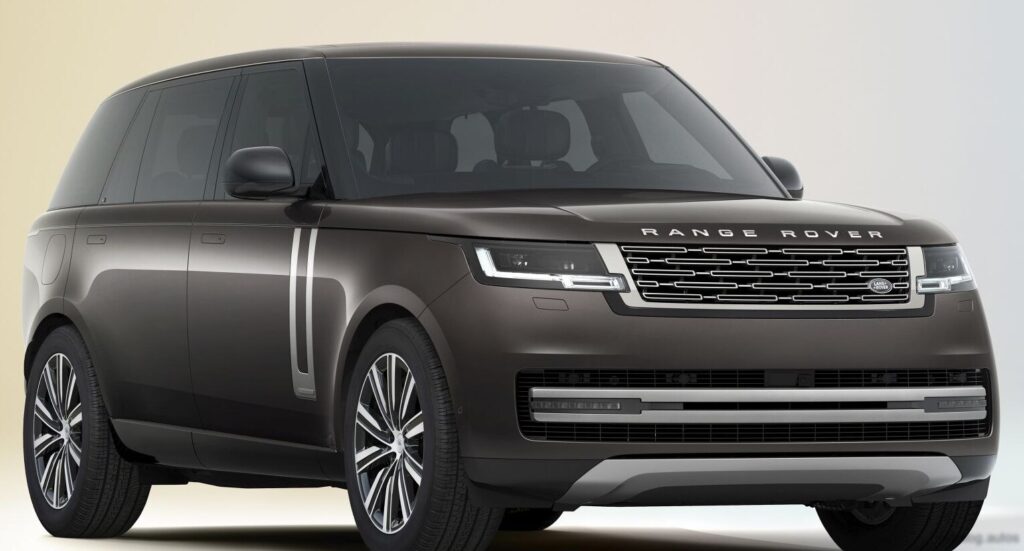
The Land Rover Range Rover V LWB 3.0 P440e, produced from January 2022 to May 2023, represents a significant step in the iconic Range Rover lineage, blending traditional luxury with modern plug-in hybrid technology. Positioned as a high-end variant within the fifth-generation Range Rover (L460) series, the P440e specifically caters to buyers seeking a balance between opulent comfort, strong performance, and reduced emissions. The “LWB” designation indicates a long wheelbase, offering enhanced rear passenger space, making it particularly popular in markets where chauffeur-driven transport is common. This model is a key component of Land Rover’s strategy to offer a fully electrified powertrain option across its range, appealing to a growing segment of environmentally conscious luxury SUV buyers in North America, Europe, and Asia.
Technical Specifications
| Brand | Land Rover |
| Model | Range Rover |
| Generation | Range Rover V LWB |
| Type (Engine) | 3.0 P440e (441 Hp) Plug-in Hybrid AWD Automatic |
| Start of production | January, 2022 |
| End of production | May, 2023 |
| Powertrain Architecture | PHEV (Plug-in Hybrid Electric Vehicle) |
| Body type | SUV |
| Seats | 5 |
| Doors | 5 |
| Combined fuel consumption (WLTP) | 0.8-0.9 l/100 km (294 – 261.3 US mpg, 353.1 – 313.9 UK mpg, 125 – 111.1 km/l) |
| CO2 emissions (WLTP) | 18-21 g/km |
| Fuel Type | Petrol / electricity |
| Acceleration 0 – 100 km/h | 6 sec |
| Acceleration 0 – 62 mph | 6 sec |
| Acceleration 0 – 60 mph | 5.7 sec |
| Maximum speed | 225 km/h (139.81 mph) |
| Emission standard | Euro 6d Final |
| Weight-to-power ratio | 6.2 kg/Hp, 161.2 Hp/tonne |
| Weight-to-torque ratio | 4.4 kg/Nm, 226.7 Nm/tonne |
| Gross battery capacity | 38.2 kWh |
| Net (usable) battery capacity | 31.8 kWh |
| Battery technology | Lithium-ion (Li-Ion) |
| Battery location | Below the floor, between front and rear seats |
| All-electric range (WLTP) | 113 km (70.21 mi) |
| Electric motor power | 143 Hp |
| Electric motor location | Between the combustion engine and the transmission |
| System power | 441 Hp |
| System torque | 620 Nm (457.29 lb.-ft.) |
| Engine layout | Front, Longitudinal |
| Engine displacement | 2996 cm3 (182.83 cu. in.) |
| Number of cylinders | 6 |
| Engine configuration | Inline |
| Cylinder Bore | 83 mm (3.27 in.) |
| Piston Stroke | 92.29 mm (3.63 in.) |
| Compression ratio | 10.5:1 |
| Number of valves per cylinder | 4 |
| Fuel injection system | Direct injection |
| Engine aspiration | Turbocharger, Intercooler |
| Engine oil capacity | 9.4 l (9.93 US qt | 8.27 UK qt) |
| Kerb Weight | 2735 kg (6029.64 lbs.) |
| Trunk (boot) space – minimum | 725 l (25.6 cu. ft.) |
| Trunk (boot) space – maximum | 2728 l (96.34 cu. ft.) |
| Fuel tank capacity | 71.5 l (18.89 US gal | 15.73 UK gal) |
| Permitted trailer load with brakes (12%) | 2500 kg (5511.56 lbs.) |
| Permitted trailer load without brakes | 750 kg (1653.47 lbs.) |
| Length | 5252 mm (206.77 in.) |
| Width with mirrors folded | 2047 mm (80.59 in.) |
| Width including mirrors | 2209 mm (86.97 in.) |
| Height | 1870 mm (73.62 in.) |
| Wheelbase | 3197 mm (125.87 in.) |
| Front track | 1702 mm (67.01 in.) |
| Rear (Back) track | 1704 mm (67.09 in.) |
| Front overhang | 860 mm (33.86 in.) |
| Rear overhang | 1195 mm (47.05 in.) |
| Ride height (ground clearance) | 284 mm (11.18 in.) |
| Drag coefficient (Cd) | 0.30 |
| Minimum turning circle (turning diameter) | 11.96 m (39.24 ft.) |
| Approach angle | 34.7° |
| Departure angle | 29° |
| Ramp-over (brakeover) angle | 23.4° |
| Wading depth | 900 mm (35.43 in.) |
| Drivetrain Architecture | The Internal combustion engine (ICE) and the electric motor permanently drive the four wheels of the car with the ability to work in full electric or mixed mode. |
| Drive wheel | All wheel drive (4×4) |
| Number of gears and type of gearbox | 8 gears, automatic transmission |
| Front suspension | Double wishbone |
| Rear suspension | Independent multi-link suspension |
| Front brakes | Ventilated discs, 400 mm |
| Rear brakes | Ventilated discs, 370 mm |
| Steering type | Steering rack and pinion |
| Power steering | Electric Steering |
Powertrain & Engine Architecture
At the heart of the P440e lies a 3.0-liter inline-six cylinder engine (designated Ingenium) coupled with a 38.2 kWh lithium-ion battery pack and a 143 hp electric motor. The engine itself utilizes direct injection and a turbocharger with an intercooler, producing 300 hp on its own. The electric motor is integrated between the engine and the eight-speed automatic transmission, allowing for both electric-only driving and a combined output of 441 hp and 620 Nm (457 lb-ft) of torque. The battery is positioned under the floor, minimizing intrusion into the passenger and cargo areas. The powertrain operates in several modes, including EV (electric vehicle), Hybrid, and Save (which prioritizes engine use to preserve battery charge). The automatic transmission is calibrated to work seamlessly with the electric motor, providing smooth and efficient gear changes.
Driving Characteristics
The P440e delivers a refined and powerful driving experience. In electric mode, it offers near-silent operation and brisk acceleration for urban commutes, with a WLTP-rated electric range of 113 km (70 miles). Switching to hybrid mode allows the engine and electric motor to work in tandem, providing strong performance for highway driving and overtaking. The combined power output results in a 0-60 mph time of 5.7 seconds. Compared to the standard 3.0-liter inline-six Range Rover, the P440e offers similar performance but with the added benefit of electric-only driving and reduced emissions. The weight of the battery pack does add some weight, but the instant torque from the electric motor helps to offset this. The eight-speed automatic transmission provides smooth shifts, and the suspension ensures a comfortable ride, even on rough terrain.
Equipment & Trim Levels
The Range Rover V LWB 3.0 P440e typically comes standard with a high level of equipment, reflecting its position as a luxury vehicle. Standard features include premium leather upholstery, a panoramic sunroof, a Meridian sound system, a 13.1-inch touchscreen infotainment system with Apple CarPlay and Android Auto compatibility, and a suite of advanced driver-assistance systems (ADAS) such as adaptive cruise control, lane-keeping assist, and automatic emergency braking. Optional extras include executive-class rear seating with massage functions, a rear entertainment system, and a variety of exterior styling enhancements. The LWB configuration specifically focuses on rear passenger comfort, offering increased legroom and dedicated climate control.
Chassis & Braking
The Range Rover V LWB utilizes a sophisticated chassis design featuring double-wishbone front suspension and an independent multi-link rear suspension. Air suspension is standard, providing adjustable ride height and exceptional ride comfort. The braking system consists of ventilated discs all around, with larger discs at the front (400mm) compared to the rear (370mm). ABS (Anti-lock Braking System) is standard, along with electronic stability control and traction control. The vehicle’s weight necessitates a robust braking system to ensure confident stopping power.
Market Reception & Comparison
The Range Rover P440e was generally well-received by automotive critics, who praised its blend of luxury, performance, and efficiency. The plug-in hybrid powertrain was seen as a significant step forward for the Range Rover brand, offering a viable alternative to traditional gasoline engines. Compared to other Range Rover trims, the P440e offers superior fuel economy and lower emissions, particularly for drivers who frequently commute in urban areas. However, the higher purchase price and the added weight of the battery pack were noted as potential drawbacks. Competitors in the luxury plug-in hybrid SUV segment include the BMW X7 xDrive40e and the Volvo XC90 Recharge.
Legacy
The Land Rover Range Rover V LWB 3.0 P440e represents a pivotal moment in the brand’s transition towards electrification. While relatively short-lived in production, it established the Range Rover as a viable option for environmentally conscious luxury buyers. The Ingenium powertrain, with its combination of a refined inline-six engine and a powerful electric motor, has proven to be reliable and efficient. On the used car market, these models hold their value well, appealing to buyers seeking a luxurious and technologically advanced SUV with a reduced carbon footprint. The P440e paved the way for Land Rover’s fully electric Range Rover models, solidifying its commitment to a sustainable future.


