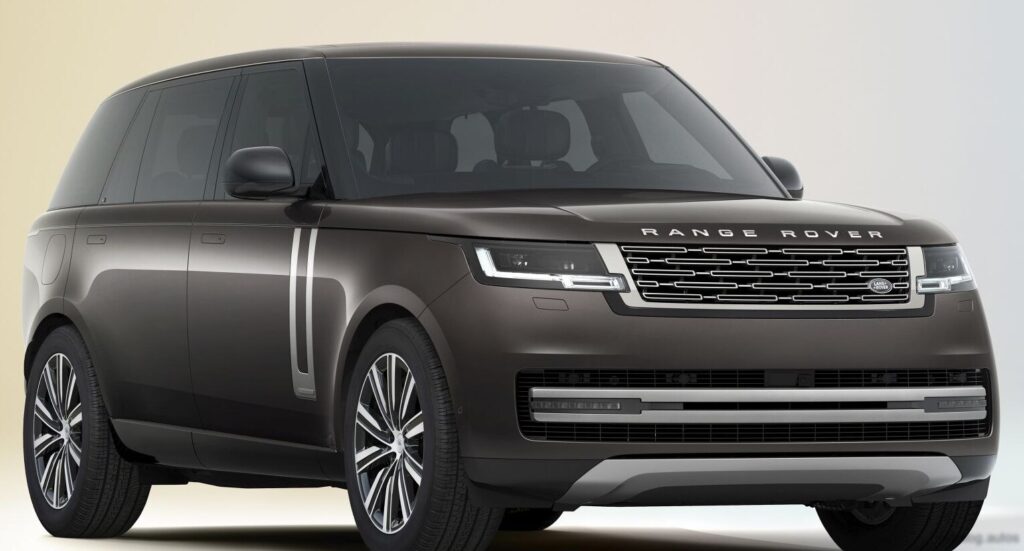
The Land Rover Range Rover V LWB 3.0 P460e, introduced in May 2023, represents the fifth generation (L460) of the iconic luxury SUV, specifically the long-wheelbase variant. This model is a plug-in hybrid electric vehicle (PHEV) designed to balance performance with improved fuel efficiency and reduced emissions. Positioned as a premium offering within the Range Rover lineup, the P460e caters to buyers seeking a luxurious and technologically advanced vehicle with the flexibility of electric-only driving for shorter journeys. It builds upon the established Range Rover reputation for off-road capability and refined comfort, while incorporating modern hybrid technology.
Technical Specifications
| Brand | Land Rover |
| Model | Range Rover |
| Generation | Range Rover V LWB |
| Type (Engine) | 3.0 P460e (460 Hp) Plug-in Hybrid AWD Automatic |
| Start of production | May, 2023 |
| Powertrain Architecture | PHEV (Plug-in Hybrid Electric Vehicle) |
| Body type | SUV |
| Seats | 5 |
| Doors | 5 |
| Combined fuel consumption (WLTP) | 0.6-0.8 l/100 km (392 – 294 US mpg, 470.8 – 353.1 UK mpg, 166.7 – 125 km/l) |
| CO2 emissions (WLTP) | 16-19 g/km |
| Fuel Type | Petrol / electricity |
| Acceleration 0 – 100 km/h | 6 sec |
| Acceleration 0 – 62 mph | 6 sec |
| Acceleration 0 – 60 mph | 5.7 sec |
| Maximum speed | 225 km/h (139.81 mph) |
| Emission standard | Euro 6d |
| Weight-to-power ratio | 5.9 kg/Hp, 168.2 Hp/tonne |
| Weight-to-torque ratio | 4.1 kg/Nm, 241.3 Nm/tonne |
| Gross battery capacity | 38.2 kWh |
| Net (usable) battery capacity | 31.8 kWh |
| Battery technology | Lithium-ion (Li-Ion) |
| Battery location | Below the floor, between front and rear seats |
| All-electric range (WLTP) | 111-120 km (68.97 – 74.56 mi) |
| Electric motor power | 218 Hp |
| Electric motor Torque | 450 Nm (331.9 lb.-ft.) |
| Electric motor location | Between the combustion engine and the transmission |
| System power | 460 Hp @ 5500-6500 rpm |
| System torque | 660 Nm @ 2000-5000 rpm (486.79 lb.-ft. @ 2000-5000 rpm) |
| Engine layout | Front, Longitudinal |
| Engine Model/Code | Ingenium |
| Engine displacement | 2997 cm3 (182.89 cu. in.) |
| Number of cylinders | 6 |
| Engine configuration | Inline |
| Cylinder Bore | 83 mm (3.27 in.) |
| Piston Stroke | 92.29 mm (3.63 in.) |
| Compression ratio | 10.5:1 |
| Number of valves per cylinder | 4 |
| Fuel injection system | Direct injection |
| Engine aspiration | Turbocharger, Intercooler |
| Engine oil capacity | 9.4 l (9.93 US qt | 8.27 UK qt) |
| Kerb Weight | 2735 kg (6029.64 lbs.) |
| Max. weight | 3480 kg (7672.09 lbs.) |
| Max load | 745 kg (1642.44 lbs.) |
| Trunk (boot) space – minimum | 818 l (28.89 cu. ft.) |
| Trunk (boot) space – maximum | 2176 l (76.84 cu. ft.) |
| Fuel tank capacity | 71.5 l (18.89 US gal | 15.73 UK gal) |
| Max. roof load | 100 kg (220.46 lbs.) |
| Length | 5252 mm (206.77 in.) |
| Width with mirrors folded | 2047 mm (80.59 in.) |
| Width including mirrors | 2209 mm (86.97 in.) |
| Height | 1870 mm (73.62 in.) |
| Wheelbase | 3197 mm (125.87 in.) |
| Front track | 1700 mm (66.93 in.) |
| Rear (Back) track | 1702 mm (67.01 in.) |
| Ride height (ground clearance) | 219-294 mm (8.62 – 11.57 in.) |
| Minimum turning circle (turning diameter) | 11.96 m (39.24 ft.) |
| Approach angle | 26.1-34.7° |
| Departure angle | 24.5-29° |
| Ramp-over (brakeover) angle | 20.1-25.9° |
| Wading depth | 900 mm (35.43 in.) |
| Drivetrain Architecture | The Internal combustion engine (ICE) and the electric motor permanently drive the four wheels of the car with the ability to work in full electric or mixed mode. |
| Drive wheel | All wheel drive (4×4) |
| Number of gears and type of gearbox | 8 gears, automatic transmission |
| Front suspension | Double wishbone |
| Rear suspension | Independent multi-link suspension |
| Front brakes | Ventilated discs, 400 mm |
| Rear brakes | Ventilated discs, 370 mm |
| Assisting systems | ABS (Anti-lock braking system) |
| Steering type | Steering rack and pinion |
| Power steering | Electric Steering |
INTRODUCTION
The Range Rover V LWB 3.0 P460e is a sophisticated blend of luxury, performance, and efficiency. Introduced as part of the fifth-generation Range Rover (L460) lineup, it offers a long-wheelbase configuration providing enhanced rear passenger space. The “P460e” designation signifies a 3.0-liter inline-six cylinder engine paired with an electric motor, delivering a combined system output of 460 horsepower. This plug-in hybrid variant aims to appeal to environmentally conscious buyers who don’t want to compromise on the Range Rover’s renowned capabilities. The L460 platform represents a significant leap forward in terms of technology, refinement, and off-road prowess compared to its predecessor.
Powertrain & Engine Architecture
At the heart of the P460e lies Land Rover’s Ingenium 3.0-liter inline-six cylinder engine, featuring a turbocharger and direct fuel injection. This engine, internally designated as P460, produces a substantial amount of power on its own. However, it’s the integration of a 38.2 kWh (gross) / 31.8 kWh (net) lithium-ion battery pack and a 218 hp electric motor that elevates the powertrain. The electric motor is strategically positioned between the engine and the eight-speed automatic transmission, allowing for seamless transitions between electric, hybrid, and petrol power. The engine utilizes a sophisticated engine management system to optimize combustion and minimize emissions. The eight-speed automatic transmission is calibrated to work harmoniously with both the engine and the electric motor, providing smooth and efficient gear changes.
Driving Characteristics
The driving experience in the Range Rover P460e is remarkably refined. In electric-only mode, the vehicle offers near-silent operation and instant torque, making it ideal for urban driving. The all-electric range of 111-120 km (68.97 – 74.56 miles) allows for many daily commutes to be completed without using any petrol. When the battery is depleted or more power is required, the petrol engine seamlessly kicks in, providing a combined output of 460 hp and 660 Nm (486.79 lb-ft) of torque. This results in brisk acceleration, with a 0-60 mph time of 5.7 seconds. The long wheelbase contributes to a comfortable and stable ride, while the advanced suspension system effectively isolates passengers from road imperfections. Compared to other Range Rover variants, the P460e prioritizes efficiency and refinement over outright performance, offering a more relaxed and composed driving experience than, for example, the higher-powered petrol models.
Equipment & Trim Levels
The Range Rover V LWB 3.0 P460e is generously equipped with standard features, reflecting its premium positioning. These include a luxurious interior with leather upholstery, heated and ventilated front seats, a panoramic sunroof, and a premium sound system. The long-wheelbase configuration provides ample legroom for rear passengers, enhancing comfort on long journeys. Standard technology features include a large touchscreen infotainment system with navigation, Apple CarPlay, and Android Auto compatibility, as well as a suite of advanced driver-assistance systems such as adaptive cruise control, lane-keeping assist, and automatic emergency braking. Optional extras include executive-class rear seating with massage functions, a rear entertainment system, and a variety of bespoke interior trim options.
Chassis & Braking
The Range Rover V LWB 3.0 P460e utilizes a robust chassis and sophisticated suspension system designed to deliver both on-road comfort and off-road capability. The front suspension features a double-wishbone design, while the rear utilizes an independent multi-link setup. Air suspension is standard, allowing for adjustable ride height and improved off-road performance. The braking system consists of ventilated discs on all four wheels, providing ample stopping power. The electronic stability control system is integrated with the Terrain Response system, allowing drivers to optimize the vehicle’s settings for various driving conditions, including grass, gravel, snow, mud, and sand.
Market Reception & Comparison
The Range Rover P460e has been well-received by critics and consumers alike. Its combination of luxury, performance, and efficiency has proven to be a compelling proposition. Compared to other Range Rover variants, the P460e offers significantly improved fuel economy and reduced emissions, making it an attractive option for environmentally conscious buyers. While the initial purchase price is higher than that of petrol-only models, the potential savings on fuel and taxes can offset the cost over time. The P460e competes with other luxury plug-in hybrid SUVs, such as the BMW X7 xDrive40e and the Volvo XC90 Recharge, offering a similar blend of features and performance.
Legacy
The Range Rover V LWB 3.0 P460e represents a significant step towards electrification for the iconic brand. Its advanced plug-in hybrid powertrain demonstrates Land Rover’s commitment to reducing its environmental impact while maintaining its reputation for luxury and capability. The long-term reliability of the powertrain remains to be seen, but Land Rover has invested heavily in the development and testing of its hybrid technology. As the automotive industry continues to transition towards electric vehicles, the P460e is likely to become an increasingly desirable model in the used car market, appealing to buyers seeking a sophisticated and environmentally friendly luxury SUV.