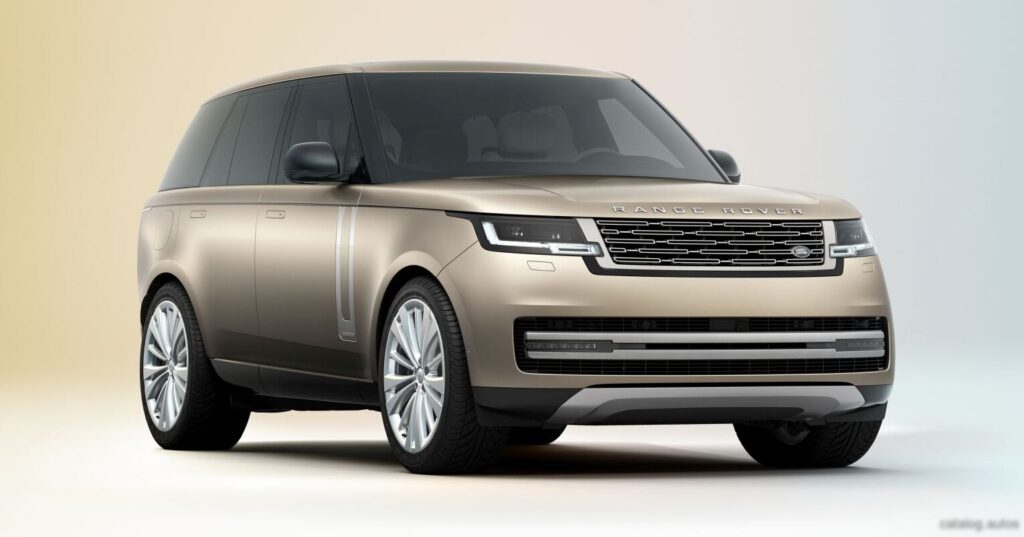
The Land Rover Range Rover V SWB 3.0 D350, introduced in October 2021, represents the fifth generation (L460) of the iconic Range Rover, specifically the short wheelbase (SWB) variant. This model occupies a significant position within the Range Rover lineup, offering a blend of luxury, off-road capability, and performance. The “D350” designation indicates a 3.0-liter inline-six diesel engine producing 351 horsepower, coupled with a mild-hybrid system and an eight-speed automatic transmission, driving all four wheels. It’s positioned as a mid-to-high range offering, appealing to buyers seeking a powerful and refined SUV experience without opting for the top-tier, higher-priced models.
Technical Specifications
| Brand | Land Rover |
| Model | Range Rover |
| Generation | Range Rover V SWB |
| Type (Engine) | 3.0 D350 (351 Hp) Mild Hybrid AWD Automatic |
| Start of production | October, 2021 |
| Powertrain Architecture | MHEV (Mild Hybrid Electric Vehicle) |
| Body type | SUV |
| Seats | 5 |
| Doors | 5 |
| Combined fuel consumption (WLTP) | 7.6-8.3 l/100 km (30.9 – 28.3 US mpg) |
| CO2 emissions (WLTP) | 198-217 g/km |
| Fuel Type | Diesel |
| Acceleration 0 – 100 km/h | 6.1 sec |
| Acceleration 0 – 60 mph | 5.8 sec |
| Maximum speed | 234 km/h (145.4 mph) |
| Emission standard | Euro 6d Final |
| Weight-to-power ratio | 6.9 kg/Hp |
| Weight-to-torque ratio | 3.5 kg/Nm |
| Power | 351 Hp |
| Torque | 700 Nm (516.29 lb.-ft.) |
| Engine layout | Front, Longitudinal |
| Engine displacement | 2997 cm3 (182.89 cu. in.) |
| Number of cylinders | 6 |
| Engine configuration | Inline |
| Cylinder Bore | 83 mm (3.27 in.) |
| Piston Stroke | 92.31 mm (3.63 in.) |
| Compression ratio | 15.5:1 |
| Number of valves per cylinder | 4 |
| Fuel injection system | Diesel Commonrail |
| Engine aspiration | Turbocharger, Intercooler |
| Engine oil capacity | 10.4 l (10.99 US qt | 9.15 UK qt) |
| Kerb Weight | 2430 kg (5357.23 lbs.) |
| Trunk (boot) space – minimum | 725 l (25.6 cu. ft.) |
| Trunk (boot) space – maximum | 1841 l (65.01 cu. ft.) |
| Fuel tank capacity | 80 l (21.13 US gal | 17.6 UK gal) |
| AdBlue tank | 20 l (5.28 US gal | 4.4 UK gal) |
| Permitted trailer load with brakes (12%) | 3500 kg (7716.18 lbs.) |
| Permitted trailer load without brakes | 750 kg (1653.47 lbs.) |
| Length | 5052 mm (198.9 in.) |
| Width with mirrors folded | 2047 mm (80.59 in.) |
| Width including mirrors | 2209 mm (86.97 in.) |
| Height | 1870 mm (73.62 in.) |
| Wheelbase | 2997 mm (117.99 in.) |
| Front track | 1702 mm (67.01 in.) |
| Rear track | 1704 mm (67.09 in.) |
| Ride height (ground clearance) | 295 mm (11.61 in.) |
| Drag coefficient (Cd) | 0.31 |
| Minimum turning circle | 11.37 m (37.3 ft.) |
| Front suspension | Double wishbone |
| Rear suspension | Independent multi-link suspension |
| Front brakes | Ventilated discs, 380 mm |
| Rear brakes | Ventilated discs, 355 mm |
| Number of gears | 8 |
| Type of gearbox | automatic transmission |
Powertrain & Engine Architecture
The heart of the Range Rover D350 is the Ingenium 3.0-liter inline-six diesel engine, designated as a ‘D350’ due to its 351 horsepower output. This engine utilizes a sophisticated diesel commonrail fuel injection system, delivering precise fuel metering for optimal combustion. A single variable geometry turbocharger, coupled with an intercooler, enhances power and torque across the rev range. The engine boasts a high compression ratio of 15.5:1, contributing to its efficiency. The mild-hybrid system, a 48-volt setup, incorporates a Belt-integrated Starter Generator (BiSG) that assists the engine during acceleration, enabling smoother starts and improved fuel economy. The BiSG also allows for extended stop/start functionality. The engine is longitudinally mounted in the front of the vehicle. The eight-speed automatic transmission, sourced from ZF, is known for its smooth and responsive shifts. It’s programmed to prioritize comfort and refinement, but also offers manual override via paddle shifters.
Driving Characteristics
The D350 powertrain delivers a compelling driving experience. While not as overtly sporty as some of the petrol-powered Range Rovers, it provides ample torque (700 Nm / 516 lb-ft) for effortless acceleration and strong performance in various driving conditions. The 0-60 mph sprint takes approximately 5.8 seconds. The eight-speed automatic transmission is well-matched to the engine’s characteristics, providing smooth gear changes and keeping the engine within its optimal power band. Compared to the higher-output petrol engines, the D350 offers a more relaxed and refined driving experience, with a focus on comfortable cruising and effortless towing. Compared to the lower-powered diesel variants (like the D250), the D350 provides a noticeable increase in performance, making it more suitable for those who frequently tow or carry heavy loads.
Equipment & Trim Levels
The Range Rover V SWB D350 typically comes well-equipped as standard. Key features include premium leather upholstery, a touchscreen infotainment system with navigation, a panoramic sunroof, and a comprehensive suite of driver-assistance systems. Standard trim levels often include features like heated and ventilated front seats, a premium sound system, and automatic climate control. Optional extras can include upgraded leather options, rear-seat entertainment systems, and advanced off-road packages. The interior design emphasizes luxury and sophistication, with high-quality materials and meticulous attention to detail.
Chassis & Braking
The Range Rover V SWB utilizes a sophisticated chassis design, featuring double-wishbone front suspension and an independent multi-link rear suspension. This setup provides a comfortable ride quality while maintaining excellent handling characteristics. Air suspension is standard, allowing for adjustable ride height and improved off-road capability. The braking system consists of ventilated discs on all four wheels, with larger discs at the front (380mm) compared to the rear (355mm). Anti-lock braking system (ABS) and electronic stability control (ESC) are standard safety features.
Market Reception & Comparison
The Range Rover V SWB D350 has been generally well-received by automotive critics. It’s praised for its blend of luxury, performance, and off-road capability. Fuel economy is respectable for a vehicle of its size and weight, achieving around 30.9-28.3 US mpg on the combined cycle. Compared to the petrol-powered Range Rovers, the D350 offers better fuel economy and lower running costs. However, some critics note that the diesel engine can be slightly noisier than the petrol alternatives. Reliability has been a concern for some Range Rover models, but the Ingenium engine family has generally proven to be more reliable than previous Land Rover powertrains.
Legacy
The 3.0-liter Ingenium diesel engine, particularly in the D350 configuration, has become a popular choice for Range Rover buyers. Its combination of power, efficiency, and refinement has made it a strong contender in the luxury SUV segment. While the automotive industry is shifting towards electrification, the D350 remains a relevant option for those who prioritize diesel power and long-range capability. On the used car market, well-maintained D350 models hold their value relatively well, reflecting the Range Rover’s enduring appeal and the engine’s proven reliability.