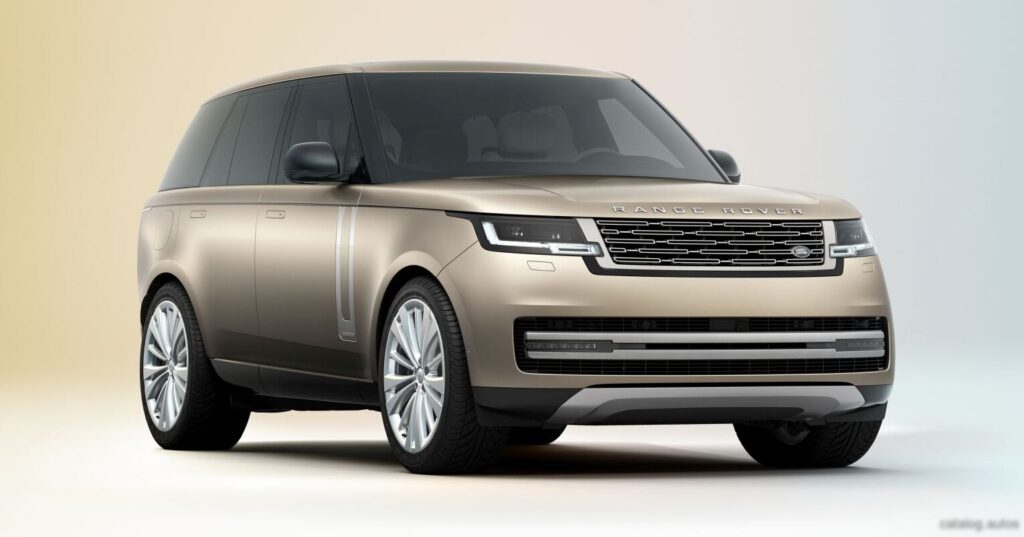
The Land Rover Range Rover V SWB 3.0 P400, introduced in October 2021, represents the fifth generation (L460) of the iconic Range Rover, specifically in its short wheelbase configuration. This variant occupies a significant position within the Range Rover lineup, offering a blend of luxury, performance, and off-road capability. It’s positioned as a mid-to-high range offering, appealing to buyers seeking a powerful and refined SUV without the extended length of the long wheelbase models. The “P400” designation signifies the engine – a 3.0-liter inline-six cylinder gasoline engine producing 400 horsepower, enhanced with mild hybrid technology. This model is primarily targeted towards the North American, European, and Asian markets where demand for luxury SUVs remains strong.
Technical Specifications
| Brand | Land Rover |
| Model | Range Rover |
| Generation | Range Rover V SWB |
| Type (Engine) | 3.0 P400 (400 Hp) Mild Hybrid AWD Automatic |
| Start of production | October, 2021 |
| Powertrain Architecture | MHEV (Mild Hybrid Electric Vehicle) |
| Body type | SUV |
| Seats | 5 |
| Doors | 5 |
| Combined fuel consumption (WLTP) | 9.5-10.2 l/100 km (24.8 – 23.1 US mpg) |
| CO2 emissions (WLTP) | 215-230 g/km |
| Fuel Type | Petrol (Gasoline) |
| Acceleration 0 – 100 km/h | 5.8 sec |
| Acceleration 0 – 60 mph | 5.5 sec |
| Maximum speed | 242 km/h (150.37 mph) |
| Engine Power | 400 Hp |
| Torque | 550 Nm (405.66 lb.-ft.) |
| Engine displacement | 2996 cm3 (182.83 cu. in.) |
| Number of cylinders | 6 |
| Engine configuration | Inline |
| Kerb Weight | 2379 kg (5244.8 lbs.) |
| Trunk (boot) space – minimum | 725 l (25.6 cu. ft.) |
| Trunk (boot) space – maximum | 1841 l (65.01 cu. ft.) |
| Fuel tank capacity | 90 l (23.78 US gal) |
| Length | 5052 mm (198.9 in.) |
| Width with mirrors folded | 2047 mm (80.59 in.) |
| Height | 1870 mm (73.62 in.) |
| Wheelbase | 2997 mm (117.99 in.) |
| Number of gears | 8 |
| Gearbox type | Automatic transmission |
Powertrain & Engine Architecture
The heart of the Range Rover P400 is Land Rover’s Ingenium 3.0-liter inline-six cylinder engine, designated as the P400. This engine utilizes a sophisticated combination of technologies, including direct fuel injection, a single twin-scroll turbocharger, and a 48-volt mild hybrid system. The mild hybrid system incorporates a Belt-integrated Starter Generator (BiSG) which assists the engine during acceleration, enabling smoother starts and improved fuel efficiency. The engine produces 400 horsepower and 550 Nm (405.66 lb.-ft.) of torque. The engine’s architecture is designed for both performance and refinement, with features like variable valve timing and a carefully tuned exhaust system. The engine is longitudinally mounted, driving all four wheels through a ZF-sourced eight-speed automatic transmission. This transmission is known for its smooth shifting and responsiveness, and is calibrated specifically for the Range Rover’s driving characteristics.
Driving Characteristics
The Range Rover P400 delivers a compelling driving experience, balancing performance with the expected comfort of a luxury SUV. The 400 horsepower and 550 Nm of torque provide brisk acceleration, with a 0-60 mph time of around 5.5 seconds. The eight-speed automatic transmission contributes to this performance, offering quick and seamless gear changes. The mild hybrid system provides a noticeable boost during initial acceleration, minimizing turbo lag. Compared to the higher-performance P530 variant, the P400 offers a more relaxed and fuel-efficient driving experience. While it doesn’t possess the outright speed of the P530, it still provides ample power for everyday driving and overtaking maneuvers. The all-wheel-drive system ensures excellent traction in various conditions, while the air suspension provides a comfortable and controlled ride, even on rough terrain.
Equipment & Trim Levels
The Range Rover V SWB 3.0 P400 comes standard with a high level of equipment, reflecting its luxury positioning. Standard features typically include premium leather upholstery, a panoramic sunroof, a high-end Meridian sound system, and a comprehensive suite of driver-assistance technologies such as adaptive cruise control, lane-keeping assist, and automatic emergency braking. The infotainment system features a large touchscreen display with navigation, Apple CarPlay, and Android Auto compatibility. Optional extras include upgraded leather trims, executive rear seating packages, and a variety of exterior styling enhancements. Trim levels beyond the base model often add features like massaging seats, more advanced driver-assistance systems, and unique interior finishes.
Chassis & Braking
The Range Rover V SWB utilizes a robust chassis designed for both on-road comfort and off-road capability. It features a double-wishbone front suspension and an independent multi-link rear suspension, both with air suspension as standard. This air suspension system allows for adjustable ride height and damping, providing a smooth and controlled ride on various surfaces. The braking system consists of ventilated discs on all four wheels, with larger discs at the front (380mm) compared to the rear (355mm). The braking system is assisted by ABS (Anti-lock Braking System), Electronic Brakeforce Distribution (EBD), and Emergency Brake Assist (EBA). The steering system is an electric power-assisted rack and pinion system, providing precise and responsive steering feel.
Market Reception & Comparison
The Range Rover P400 has been generally well-received by automotive critics. It’s praised for its blend of performance, luxury, and refinement. Fuel economy, while not exceptional for a vehicle of its size and weight (9.5-10.2 l/100 km), is considered reasonable given its performance capabilities. Compared to the diesel-powered D300 and D350 variants, the P400 offers a more responsive and refined driving experience, albeit with slightly higher fuel consumption. It also provides a compelling alternative to competitors such as the BMW X5, Mercedes-Benz GLE, and Porsche Cayenne, offering a unique combination of luxury, off-road capability, and British heritage.
Legacy
The Ingenium engine family, including the 3.0-liter P400, is expected to be a mainstay of the Range Rover lineup for years to come. While long-term reliability data is still emerging for this specific generation, Land Rover has made significant strides in improving the reliability of its vehicles. The mild hybrid technology incorporated into the P400 powertrain is likely to become increasingly common in future Range Rover models, as manufacturers strive to improve fuel efficiency and reduce emissions. On the used car market, the 2021 and later Range Rover P400 models are expected to hold their value well, due to the brand’s reputation for luxury and durability, and the appeal of the powerful and refined powertrain.