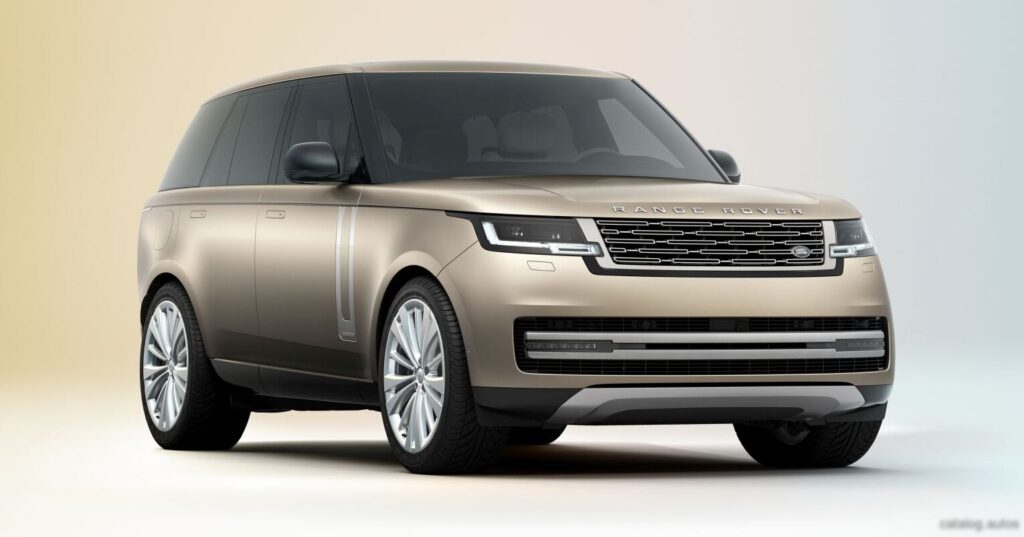
The Land Rover Range Rover V SWB 3.0 P440e, produced from January 2022 to May 2023, represents a significant step in the fifth generation (V) of the iconic Range Rover line. This short wheelbase (SWB) variant combines a 3.0-liter inline-six cylinder engine with an electric motor, creating a plug-in hybrid electric vehicle (PHEV) offering. Positioned as a premium offering within the Range Rover lineup, the P440e aimed to deliver both luxurious comfort and improved fuel efficiency, appealing to buyers seeking a sophisticated and environmentally conscious SUV. It’s a key model in Land Rover’s strategy to electrify its range, offering a blend of performance and reduced emissions.
Technical Specifications
| Brand | Land Rover |
| Model | Range Rover |
| Generation | Range Rover V SWB |
| Type (Engine) | 3.0 P440e (441 Hp) Plug-in Hybrid AWD Automatic |
| Start of production | January, 2022 |
| End of production | May, 2023 |
| Powertrain Architecture | PHEV (Plug-in Hybrid Electric Vehicle) |
| Body type | SUV |
| Seats | 5 |
| Doors | 5 |
| Combined fuel consumption (WLTP) | 0.8-0.9 l/100 km (294 – 261.3 US mpg, 353.1 – 313.9 UK mpg, 125 – 111.1 km/l) |
| CO2 emissions (WLTP) | 18-21 g/km |
| Fuel Type | Petrol / electricity |
| Acceleration 0 – 100 km/h | 6 sec |
| Acceleration 0 – 62 mph | 6 sec |
| Acceleration 0 – 60 mph | 5.7 sec |
| Maximum speed | 225 km/h (139.81 mph) |
| Emission standard | Euro 6d Final |
| Weight-to-power ratio | 6.1 kg/Hp, 163.6 Hp/tonne |
| Weight-to-torque ratio | 4.3 kg/Nm, 230.1 Nm/tonne |
| Gross battery capacity | 38.2 kWh |
| Net (usable) battery capacity | 31.8 kWh |
| Battery technology | Lithium-ion (Li-Ion) |
| Battery location | Below the floor, between front and rear seats |
| All-electric range (WLTP) | 113 km (70.21 mi) |
| Electric motor power | 143 Hp |
| Electric motor location | Between the combustion engine and the transmission |
| System power | 441 Hp |
| System torque | 620 Nm (457.29 lb.-ft.) |
| Engine layout | Front, Longitudinal |
| Engine displacement | 2996 cm3 (182.83 cu. in.) |
| Number of cylinders | 6 |
| Engine configuration | Inline |
| Cylinder Bore | 83 mm (3.27 in.) |
| Piston Stroke | 92.29 mm (3.63 in.) |
| Compression ratio | 10.5:1 |
| Number of valves per cylinder | 4 |
| Fuel injection system | Direct injection |
| Engine aspiration | Turbocharger, Intercooler |
| Engine oil capacity | 9.4 l (9.93 US qt | 8.27 UK qt) |
| Kerb Weight | 2695 kg (5941.46 lbs.) |
| Trunk (boot) space – minimum | 725 l (25.6 cu. ft.) |
| Trunk (boot) space – maximum | 1841 l (65.01 cu. ft.) |
| Fuel tank capacity | 71.5 l (18.89 US gal | 15.73 UK gal) |
| Permitted trailer load with brakes (12%) | 2500 kg (5511.56 lbs.) |
| Permitted trailer load without brakes | 750 kg (1653.47 lbs.) |
| Length | 5052 mm (198.9 in.) |
| Width with mirrors folded | 2047 mm (80.59 in.) |
| Width including mirrors | 2209 mm (86.97 in.) |
| Height | 1870 mm (73.62 in.) |
| Wheelbase | 2997 mm (117.99 in.) |
| Front track | 1702 mm (67.01 in.) |
| Rear (Back) track | 1704 mm (67.09 in.) |
| Front overhang | 860 mm (33.86 in.) |
| Rear overhang | 1195 mm (47.05 in.) |
| Ride height (ground clearance) | 284 mm (11.18 in.) |
| Drag coefficient (Cd) | 0.30 |
| Minimum turning circle (turning diameter) | 11.37 m (37.3 ft.) |
| Approach angle | 34.7° |
| Departure angle | 29° |
| Ramp-over (brakeover) angle | 25.2° |
| Wading depth | 900 mm (35.43 in.) |
| Drivetrain Architecture | The Internal combustion engine (ICE) and the electric motor permanently drive the four wheels of the car with the ability to work in full electric or mixed mode. |
| Drive wheel | All wheel drive (4×4) |
| Number of gears and type of gearbox | 8 gears, automatic transmission |
| Front suspension | Double wishbone |
| Rear suspension | Independent multi-link suspension |
| Front brakes | Ventilated discs, 400 mm |
| Rear brakes | Ventilated discs, 370 mm |
| Steering type | Steering rack and pinion |
| Power steering | Electric Steering |
Powertrain & Engine Architecture
At the heart of the P440e lies Land Rover’s Ingenium 3.0-liter inline-six cylinder engine, designated as the P440. This engine utilizes a turbocharger and direct fuel injection to produce 400 horsepower. Combined with the 143 horsepower electric motor integrated between the engine and the eight-speed automatic transmission, the total system output reaches 441 horsepower and 620 Nm (457 lb-ft) of torque. The electric motor draws power from a 31.8 kWh (usable) lithium-ion battery pack positioned under the floor, between the front and rear seats. This placement minimizes intrusion into the passenger or cargo areas. The engine features a Start & Stop system and a particulate filter to reduce emissions. The eight-speed automatic transmission is calibrated to work seamlessly with both the combustion engine and the electric motor, providing smooth and efficient power delivery.
Driving Characteristics
The P440e offers a unique driving experience. In electric-only mode, it provides near-silent operation and instant torque, making it ideal for urban driving. The 113 km (70.21 miles) of all-electric range allows for many daily commutes to be completed without using the gasoline engine. When the battery is depleted or more power is needed, the gasoline engine seamlessly kicks in, providing a combined output that delivers strong acceleration – 0-60 mph in 5.7 seconds. The eight-speed automatic transmission is well-tuned, offering smooth gear changes. Compared to the non-hybrid Range Rover models, the P440e prioritizes efficiency and refinement over outright performance, though it still offers ample power for overtaking and highway cruising. The added weight of the battery pack is noticeable, but the sophisticated suspension system mitigates much of the impact on handling.
Equipment & Trim Levels
The Range Rover V SWB 3.0 P440e came standard with a high level of equipment, reflecting its premium positioning. Standard features included leather upholstery, a panoramic sunroof, a premium sound system, and a comprehensive suite of driver-assistance technologies such as adaptive cruise control, lane-keeping assist, and automatic emergency braking. The infotainment system featured a large touchscreen display with navigation, Apple CarPlay, and Android Auto compatibility. Optional extras included upgraded leather trims, executive rear seating packages, and advanced off-road features. The interior design emphasized luxury and comfort, with high-quality materials and meticulous attention to detail.
Chassis & Braking
The Range Rover V SWB utilizes a robust chassis designed for both on-road comfort and off-road capability. The suspension system features double wishbones at the front and an independent multi-link setup at the rear, providing a smooth and controlled ride. Ventilated disc brakes are fitted to all four wheels, with larger 400mm discs at the front and 370mm discs at the rear, ensuring ample stopping power. The electronic stability control system and anti-lock braking system (ABS) work in conjunction to enhance safety and stability. The vehicle’s Terrain Response system allows the driver to select different driving modes optimized for various surfaces, such as grass, gravel, snow, mud, and sand.
Market Reception & Comparison
The Range Rover P440e was generally well-received by critics, who praised its blend of luxury, performance, and efficiency. The plug-in hybrid powertrain was seen as a significant step forward in reducing emissions without compromising the Range Rover’s renowned comfort and capability. Compared to the petrol-only Range Rover models, the P440e offered significantly improved fuel economy, particularly for drivers who frequently commute short distances and can take advantage of the electric-only range. However, the higher price tag and added weight were noted as potential drawbacks. Compared to other PHEV SUVs in the luxury segment, the Range Rover P440e stood out for its superior off-road capability and overall refinement.
Legacy
The Land Rover Range Rover V SWB 3.0 P440e represents an important milestone in the brand’s transition towards electrification. While relatively short-lived in production, it established the Range Rover as a viable plug-in hybrid option, paving the way for future electric models. The Ingenium engine and eight-speed automatic transmission have proven to be reliable, and the hybrid system has generally demonstrated good durability. On the used car market, the P440e holds its value well, appealing to buyers seeking a luxurious and efficient SUV with a reduced environmental impact. Its combination of performance, comfort, and technology continues to make it a desirable choice for discerning buyers.