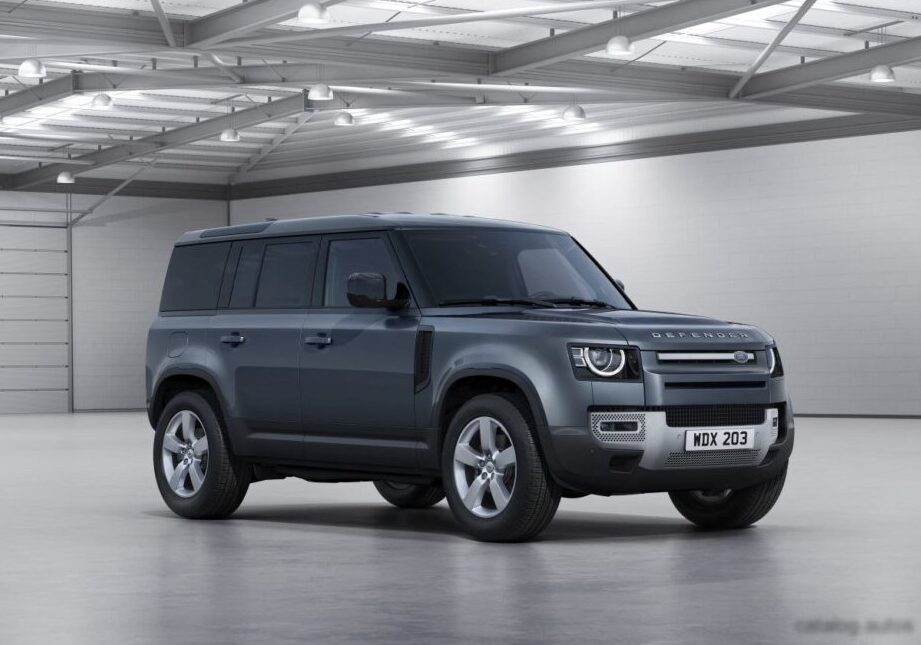
The Land Rover Range Rover Velar P 380, produced from 2017 to April 2018, represents a compelling blend of luxury, performance, and technology within the Velar model range. Positioned as a mid-to-high-tier offering, the P 380 featured a supercharged 3.0-liter V6 engine paired with an eight-speed automatic transmission and all-wheel drive. It occupied a space above the entry-level four-cylinder models but below the even more potent supercharged V8 variants, appealing to buyers seeking a significant performance upgrade without the top-tier price tag. The Velar itself was a crucial addition to the Range Rover lineup, aiming to bridge the gap between the Evoque and the full-size Range Rover, offering a more stylish and technologically advanced alternative.
Technical Specifications
| Brand | Land Rover |
| Model | Range Rover Velar |
| Type (Engine) | P 380 3.0 V6 (380 Hp) AWD Automatic |
| Start of production | 2017 |
| End of production | April, 2018 |
| Powertrain Architecture | Internal Combustion engine |
| Body type | SUV |
| Seats | 5 |
| Doors | 5 |
| Fuel consumption (urban) | 12.7 l/100 km (18.5 US mpg, 22.2 UK mpg, 7.9 km/l) |
| Fuel consumption (extra urban) | 7.5 l/100 km (31.4 US mpg, 37.7 UK mpg, 13.3 km/l) |
| Fuel consumption (combined) | 9.4 l/100 km (25 US mpg, 30.1 UK mpg, 10.6 km/l) |
| CO2 emissions | 214 g/km |
| Fuel Type | Petrol (Gasoline) |
| Acceleration 0 – 100 km/h | 5.7 sec |
| Acceleration 0 – 62 mph | 5.7 sec |
| Acceleration 0 – 60 mph | 5.4 sec |
| Maximum speed | 250 km/h (155.34 mph) |
| Emission standard | Euro 6 |
| Weight-to-power ratio | 5 kg/Hp, 201.7 Hp/tonne |
| Weight-to-torque ratio | 4.2 kg/Nm, 238.9 Nm/tonne |
| Power | 380 Hp @ 6500 rpm |
| Power per litre | 126.9 Hp/l |
| Torque | 450 Nm @ 3500-5000 rpm (331.9 lb.-ft. @ 3500-5000 rpm) |
| Engine layout | Front, Longitudinal |
| Engine Model/Code | 306PS |
| Engine displacement | 2995 cm3 (182.77 cu. in.) |
| Number of cylinders | 6 |
| Engine configuration | V-engine |
| Cylinder Bore | 84.5 mm (3.33 in.) |
| Piston Stroke | 89 mm (3.5 in.) |
| Compression ratio | 10.5:1 |
| Number of valves per cylinder | 4 |
| Fuel injection system | Direct injection |
| Engine aspiration | Supercharger, Intercooler |
| Valvetrain | DOHC |
| Engine oil capacity | 6.5 l (6.87 US qt | 5.72 UK qt) |
| Coolant | 13.5 l (14.27 US qt | 11.88 UK qt) |
| Kerb Weight | 1884 kg (4153.51 lbs.) |
| Trunk (boot) space – minimum | 673 l (23.77 cu. ft.) |
| Trunk (boot) space – maximum | 1731 l (61.13 cu. ft.) |
| Fuel tank capacity | 63 l (16.64 US gal | 13.86 UK gal) |
| Permitted trailer load with brakes (8%) | 2500 kg (5511.56 lbs.) |
| Permitted trailer load without brakes | 750 kg (1653.47 lbs.) |
| Length | 4803 mm (189.09 in.) |
| Width with mirrors folded | 2032 mm (80 in.) |
| Width including mirrors | 2145 mm (84.45 in.) |
| Height | 1665 mm (65.55 in.) |
| Wheelbase | 2874 mm (113.15 in.) |
| Front track | 1640-1644 mm (64.57 – 64.72 in.) |
| Rear (Back) track | 1657-1663 mm (65.24 – 65.47 in.) |
| Ride height (ground clearance) | 213-251 mm (8.39 – 9.88 in.) |
| Drag coefficient (Cd) | 0.36 |
| Minimum turning circle (turning diameter) | 11.6 m (38.06 ft.) |
| Approach angle | 25.93- 28.89° |
| Departure angle | 27.3-29.5° |
| Ramp-over (brakeover) angle | 21-23.5° |
| Wading depth | 600-650 mm (23.62 – 25.59 in.) |
| Drive wheel | All wheel drive (4×4) |
| Number of gears and type of gearbox | 8 gears, automatic transmission |
| Front suspension | Double wishbone |
| Rear suspension | Independent multi-link suspension |
| Front brakes | Ventilated discs |
| Rear brakes | Ventilated discs |
| Assisting systems | ABS (Anti-lock braking system) |
| Steering type | Steering rack and pinion |
| Power steering | Electric Steering |
Powertrain & Engine Architecture
The heart of the Velar P 380 is Jaguar Land Rover’s AJ206 engine family, specifically the 3.0-liter supercharged V6. This engine, designated as the 306PS variant, utilizes a sixth-generation twin-vortex supercharger integrated directly into the intake manifold. This configuration provides near-instantaneous boost, minimizing turbo lag and delivering a responsive driving experience. Direct fuel injection, combined with a double overhead camshaft (DOHC) valvetrain and four valves per cylinder, optimizes combustion efficiency and power output. The engine’s longitudinal mounting and all-wheel-drive system contribute to balanced handling. The eight-speed automatic transmission, sourced from ZF, is known for its smooth shifts and wide gear ratio spread, enhancing both acceleration and fuel economy.
Driving Characteristics
The P 380 offers a noticeably more spirited driving experience compared to the lower-powered four-cylinder Velar models. The supercharged V6 delivers strong acceleration, achieving 0-60 mph in approximately 5.4 seconds. The eight-speed automatic transmission is well-tuned, providing quick and seamless gear changes. While not as overtly sporty as some competitors, the Velar P 380 strikes a good balance between comfort and performance. The all-wheel-drive system provides excellent traction in various conditions, and the suspension offers a comfortable ride without feeling overly soft. The gear ratios are optimized for both everyday driving and more aggressive acceleration, with lower gears providing quick response and higher gears prioritizing fuel efficiency at cruising speeds.
Equipment & Trim Levels
The P 380 trim typically included a generous array of standard features. Interior appointments generally featured leather upholstery, power-adjustable seats, and a premium sound system. Standard technology included the Touch Pro Duo infotainment system with dual touchscreens, navigation, and smartphone integration. Optional extras included features like a panoramic sunroof, adaptive cruise control, a head-up display, and upgraded leather options. The P 380 often served as a platform for adding various Land Rover accessory packages, allowing buyers to personalize their vehicle to their specific needs and preferences.
Chassis & Braking
The Velar P 380 utilizes a lightweight aluminum-intensive chassis, contributing to its relatively low curb weight of around 4,153 pounds. The suspension system features double wishbones at the front and an independent multi-link setup at the rear, providing a comfortable and controlled ride. Ventilated disc brakes are fitted on all four wheels, providing ample stopping power. The electronic stability control (ESC) system and anti-lock braking system (ABS) work in conjunction to enhance safety and stability. The P 380’s suspension tuning is geared towards providing a balance between on-road comfort and off-road capability, although it’s primarily designed as a road-focused SUV.
Market Reception & Comparison
The Range Rover Velar P 380 was generally well-received by automotive critics. Reviewers praised its stylish design, luxurious interior, and strong performance. The supercharged V6 engine was consistently highlighted as a key strength, offering a significant performance upgrade over the base engine options. Fuel economy, while not exceptional, was considered acceptable for a vehicle of its size and performance. Compared to competitors like the Porsche Macan and BMW X3, the Velar P 380 offered a more luxurious and visually striking alternative, although it may not have matched the outright sportiness of some rivals.
Legacy
The Land Rover Range Rover Velar P 380, while a relatively short-lived variant, has established itself as a desirable used car option. The 3.0-liter supercharged V6 engine has proven to be reasonably reliable, although regular maintenance is crucial. Common issues reported include occasional oil leaks and potential problems with the water pump. The eight-speed ZF transmission is generally considered robust and reliable. As a whole, the P 380 offers a compelling combination of luxury, performance, and style, making it a popular choice for buyers seeking a premium SUV with a strong engine and a refined driving experience. Its continued presence in the used car market reflects its enduring appeal and the overall quality of the Range Rover Velar platform.