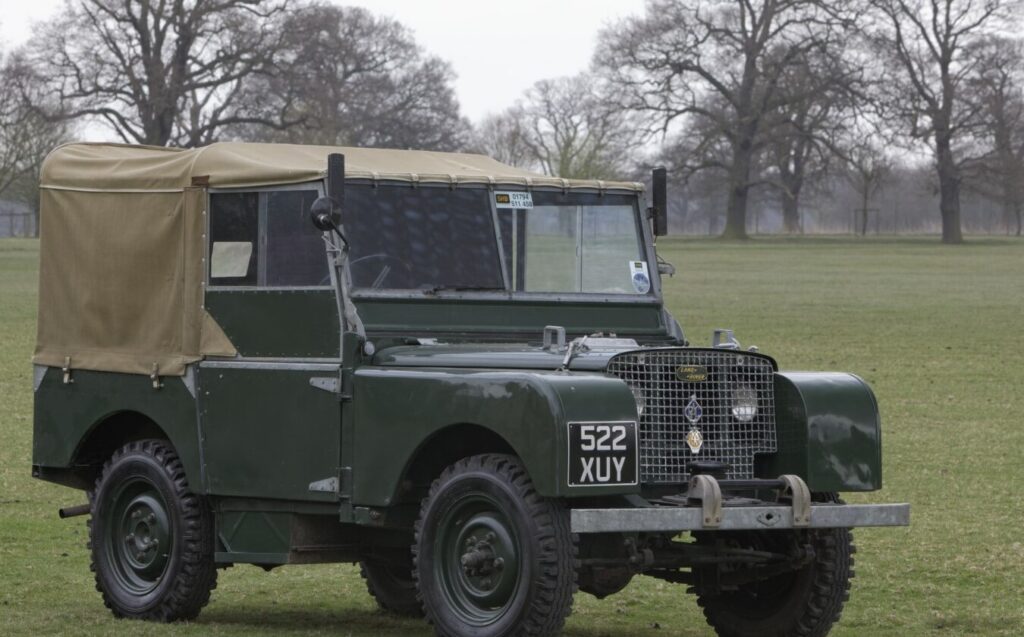
The Land Rover Series I 1.6, produced between 1948 and 1951, represents the foundational iteration of what would become an iconic British four-wheel-drive vehicle. This early variant, powered by a modest 1.6-liter petrol engine developing 50 horsepower, played a crucial role in establishing the Series I’s reputation for ruggedness and utility. It was the initial offering in a vehicle line designed to fill a post-war need for a versatile, agricultural, and light industrial workhorse, particularly in rural areas. The Series I, and specifically this 1.6-liter version, was instrumental in defining the brand’s identity and setting the stage for decades of off-road vehicle development.
Technical Specifications
| Brand | Land Rover |
| Model | Series I |
| Generation | Series I |
| Type (Engine) | 1.6 (50 Hp) |
| Start of production | 1948 |
| End of production | 1951 |
| Powertrain Architecture | Internal Combustion engine |
| Body type | Off-road vehicle |
| Fuel Type | Petrol (Gasoline) |
| Power | 50 Hp @ 4000 rpm |
| Power per litre | 31.3 Hp/l |
| Engine displacement | 1595 cm3 |
| 97.33 cu. in. | |
| Number of cylinders | 4 |
| Engine configuration | Inline |
| Cylinder Bore | 69.5 mm |
| 2.74 in. | |
| Piston Stroke | 105 mm |
| 4.13 in. | |
| Compression ratio | 6.8:1 |
| Fuel injection system | Carburettor |
| Engine aspiration | Naturally aspirated engine |
Powertrain & Engine Architecture
The heart of the Series I 1.6 was a 1595cc (97.33 cubic inch) inline-four cylinder petrol engine. This engine, while relatively simple by modern standards, was robust and designed for durability rather than outright performance. It featured a long-stroke configuration (69.5mm bore and 105mm stroke), contributing to its low-end torque characteristics. The engine utilized a single carburetor for fuel delivery, a common practice for the era, and operated with a compression ratio of 6.8:1. The engine was mounted longitudinally in the front of the vehicle. The valve train employed a traditional overhead valve (OHV) configuration, with a single camshaft operating the valves via pushrods and rocker arms. This design was chosen for its simplicity and ease of maintenance, crucial considerations for a vehicle intended for use in remote locations. The engine’s 50 horsepower output was modest, but sufficient for the intended applications of the Series I, which prioritized capability over speed.
Driving Characteristics
The driving experience in a Series I 1.6 was decidedly utilitarian. With only 50 horsepower on tap, acceleration was slow, and hill climbing required careful gear selection and momentum. The vehicle was typically equipped with a four-speed manual transmission, which, while robust, demanded frequent shifting to keep the engine within its optimal power band. The low gearing provided ample torque for navigating challenging terrain, but limited the vehicle’s cruising speed on paved roads. The suspension, consisting of leaf springs front and rear, offered a comfortable ride on rough surfaces, but also resulted in a noticeable degree of body roll during cornering. Compared to later Series I models equipped with larger engines, the 1.6-liter version felt underpowered, particularly when fully loaded or towing a trailer. However, its simplicity and lower stress on the drivetrain arguably contributed to its long-term reliability.
Equipment & Trim Levels
The Series I 1.6 was offered with minimal trim and equipment, reflecting its intended purpose as a functional work vehicle. The interior was spartan, typically featuring basic steel seats covered in durable vinyl or canvas. The dashboard was simple, consisting of a speedometer, fuel gauge, and ammeter. Windows were flat and manually operated. Exterior features included a basic steel body, often painted in a utilitarian color such as olive green or grey. Optional extras were limited, but could include a heater, a winch, and additional lighting. The emphasis was on practicality and durability rather than luxury or comfort. The vehicle was available in various body styles, including a station wagon, pickup truck, and open-top versions.
Chassis & Braking
The Series I chassis was a robust ladder frame construction, providing a solid foundation for the vehicle’s off-road capabilities. The suspension utilized leaf springs at both the front and rear, offering a good balance of ride comfort and load-carrying capacity. Early Series I models, including the 1.6-liter version, typically featured mechanical drum brakes on all four wheels. Steering was accomplished via a steering box and a traditional steering wheel. The vehicle’s ground clearance was substantial, allowing it to navigate obstacles with ease. The relatively simple chassis design contributed to the Series I’s ease of maintenance and repair, even in remote locations. Stabilizer bars were not typically fitted to the early Series I models.
Market Reception & Comparison
The Land Rover Series I 1.6 was well-received in its target market, particularly among farmers, landowners, and utility companies. Critics praised its ruggedness, versatility, and off-road capability. However, the 1.6-liter engine was often criticized for its lack of power, especially when compared to the larger engines that were later offered in the Series I lineup. The 2.0-liter petrol and diesel engines provided significantly more performance, making them more suitable for demanding applications. Fuel economy was reasonable for the era, but not exceptional. The Series I 1.6 was generally considered to be a reliable vehicle, but required regular maintenance to ensure optimal performance. Its simplicity made it relatively easy to repair, even by owners with limited mechanical experience.
Legacy
The Land Rover Series I 1.6 holds a significant place in automotive history as the vehicle that launched the Land Rover brand. While it was superseded by more powerful and refined models, the 1.6-liter version remains a popular choice among enthusiasts and collectors. Its simplicity and durability make it a relatively easy vehicle to maintain and restore. Today, well-maintained examples of the Series I 1.6 can command a premium price in the used car market. The engine, while not particularly powerful by modern standards, is known for its reliability and longevity. The Series I 1.6 serves as a reminder of the origins of a brand that has become synonymous with off-road adventure and rugged capability. Its influence can still be seen in the design and engineering of modern Land Rover vehicles.