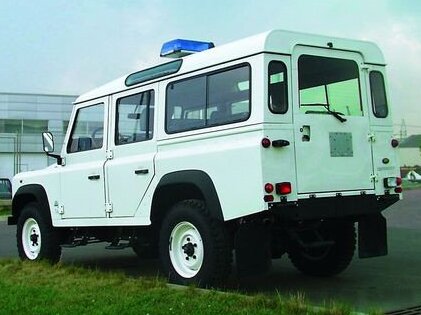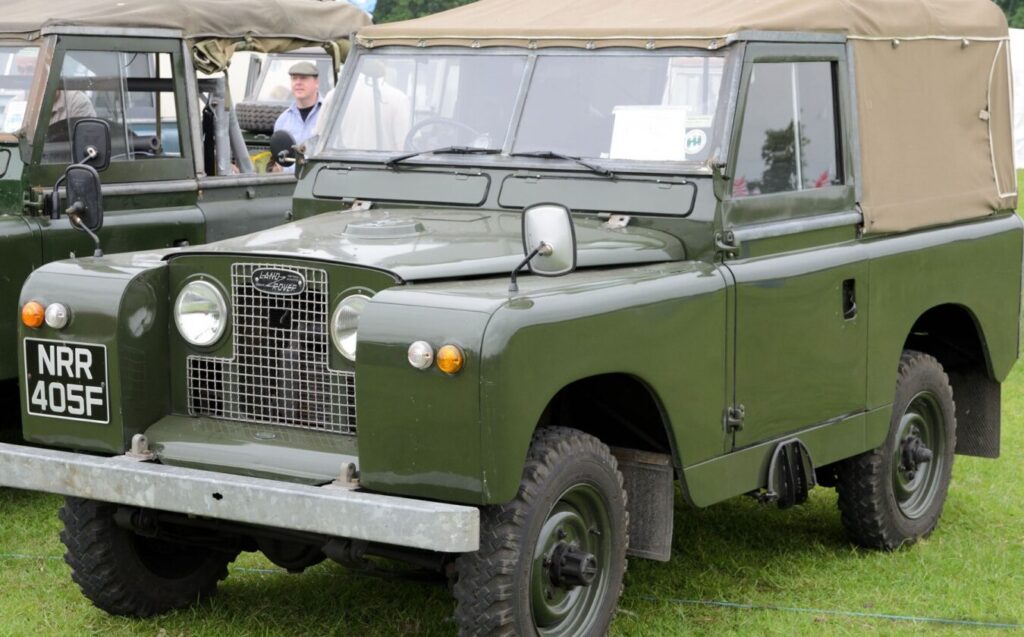
The Land Rover Series IIA 2.3 Diesel, specifically the LR 88 DP and LR 109 DP variants producing 63 horsepower, represents a significant evolution in the iconic Land Rover lineage. Produced from 1963 to 1986, this diesel-powered version of the Series IIA played a crucial role in expanding the Land Rover’s appeal, particularly in markets demanding robust, low-speed torque for agricultural, industrial, and general utility purposes. While the original Series I and early Series II models were largely gasoline-powered, the introduction of the 2.3-liter diesel engine broadened the vehicle’s practicality and affordability for a wider range of buyers. This variant occupied a position as the workhorse of the lineup, prioritizing durability and fuel efficiency over outright speed and refinement.
Technical Specifications
| Brand | Land Rover |
| Model Series | Series II |
| Generation | Series IIA |
| Type (Engine) | 2.3 D (LR 88 DP, LR 109 DP) (63 Hp) |
| Start of Production | 1963 |
| End of Production | 1986 |
| Powertrain Architecture | Internal Combustion Engine |
| Body Type | Off-Road Vehicle |
| Fuel Type | Diesel |
| Power | 63 Hp |
| Engine Aspiration | Naturally Aspirated |
Powertrain & Engine Architecture
The heart of the Series IIA 2.3 Diesel is a 2286cc (139.4 cubic inch) four-cylinder diesel engine. This engine, often referred to as the ‘2.3 Diesel’, was not a Land Rover design originally. It was based on a pre-war Rover diesel engine, which Land Rover acquired when Rover ceased production of the engine in the early 1950s. The engine is a naturally aspirated, indirect injection diesel. Indirect injection, common for the era, involves injecting fuel into a pre-chamber where it partially combusts before entering the main combustion chamber. This design reduces engine noise and improves cold-starting performance, but at the cost of some efficiency. The engine utilizes a robust cast iron block and head, contributing to its legendary durability. The valve train is operated by a single overhead camshaft.
The LR 88 DP and LR 109 DP designations refer to the wheelbase length. The ‘88’ indicates an 88-inch wheelbase, typically used for the shorter, more maneuverable versions, while ‘109’ denotes a 109-inch wheelbase, offering more interior space and payload capacity. Both versions were typically paired with a four-speed manual transmission, although a five-speed manual became available later in production. The transmission is a direct-drive unit, meaning it lacks a synchronizer on first gear, requiring a skilled driver for smooth shifting. The transfer case provides selectable four-wheel drive with high and low range gearing, essential for off-road capability.
Driving Characteristics
The 2.3 Diesel engine, producing just 63 horsepower, prioritizes torque over outright speed. Acceleration is deliberately slow, and the engine operates most efficiently within a narrow RPM band. This characteristic makes it ideally suited for low-speed tasks such as towing, plowing, or navigating challenging terrain. The four-speed manual transmission, while requiring practice to master, provides a good range of gears for controlling the engine’s power delivery. The gear ratios are relatively low, maximizing torque multiplication. Compared to the gasoline-powered Series IIA variants, the diesel offers significantly more torque at lower engine speeds, making it less prone to stalling and more capable of handling heavy loads. However, it lacks the responsiveness and higher top speed of the petrol engines. The diesel’s weight also contributes to a higher center of gravity, impacting on-road handling, but this is largely irrelevant given the vehicle’s primary purpose.
Equipment & Trim Levels
The Series IIA 2.3 Diesel, particularly in the DP (Diesel Pick-up) configuration, was typically spartan in terms of equipment. The focus was on functionality and durability rather than luxury. Standard features included basic instrumentation (speedometer, fuel gauge, temperature gauge), a simple heater, and utilitarian seating, often covered in vinyl. The dashboard was typically constructed from painted steel. Optional extras included a radio, additional lighting, and a winch. Trim levels were minimal; the primary differentiation was between the 88 and 109 wheelbase models and whether the vehicle was a soft-top, hard-top, or pick-up. The interior was designed to be easily cleaned and maintained, reflecting the vehicle’s intended use in harsh environments.
Chassis & Braking
The Series IIA chassis is a traditional ladder frame construction, providing exceptional strength and rigidity. The suspension utilizes leaf springs front and rear, offering a comfortable ride over rough terrain, albeit with a tendency to bounce. The LR 88 DP typically featured drum brakes on all four wheels, while some later LR 109 DP models were upgraded to front disc brakes. Steering is a traditional steering box system, providing a direct but somewhat heavy feel. The 88-inch wheelbase models generally had tighter turning circles, making them more maneuverable in confined spaces. Stabilizer bars were not typically fitted to these models, prioritizing suspension articulation over on-road handling precision.
Market Reception & Comparison
The introduction of the 2.3 Diesel engine significantly broadened the Land Rover’s appeal, particularly in agricultural and industrial sectors. Critics praised the engine’s durability, fuel efficiency, and low-speed torque. However, the engine’s lack of power and refinement were also noted. Compared to the petrol-powered Series IIA variants, the diesel offered lower running costs but a less engaging driving experience. The diesel was particularly popular in regions where fuel costs were high or where access to gasoline was limited. Against competitors like the Jeep CJ series, the Land Rover offered a more robust and versatile platform, particularly in terms of load-carrying capacity and off-road capability.
Legacy
The Land Rover Series IIA 2.3 Diesel has earned a reputation for exceptional reliability and longevity. Many examples remain in service today, testament to the quality of their construction and the robustness of the engine. The 2.3 Diesel engine, while relatively simple by modern standards, is known for its ability to withstand years of hard use with minimal maintenance. In the used car market, these vehicles are highly sought after by enthusiasts and collectors, particularly those seeking a classic off-road vehicle with a strong heritage. Parts availability remains relatively good, although some components can be difficult to source. The Series IIA 2.3 Diesel represents a pivotal moment in Land Rover’s history, solidifying its reputation as a capable and dependable workhorse.