
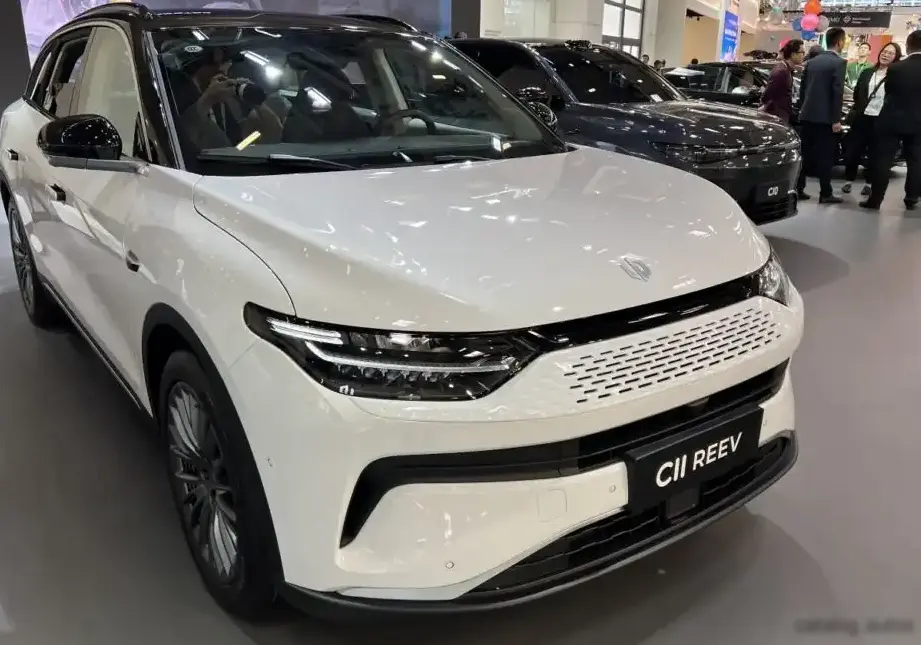
The Leapmotor C11, equipped with an 89.55 kWh battery and delivering 272 horsepower, represents a significant entry into the burgeoning electric SUV market. Production spanned from December 2020 to July 2025, positioning the C11 as a key model in Leapmotor’s initial lineup. Designed primarily for the Chinese domestic market, the C11 aimed to offer a compelling blend of range, performance, and technology at a competitive price point. This specific configuration, with its substantial battery capacity, was intended to appeal to consumers seeking a practical and long-range electric vehicle for daily commuting and longer journeys.
Technical Specifications
| Brand | Leapmotor |
| Model | C11 |
| Generation | C11 |
| Type (Engine) | 89.55 kWh (272 Hp) BEV |
| Start of production | December, 2020 |
| End of production | July, 2025 |
| Powertrain Architecture | BEV (Electric Vehicle) |
| Body type | SUV |
| Seats | 5 |
| Doors | 5 |
| Fuel Type | Electricity |
| Acceleration 0 – 100 km/h | 7.9 sec |
| Acceleration 0 – 62 mph | 7.9 sec |
| Acceleration 0 – 60 mph | 7.5 sec |
| Maximum speed | 170 km/h (105.63 mph) |
| Gross battery capacity | 89.55 kWh |
| Battery technology | Lithium-ion (Li-Ion) |
| Battery location | Below the floor |
| All-electric range (CLTC) | 650 km (403.89 mi) |
| Electric motor power | 272 Hp |
| Electric motor Torque | 360 Nm (265.52 lb.-ft.) |
| Electric motor location | Rear axle, Transverse |
| Electric motor type | Synchronous |
| System power | 272 Hp |
| System torque | 360 Nm (265.52 lb.-ft.) |
| Trunk (boot) space – minimum | 375 l (13.24 cu. ft.) |
| Trunk (boot) space – maximum | 840 l (29.66 cu. ft.) |
| Length | 4750 mm (187.01 in.) |
| Width | 1905 mm (75 in.) |
| Height | 1675 mm (65.94 in.) |
| Wheelbase | 2930 mm (115.35 in.) |
| Ride height (ground clearance) | 180 mm (7.09 in.) |
| Drivetrain Architecture | One electric motor drives the rear wheels. |
| Drive wheel | Rear wheel drive |
| Number of gears and type of gearbox | 1 gears, automatic transmission |
| Front suspension | Double wishbone |
| Rear suspension | Independent multi-link suspension |
| Front brakes | Ventilated discs |
| Rear brakes | Ventilated discs |
| Assisting systems | ABS (Anti-lock braking system) |
| Steering type | Steering rack and pinion |
| Power steering | Electric Steering |
| Tires size | 235/60 R18 |
| Wheel rims size | 18 |
Powertrain & Engine Architecture
The Leapmotor C11 utilizes a fully electric powertrain, centered around a permanent magnet synchronous motor driving the rear wheels. This configuration simplifies the drivetrain, eliminating the need for a traditional multi-speed transmission. Instead, a single-speed gearbox provides a fixed gear ratio. The 89.55 kWh lithium-ion battery pack is positioned under the vehicle floor, contributing to a lower center of gravity and improved handling. The battery employs a liquid cooling system to maintain optimal operating temperatures and prolong its lifespan. The motor delivers a peak output of 272 horsepower and 360 Nm (265.52 lb.-ft.) of torque, providing brisk acceleration. The vehicle’s electronic control unit (ECU) manages power delivery, regenerative braking, and battery charging functions.
Driving Characteristics
The C11 89.55 kWh offers a smooth and responsive driving experience typical of electric vehicles. The instant torque delivery from the electric motor results in quick acceleration, with a 0-60 mph time of approximately 7.5 seconds. The single-speed transmission provides seamless acceleration without noticeable gear changes. The rear-wheel-drive configuration contributes to a balanced feel, although it may exhibit some understeer during aggressive cornering. Regenerative braking allows for one-pedal driving in certain conditions, enhancing efficiency and convenience. Compared to potential future higher-performance variants, this version prioritizes range and efficiency over outright speed.
Equipment & Trim Levels
The C11 89.55 kWh was generally well-equipped, even in its base trim levels. Standard features typically included a large touchscreen infotainment system, digital instrument cluster, automatic climate control, and a suite of advanced driver-assistance systems (ADAS) such as adaptive cruise control, lane keeping assist, and automatic emergency braking. Interior upholstery was typically a combination of synthetic leather and fabric. Optional extras could include a panoramic sunroof, premium audio system, and upgraded interior trim materials. The overall interior design aimed for a modern and minimalist aesthetic.
Chassis & Braking
The Leapmotor C11 features a double wishbone suspension setup at the front and an independent multi-link suspension at the rear, designed to provide a comfortable ride and stable handling. Ventilated disc brakes are used on all four wheels, providing ample stopping power. The electronic stability control (ESC) system and anti-lock braking system (ABS) work in conjunction to enhance safety and control. The steering system utilizes an electric power steering (EPS) unit, offering precise and responsive steering feel. The vehicle’s relatively low center of gravity, thanks to the underfloor battery pack, contributes to reduced body roll during cornering.
Market Reception & Comparison
The Leapmotor C11 received generally positive reviews in the Chinese market, praised for its competitive pricing, long range, and advanced technology. Critics noted its spacious interior and comfortable ride quality. Compared to other electric SUVs in its class, such as the NIO ES6 or the BYD Tang, the C11 offered a compelling value proposition. Its range of 650 km (CLTC) was competitive, and its acceleration performance was adequate for most drivers. Reliability reports are still emerging, as the C11 is a relatively new model, but initial feedback suggests a solid build quality.
Legacy
The Leapmotor C11 played a crucial role in establishing Leapmotor as a significant player in the Chinese EV market. Its success demonstrated the viability of offering technologically advanced electric vehicles at a more accessible price point. The C11’s powertrain, while not groundbreaking in its technology, proved to be reliable and efficient. As the used car market matures, the C11 is expected to become a popular choice for buyers seeking an affordable and practical electric SUV. The long-term durability of the battery pack will be a key factor in determining its residual value. The C11’s impact extends beyond its direct sales figures, as it helped to accelerate the adoption of electric vehicles in China and spurred competition among automakers.

