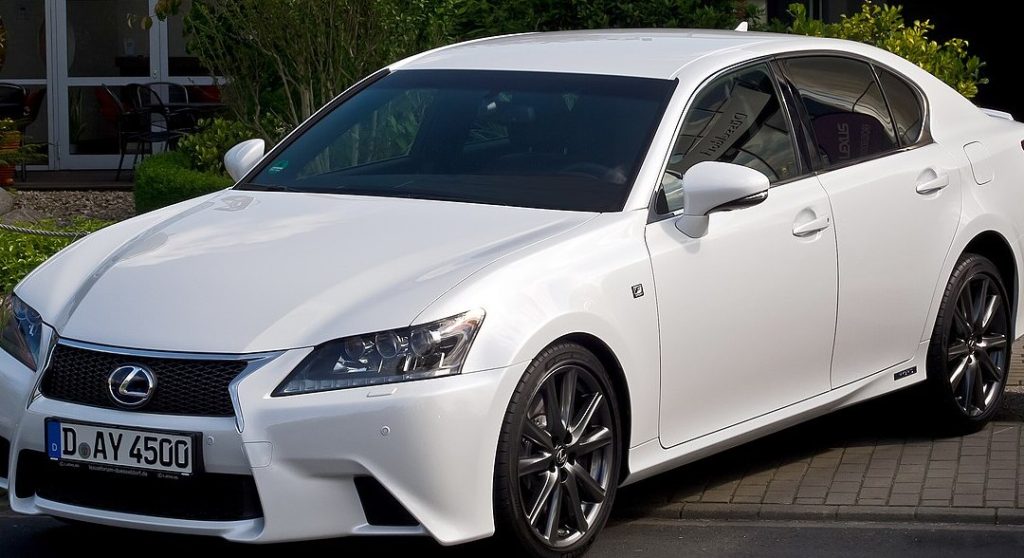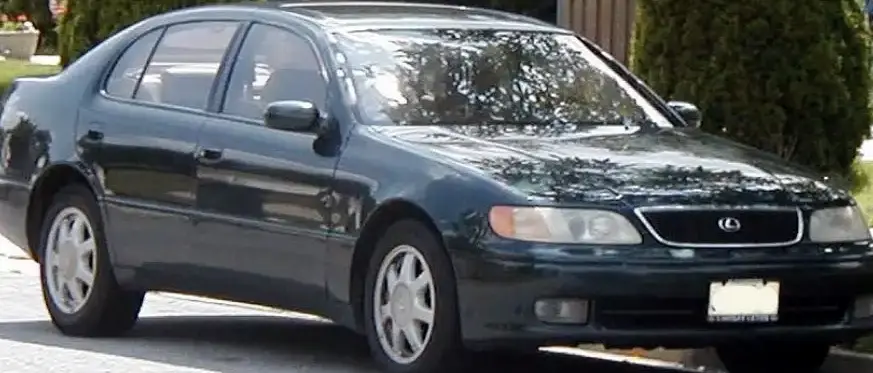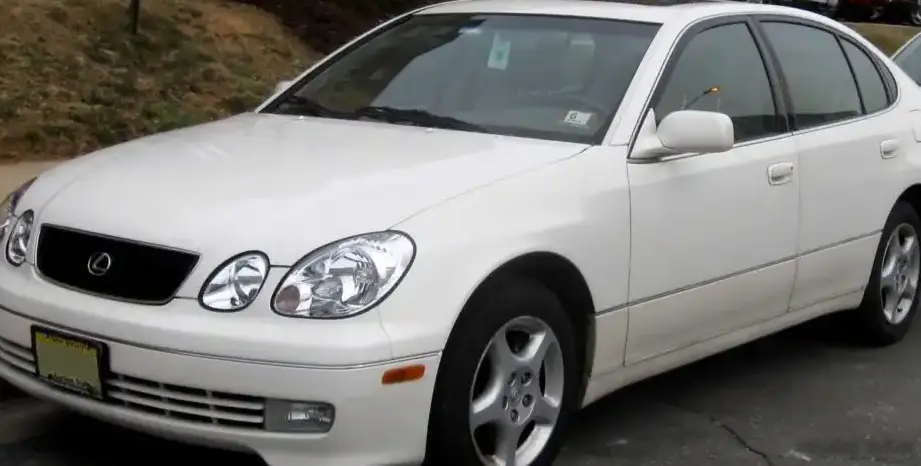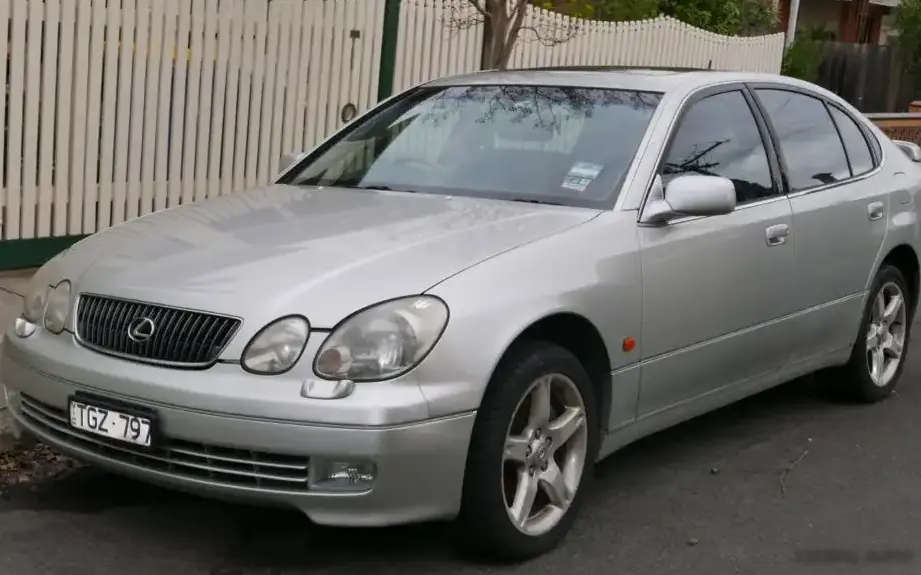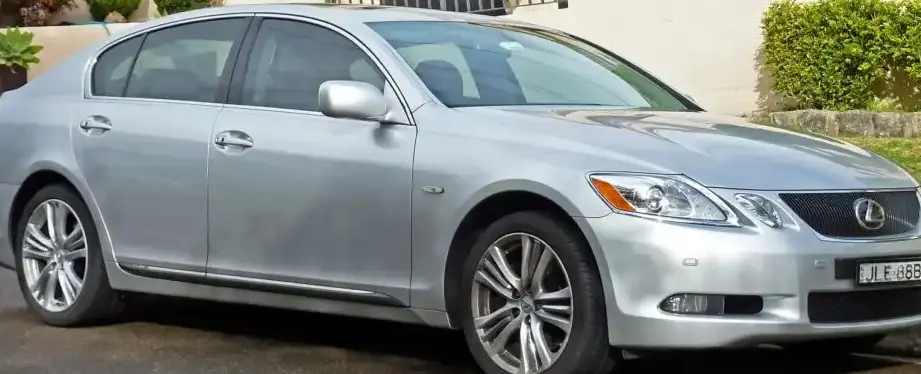
The Lexus GS 450h, produced from 2006 to 2007, represented Lexus’s initial foray into the luxury hybrid sedan market. Part of the third-generation GS (GS III) series – internally designated as the GR series – the 450h distinguished itself with a sophisticated full hybrid powertrain. It aimed to deliver both the performance expected of a Lexus GS and the fuel efficiency benefits of hybrid technology. Positioned as the flagship trim within the GS III range, it offered a premium experience compared to the conventionally powered GS 350 and GS 430 models. The GS 450h was primarily marketed in North America, Europe, and select Asian markets, appealing to buyers seeking a technologically advanced and environmentally conscious luxury vehicle.
Technical Specifications
| Brand | Lexus |
| Model | GS |
| Generation | GS III |
| Type (Engine) | 450h (339 Hp) Hybrid e-CVT |
| Start of production | 2006 |
| End of production | 2007 |
| Powertrain Architecture | FHEV (Full Hybrid Electric Vehicle) |
| Body type | Sedan |
| Seats | 5 |
| Doors | 4 |
| Fuel consumption (urban) | 8.7 l/100 km (27 US mpg, 32.5 UK mpg, 11.5 km/l) |
| Fuel consumption (extra urban) | 7.8 l/100 km (30.2 US mpg, 36.2 UK mpg, 12.8 km/l) |
| Fuel Type | Petrol (Gasoline) |
| Acceleration 0 – 100 km/h | 5.4 sec |
| Acceleration 0 – 62 mph | 5.4 sec |
| Acceleration 0 – 60 mph | 5.1 sec |
| Maximum speed | 211 km/h (131.11 mph) |
| Weight-to-power ratio | 5.5 kg/Hp, 180.8 Hp/tonne |
| Weight-to-torque ratio | 5.2 kg/Nm, 193.1 Nm/tonne |
| Battery voltage | 288 V |
| Battery technology | Nickel-metal hydride (NiMH) |
| Battery location | Behind the back wall of the passenger cabin |
| Electric motor power | 200 Hp |
| Electric motor Torque | 275 Nm (202.83 lb.-ft.) |
| Electric motor location | Integrated into the transmission |
| Electric motor type | Synchronous |
| System power | 339 Hp |
| System torque | 362 Nm @ 4800 rpm (267 lb.-ft. @ 4800 rpm) |
| Engine Power | 292 Hp @ 6400 rpm |
| Engine Torque | 362 Nm @ 4800 rpm (267 lb.-ft. @ 4800 rpm) |
| Engine layout | Front, Longitudinal |
| Engine Model/Code | 2GR-FXE |
| Engine displacement | 3456 cm3 (210.9 cu. in.) |
| Number of cylinders | 6 |
| Engine configuration | V-engine |
| Cylinder Bore | 94 mm (3.7 in.) |
| Piston Stroke | 83 mm (3.27 in.) |
| Compression ratio | 11.8:1 |
| Number of valves per cylinder | 4 |
| Fuel injection system | Direct injection |
| Valvetrain | DOHC, VVT-i |
| Engine oil capacity | 6.3 l (6.66 US qt | 5.54 UK qt) |
| Coolant capacity | 9.25 l (9.77 US qt | 8.14 UK qt) |
| Kerb Weight | 1875 kg (4133.67 lbs.) |
| Max. weight | 2355 kg (5191.89 lbs.) |
| Max load | 480 kg (1058.22 lbs.) |
| Trunk (boot) space – minimum | 229 l (8.09 cu. ft.) |
| Fuel tank capacity | 65 l (17.17 US gal | 14.3 UK gal) |
| Length | 4825 mm (189.96 in.) |
| Width | 1820 mm (71.65 in.) |
| Height | 1425 mm (56.1 in.) |
| Wheelbase | 2850 mm (112.2 in.) |
| Front track | 1535 mm (60.43 in.) |
| Rear (Back) track | 1540 mm (60.63 in.) |
| Ride height (ground clearance) | 130 mm (5.12 in.) |
| Drag coefficient (Cd) | 0.27 |
| Minimum turning circle | 11.2 m (36.75 ft.) |
| Drivetrain Architecture | Rear wheel drive. FHEV. ICE and electric motor drive rear wheels. |
| Drive wheel | Rear wheel drive |
| Number of gears | automatic transmission e-CVT |
| Front suspension | Double wishbone |
| Rear suspension | Independent multi-link suspension |
| Front brakes | Ventilated discs, 333 mm |
| Rear brakes | Ventilated discs, 310 mm |
| Assisting systems | ABS (Anti-lock braking system) |
| Steering type | Steering rack and pinion |
| Power steering | Electric Steering |
| Tires size | 245/40 R18 |
| Wheel rims size | 8J x 18 |
Powertrain & Engine Architecture
The heart of the GS 450h is its hybrid powertrain, combining a 3.5-liter 2GR-FXE V6 gasoline engine with a powerful electric motor. The 2GR-FXE engine utilizes D-4S direct injection technology and Variable Valve Timing with intelligence (VVT-i) to optimize both power and efficiency. It produces 292 horsepower at 6400 rpm and 267 lb-ft of torque at 4800 rpm. The electric motor contributes an additional 200 horsepower and 203 lb-ft of torque. Combined, the system delivers a total output of 339 horsepower. The engine and motor work in conjunction, seamlessly transitioning between gasoline, electric, and combined power modes. The e-CVT (electronically controlled continuously variable transmission) manages power delivery, offering smooth and efficient acceleration. Unlike traditional CVTs, the Lexus e-CVT doesn’t rely on belts or chains; instead, it uses a planetary gearset to provide a continuously variable gear ratio. This design contributes to the system’s reliability and responsiveness.
Driving Characteristics
The GS 450h offers a unique driving experience. The electric motor provides instant torque, resulting in brisk acceleration – 0 to 60 mph in approximately 5.1 seconds. The e-CVT, while efficient, lacks the traditional gear changes of a conventional automatic transmission, providing a smooth, linear power delivery. Compared to the GS 350 and GS 430, the 450h feels more responsive at lower speeds due to the electric motor’s assistance. However, at higher speeds, the gasoline engine takes over, and the difference in performance becomes less noticeable. The hybrid system prioritizes fuel efficiency, and the car can operate in electric-only mode at lower speeds and under light loads. The regenerative braking system captures energy during deceleration, further enhancing fuel economy.
Equipment & Trim Levels
The GS 450h came generously equipped as standard. Interior features included leather upholstery, power-adjustable and heated front seats, a premium sound system, navigation system, and a multi-information display. Standard safety features included ABS, traction control, stability control, and multiple airbags. Optional extras included Mark Levinson premium audio, adaptive cruise control, and a rear spoiler. The interior design was consistent with other GS models, emphasizing luxury and refinement. The dashboard layout was driver-focused, with intuitive controls and high-quality materials.
Chassis & Braking
The GS 450h utilizes a double wishbone front suspension and an independent multi-link rear suspension, providing a comfortable and controlled ride. The suspension was tuned to balance handling and comfort, offering a stable and predictable driving experience. Ventilated disc brakes are used on all four wheels, providing ample stopping power. The ABS (Anti-lock Braking System) and electronic brake-force distribution further enhance braking performance and safety. Due to the added weight of the hybrid components, the suspension was slightly stiffer compared to the non-hybrid GS models.
Market Reception & Comparison
The Lexus GS 450h was generally well-received by automotive critics. It was praised for its fuel efficiency, smooth ride, and luxurious interior. However, some critics noted the lack of traditional gear changes from the e-CVT and the relatively high price compared to the GS 350 and GS 430. Fuel economy was a significant advantage, with the GS 450h achieving approximately 27 mpg in the city and 30 mpg on the highway. Compared to the GS 350 (around 24 mpg combined) and GS 430 (around 18 mpg combined), the 450h offered substantial fuel savings. Reliability was also a strong point, consistent with Lexus’s reputation for building durable vehicles.
Legacy
The Lexus GS 450h was a pioneering vehicle, demonstrating the potential of hybrid technology in the luxury sedan segment. While the first generation had some quirks, the powertrain proved to be remarkably reliable. Today, well-maintained GS 450h models can still provide years of service. The hybrid battery, while a potential maintenance concern, has proven to be durable in many cases. The GS 450h laid the groundwork for Lexus’s continued development of hybrid technology, which is now integrated into many of its models. In the used car market, the GS 450h remains a desirable option for buyers seeking a fuel-efficient and luxurious sedan with a proven track record.