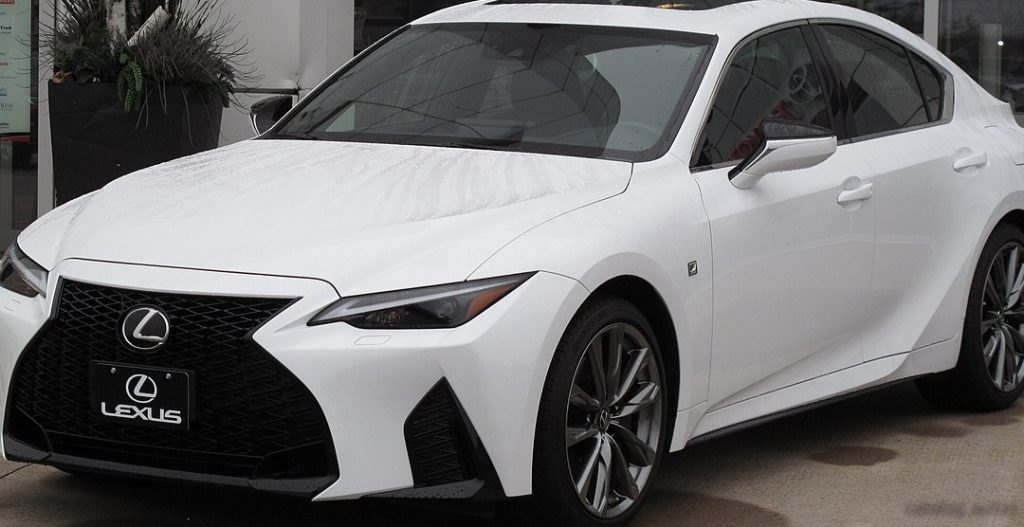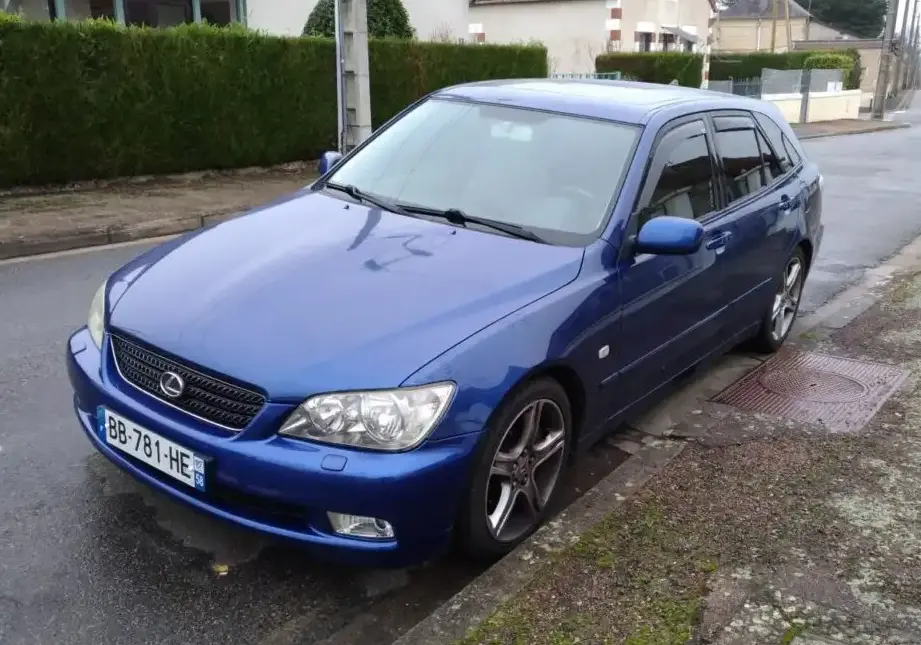
The Lexus IS 350, specifically the XE30 generation produced between 2013 and 2016, represented a significant evolution in the luxury sport sedan segment. Positioned as the performance-oriented variant within the third-generation IS lineup (alongside the IS 250), the 350 featured a potent 3.5-liter V6 engine paired with a sophisticated 8-speed Direct Shift automatic transmission. This combination aimed to deliver a blend of exhilarating performance and refined luxury, appealing to buyers seeking a more engaging driving experience than the base model offered. The XE30 chassis underpinned the IS range, offering improvements in rigidity and handling over its predecessor.
Technical Specifications
| Brand | Lexus |
| Model | IS |
| Generation | IS III (XE30) |
| Type (Engine) | 350 V6 (306 Hp) Direct Shift |
| Start of production | 2013 |
| End of production | 2016 |
| Powertrain Architecture | Internal Combustion engine |
| Body type | Sedan |
| Seats | 5 |
| Doors | 4 |
| Fuel consumption (economy) – urban (EPA) | 12.4 l/100 km (19 US mpg, 22.8 UK mpg, 8.1 km/l) |
| Fuel consumption (economy) – extra urban (EPA) | 8.4 l/100 km (28 US mpg, 33.6 UK mpg, 11.9 km/l) |
| Fuel consumption (economy) – combined (EPA) | 10.7 l/100 km (22 US mpg, 26.4 UK mpg, 9.3 km/l) |
| Fuel Type | Petrol (Gasoline) |
| Acceleration 0 – 60 mph | 5.6 sec |
| Maximum speed | 230 km/h (142.92 mph), Electronically limited |
| Emission standard | ULEV II |
| Weight-to-power ratio | 5.3 kg/Hp, 187.7 Hp/tonne |
| Weight-to-torque ratio | 4.3 kg/Nm, 230.7 Nm/tonne |
| Power | 306 Hp @ 6400 rpm |
| Power per litre | 88.5 Hp/l |
| Torque | 376 Nm @ 4800 rpm (277.32 lb.-ft. @ 4800 rpm) |
| Maximum engine speed | 6600 rpm |
| Engine layout | Front, Longitudinal |
| Engine Model/Code | 2GR-FSE |
| Engine displacement | 3456 cm3 (210.9 cu. in.) |
| Number of cylinders | 6 |
| Engine configuration | V-engine |
| Cylinder Bore | 94 mm (3.7 in.) |
| Piston Stroke | 83 mm (3.27 in.) |
| Compression ratio | 11.8:1 |
| Number of valves per cylinder | 4 |
| Fuel injection system | Direct injection and Multi-port manifold injection |
| Engine aspiration | Naturally aspirated engine |
| Valvetrain | DOHC |
| Engine oil capacity | 6.2 l (6.55 US qt | 5.46 UK qt) |
| Coolant | 9.6 l (10.14 US qt | 8.45 UK qt) |
| Kerb Weight | 1630 kg (3593.53 lbs.) |
| Max. weight | 2100 kg (4629.71 lbs.) |
| Max load | 470 kg (1036.17 lbs.) |
| Trunk (boot) space – minimum | 306 l (10.81 cu. ft.) |
| Fuel tank capacity | 66 l (17.44 US gal | 14.52 UK gal) |
| Length | 4665 mm (183.66 in.) |
| Width | 1810 mm (71.26 in.) |
| Width including mirrors | 2027 mm (79.8 in.) |
| Height | 1430 mm (56.3 in.) |
| Wheelbase | 2800 mm (110.24 in.) |
| Front track | 1535 mm (60.43 in.) |
| Rear (Back) track | 1540-1550 mm (60.63 – 61.02 in.) |
| Front overhang | 830 mm (32.68 in.) |
| Rear overhang | 1035 mm (40.75 in.) |
| Ride height (ground clearance) | 135 mm (5.31 in.) |
| Drag coefficient (Cd) | 0.28 |
| Minimum turning circle (turning diameter) | 10.4 m (34.12 ft.) |
| Drivetrain Architecture | The Internal combustion engine (ICE) drives the rear wheels of the vehicle. |
| Drive wheel | Rear wheel drive |
| Number of gears and type of gearbox | 8 gears, automatic transmission Direct Shift |
| Front suspension | Coil spring, Double wishbone, Transverse stabilizer |
| Rear suspension | Independent multi-link spring suspension with stabilizer |
| Front brakes | Ventilated discs, 334 mm |
| Rear brakes | Ventilated discs, 310 mm |
| Assisting systems | ABS (Anti-lock braking system) |
| Steering type | Steering rack and pinion |
| Power steering | Electric Steering |
| Tires size | Front wheel tires: 225/45 R17; 225/35 R18; 225/40 R18Rear wheel tires: 225/45 R17; 225/35 R18; 225/40 R18; 255/35 R18 |
| Wheel rims size | Front wheel rims: 7.5J x 17; 8J x 18Rear wheel rims: 7.5J x 17; 8J x 18; 8.5J x 18 |
Powertrain & Engine Architecture
The heart of the IS 350 is the 2GR-FSE 3.5-liter V6 engine. This naturally aspirated powerplant utilizes both direct injection (D-4S) and port injection, optimizing combustion efficiency and power delivery across the rev range. The D-4S system allows for precise fuel metering, enhancing both performance and fuel economy. The engine features a dual overhead camshaft (DOHC) valvetrain with four valves per cylinder, contributing to its high-revving nature. The 8-speed Direct Shift automatic transmission, sourced from Aisin, was a key component of the IS 350’s appeal. Unlike traditional torque converter automatics, the Direct Shift transmission employs a torque converter with a lock-up clutch, providing a more direct connection between the engine and the wheels. This results in quicker shifts and improved fuel efficiency. The transmission also featured paddle shifters, allowing drivers to manually select gears for a more engaging driving experience.
Driving Characteristics
The IS 350 with the 8-speed automatic offered a compelling blend of performance and comfort. Acceleration from 0 to 60 mph was achieved in around 5.6 seconds, making it a genuinely quick sport sedan. The Direct Shift transmission contributed to crisp and responsive shifts, although some reviewers noted a slight hesitation at lower speeds. The gear ratios were tuned to provide strong acceleration in everyday driving situations, while still allowing for relaxed cruising on the highway. Compared to the IS 250, the 350 offered significantly more power and torque, resulting in a more confident and engaging driving experience. While the IS 350 didn’t possess the raw performance of some of its European rivals, it provided a refined and accessible performance profile.
Equipment & Trim Levels
The IS 350 typically came well-equipped with standard features such as leather upholstery, power-adjustable front seats, a premium audio system, and a navigation system. Available options included a Mark Levinson premium sound system, adaptive variable suspension, and a pre-collision system. Trim levels varied slightly depending on the year, but generally included a base IS 350 and an F Sport package. The F Sport package added more aggressive styling cues, sport-tuned suspension, and unique interior trim. Interior materials were generally high quality, reflecting Lexus’s reputation for craftsmanship.
Chassis & Braking
The XE30 chassis provided a solid foundation for the IS 350. The suspension featured coil springs, double wishbones at the front, and an independent multi-link setup at the rear. Stabilizer bars were fitted to both axles to reduce body roll during cornering. The IS 350 was equipped with ventilated disc brakes on all four wheels, providing ample stopping power. The ABS (Anti-lock Braking System) was standard, enhancing safety and control. The rear suspension configuration varied slightly depending on the specific trim level and options selected.
Market Reception & Comparison
The Lexus IS 350 was generally well-received by automotive critics. It was praised for its refined interior, comfortable ride, and strong performance. However, some reviewers criticized its infotainment system and its relatively conservative styling. Compared to its competitors, such as the BMW 335i and the Audi S4, the IS 350 offered a more comfortable ride and a more reliable powertrain. Fuel economy was respectable for a V6-powered sport sedan, averaging around 22 mpg in combined driving. The IS 350’s reliability was a significant selling point, as Lexus consistently ranked highly in reliability surveys.
Legacy
The 2GR-FSE engine and the 8-speed Direct Shift transmission have proven to be remarkably reliable powertrains. The IS 350 has maintained a good reputation for long-term durability, and well-maintained examples continue to command reasonable prices on the used car market. While not as sought-after as some of its European rivals, the IS 350 remains a compelling option for buyers seeking a comfortable, reliable, and reasonably sporty luxury sedan. Its blend of performance, luxury, and dependability has ensured its place as a respected member of the sport sedan segment.