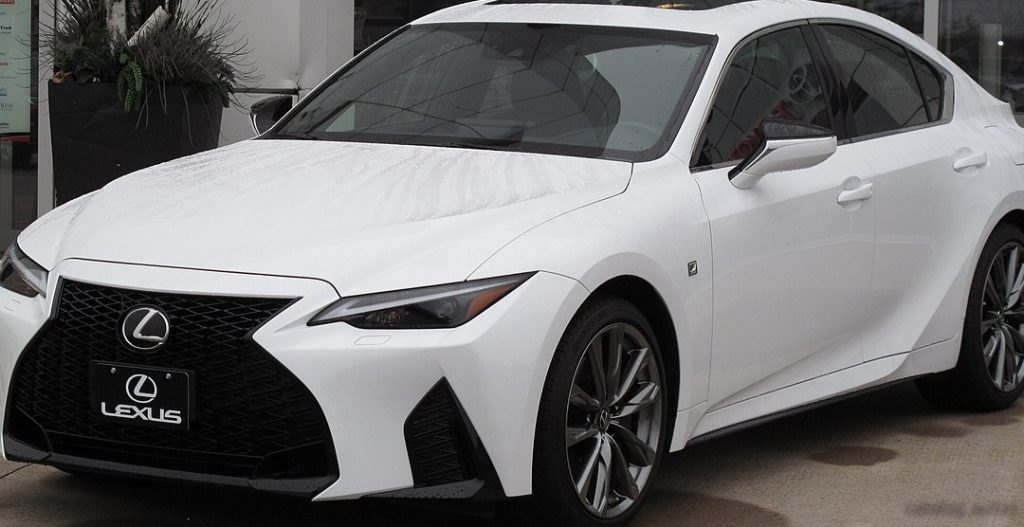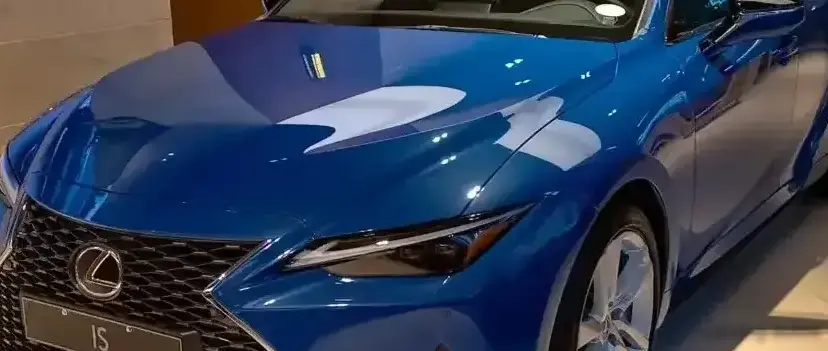
The Lexus IS 300h, specifically the XE30 facelift model introduced in November 2020, represents Lexus’s entry into the luxury sport sedan segment with a focus on hybrid efficiency. Part of the third generation (XE30) IS family, the 300h utilizes Lexus’s Hybrid Synergy Drive system to deliver a balance of performance and fuel economy. This variant occupied a key position in the IS lineup, offering a more accessible price point compared to the IS 350 while providing superior fuel efficiency than its solely gasoline-powered sibling. The facelift brought updated styling, improved technology, and refinements to the driving experience.
Technical Specifications
| Brand | Lexus |
| Model | IS |
| Generation | IS III (XE30, facelift 2020) |
| Type (Engine) | 300h (220 Hp) Hybrid e-CVT |
| Start of production | November, 2020 |
| Powertrain Architecture | FHEV (Full Hybrid Electric Vehicle) |
| Body type | Sedan |
| Seats | 5 |
| Doors | 4 |
| Fuel consumption (economy) – urban (WLTC) | 6.4 l/100 km (36.8 US mpg, 44.1 UK mpg, 15.6 km/l) |
| Fuel consumption (economy) – extra urban (WLTC) | 5.3 l/100 km (44.4 US mpg, 53.3 UK mpg, 18.9 km/l) |
| Fuel consumption (economy) – combined (WLTC) | 5.6 l/100 km (42 US mpg, 50.4 UK mpg, 17.9 km/l) |
| Fuel Type | Petrol (Gasoline) |
| Maximum speed | 200 km/h (124.27 mph) |
| Weight-to-power ratio | 7.7 kg/Hp, 130.2 Hp/tonne |
| Weight-to-torque ratio | 7.6 kg/Nm, 130.8 Nm/tonne |
| Battery voltage | 230.4 V |
| Battery technology | Nickel-metal hydride (NiMH) |
| Battery location | Under the trunk |
| Electric motor power | 143 Hp |
| Electric motor Torque | 300 Nm (221.27 lb.-ft.) |
| Electric motor model/code | 1KM |
| Electric motor location | Integrated into the transmission |
| Electric motor type | Synchronous |
| System power | 220 Hp |
| Internal combustion engine power | 178 Hp @ 6000 rpm |
| Power per litre | 71.4 Hp/l |
| Torque | 221 Nm @ 4200-4800 rpm (163 lb.-ft. @ 4200-4800 rpm) |
| Engine layout | Front, Longitudinal |
| Engine Model/Code | 2AR-FSE |
| Engine displacement | 2493 cm3 (152.13 cu. in.) |
| Number of cylinders | 4 |
| Engine configuration | Inline |
| Cylinder Bore | 90 mm (3.54 in.) |
| Piston Stroke | 98 mm (3.86 in.) |
| Compression ratio | 13:1 |
| Number of valves per cylinder | 4 |
| Fuel injection system | Direct injection and Multi-port manifold injection |
| Engine aspiration | Naturally aspirated engine |
| Valvetrain | DOHC, Dual VVT-i |
| Engine oil capacity | 4.5 l (4.76 US qt | 3.96 UK qt) |
| Coolant | 8.1 l (8.56 US qt | 7.13 UK qt) |
| Kerb Weight | 1690-1730 kg (3725.81 – 3814 lbs.) |
| Max. weight | 1965-2005 kg (4332.08 – 4420.27 lbs.) |
| Max load | 275 kg (606.27 lbs.) |
| Trunk (boot) space – minimum | 450 l (15.89 cu. ft.) |
| Fuel tank capacity | 66 l (17.44 US gal | 14.52 UK gal) |
| Length | 4710 mm (185.43 in.) |
| Width | 1840 mm (72.44 in.) |
| Height | 1435 mm (56.5 in.) |
| Wheelbase | 2800 mm (110.24 in.) |
| Front track | 1580 mm (62.2 in.) |
| Rear (Back) track | 1570-1600 mm (61.81 – 62.99 in.) |
| Front overhang | 875 mm (34.45 in.) |
| Rear overhang | 1035 mm (40.75 in.) |
| Ride height (ground clearance) | 140 mm (5.51 in.) |
| Minimum turning circle (turning diameter) | 10.4 m (34.12 ft.) |
| Drivetrain Architecture | The Internal combustion engine (ICE) and electric motor drive the rear wheels of the car with the ability to work in full electric or mixed mode. |
| Drive wheel | Rear wheel drive |
| Number of gears and type of gearbox | automatic transmission e-CVT |
| Front suspension | Coil spring, Double wishbone, Transverse stabilizer |
| Rear suspension | Independent multi-link spring suspension with stabilizer |
| Front brakes | Ventilated discs, 334×30 mm |
| Rear brakes | Ventilated discs, 297×18 mm |
| Assisting systems | ABS (Anti-lock braking system) |
| Steering type | Steering rack and pinion |
| Power steering | Electric Steering |
| Tires size | Front wheel tires: 235/45 R18; 235/40 R19Rear wheel tires: 235/45 R18; 235/40 R19; 265/35 R19 |
| Wheel rims size | Front wheel rims: 8.5J x 18; 8.5J x 19Rear wheel rims: 8.5J x 18; 8.5J x 19; 9.5J x 19 |
Powertrain & Engine Architecture
The Lexus IS 300h’s powertrain centers around the 2AR-FSE 2.5-liter inline-four gasoline engine, coupled with Lexus’s Hybrid Synergy Drive system. This system employs a permanent magnet synchronous electric motor (1KM code) and a nickel-metal hydride (NiMH) battery pack located under the trunk floor. The 2AR-FSE engine utilizes direct injection (D-4S) and multi-port fuel injection, along with a dual VVT-i (Variable Valve Timing-intelligent) system for optimized efficiency and power delivery. The e-CVT (electronically controlled continuously variable transmission) doesn’t have fixed gears; instead, it seamlessly blends power from the engine and electric motor, optimizing for fuel economy or performance as needed. The system prioritizes electric drive at low speeds and during gentle acceleration, switching to a combination of engine and motor power during more demanding situations.
Driving Characteristics
The IS 300h with the e-CVT delivers a smooth and refined driving experience. While not offering the outright acceleration of the IS 350, the hybrid system provides ample power for everyday driving situations. The e-CVT’s lack of traditional gear changes contributes to a seamless power delivery, although some drivers may find it less engaging than a conventional automatic transmission. The rear-wheel-drive configuration contributes to balanced handling, and the suspension is tuned for a comfortable ride. The combined system output of 220 horsepower allows for a 0-60 mph time in the low-7 second range. The focus is less on sporty performance and more on efficient and comfortable cruising.
Equipment & Trim Levels
The 2020 facelifted IS 300h typically came standard with features such as Lexus Safety System+ 2.0 (including pre-collision system with pedestrian detection, lane departure alert with intelligent steering assist, and dynamic radar cruise control), a 8-inch touchscreen infotainment system, Apple CarPlay and Android Auto integration, and synthetic leather upholstery. Higher trim levels offered upgrades like genuine leather seats, a larger 10.3-inch touchscreen display, Mark Levinson premium sound system, and adaptive variable suspension. Optional extras included a head-up display, blind spot monitor, and rear cross-traffic alert.
Chassis & Braking
The IS 300h utilizes a coil spring, double wishbone suspension setup at the front and an independent multi-link suspension at the rear, both incorporating a transverse stabilizer bar. Braking duties are handled by ventilated discs on all four wheels, with the front discs measuring 334x30mm and the rear discs at 297x18mm. The car is equipped with an Anti-lock Braking System (ABS) and electronic brake-force distribution. The suspension tuning is geared towards providing a comfortable ride while maintaining reasonable handling characteristics.
Market Reception & Comparison
The IS 300h was generally well-received by automotive critics for its fuel efficiency, comfortable ride, and refined interior. However, some reviewers noted that the e-CVT could feel less responsive than traditional automatic transmissions, and the overall driving experience wasn’t as sporty as some competitors. Compared to the IS 350, the 300h offered significantly better fuel economy but less overall performance. Against rivals like the Acura TLX and BMW 330i, the IS 300h stood out with its hybrid powertrain and Lexus’s reputation for reliability.
Legacy
The Lexus IS 300h (XE30 facelift) has proven to be a reliable and fuel-efficient luxury sedan. The Hybrid Synergy Drive system is known for its durability, and the IS 300h generally requires less maintenance than its gasoline-only counterparts. On the used car market, these models hold their value reasonably well, appealing to buyers seeking a comfortable, efficient, and well-equipped luxury car. The powertrain’s longevity and relatively simple design contribute to its continued appeal, making it a practical choice for those prioritizing long-term ownership costs and reliability.