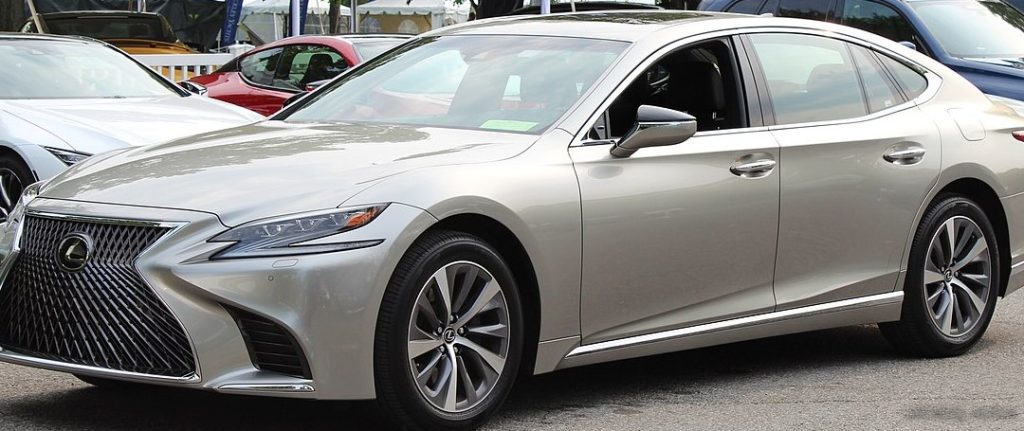
The Lexus LS 400, specifically the facelifted model produced from 1993 to 1994, represented a pivotal moment for Toyota’s luxury division. Introduced as a direct competitor to established German marques like Mercedes-Benz and BMW, the LS 400 aimed to redefine the luxury sedan experience with a focus on refinement, reliability, and advanced technology. This variant, powered by the 4.0-liter 1UZ-FE V8 engine paired with a four-speed automatic transmission, occupied the top-tier position within the LS lineup, offering the highest level of performance and features. It was a key model in establishing Lexus’s reputation for quality and customer satisfaction in the North American market, where luxury sedans were highly sought after.
Technical Specifications
| Brand | Lexus |
| Model | LS |
| Generation | LS I (facelift 1993) |
| Type (Engine) | 400 V8 (253 Hp) Automatic |
| Start of production | 1992 |
| End of production | 1994 |
| Powertrain Architecture | Internal Combustion engine |
| Body type | Sedan |
| Seats | 5 |
| Doors | 4 |
| Fuel consumption (combined) | 11.8 l/100 km (19.9 US mpg, 23.9 UK mpg, 8.5 km/l) |
| Fuel Type | Petrol (Gasoline) |
| Acceleration 0 – 100 km/h | 8.2 sec |
| Acceleration 0 – 62 mph | 8.2 sec |
| Acceleration 0 – 60 mph | 7.8 sec |
| Maximum speed | 241 km/h (149.75 mph) |
| Weight-to-power ratio | 6.9 kg/Hp, 144.6 Hp/tonne |
| Weight-to-torque ratio | 5 kg/Nm, 201.7 Nm/tonne |
| Power | 253 Hp @ 5300 rpm |
| Power per litre | 63.7 Hp/l |
| Torque | 353 Nm @ 4400 rpm (260.36 lb.-ft. @ 4400 rpm) |
| Engine layout | Front, Longitudinal |
| Engine Model/Code | 1UZ-FE |
| Engine displacement | 3969 cm3 (242.2 cu. in.) |
| Number of cylinders | 8 |
| Engine configuration | V-engine |
| Cylinder Bore | 87.5 mm (3.44 in.) |
| Piston Stroke | 82.5 mm (3.25 in.) |
| Compression ratio | 10:1 |
| Number of valves per cylinder | 4 |
| Fuel injection system | Multi-port manifold injection |
| Engine aspiration | Naturally aspirated engine |
| Valvetrain | DOHC |
| Engine oil capacity | 5.3 l (5.6 US qt | 4.66 UK qt) |
| Coolant | 10.8 l (11.41 US qt | 9.5 UK qt) |
| Kerb Weight | 1750 kg (3858.09 lbs.) |
| Trunk (boot) space – minimum | 408 l (14.41 cu. ft.) |
| Fuel tank capacity | 85 l (22.45 US gal | 18.7 UK gal) |
| Length | 4995 mm (196.65 in.) |
| Width | 1820 mm (71.65 in.) |
| Height | 1415 mm (55.71 in.) |
| Wheelbase | 2815 mm (110.83 in.) |
| Front track | 1565 mm (61.61 in.) |
| Rear (Back) track | 1565 mm (61.61 in.) |
| Drag coefficient (Cd) | 0.3 |
| Minimum turning circle (turning diameter) | 12 m (39.37 ft.) |
| Drivetrain Architecture | The Internal combustion engine (ICE) drives the rear wheels of the vehicle. |
| Drive wheel | Rear wheel drive |
| Number of gears and type of gearbox | 4 gears, automatic transmission |
| Front suspension | Double wishbone |
| Rear suspension | Double wishbone |
| Front brakes | Ventilated discs |
| Rear brakes | Ventilated discs |
| Assisting systems | ABS (Anti-lock braking system) |
| Steering type | Steering rack and pinion |
| Power steering | Hydraulic Steering |
| Tires size | 205/65 R15 |
| Wheel rims size | 6.5J x 15 |
Powertrain & Engine Architecture
The heart of the LS 400 was the 1UZ-FE, a 4.0-liter (3969 cc) naturally aspirated V8 engine. This engine was notable for its exceptionally smooth operation, a characteristic achieved through a sophisticated design featuring a 90-degree V-angle, dual overhead camshafts (DOHC), and four valves per cylinder. The 1UZ-FE employed multi-port fuel injection, delivering precise fuel metering for optimal combustion. The engine produced 253 horsepower at 5300 rpm and 353 Nm (260.36 lb.-ft.) of torque at 4400 rpm. The four-speed automatic transmission, designated A340E, was specifically tuned to complement the V8’s power delivery, prioritizing smooth shifts and a refined driving experience. This transmission featured electronically controlled torque converter lock-up for improved fuel efficiency at cruising speeds.
Driving Characteristics
The LS 400 with the 1UZ-FE and automatic transmission offered a distinctly grand touring experience. Acceleration from 0 to 60 mph took approximately 7.8 seconds, respectable for a large luxury sedan of the era. While not overtly sporty, the engine provided ample power for effortless highway cruising and confident passing maneuvers. The automatic transmission’s gear ratios were optimized for relaxed acceleration and smooth transitions. Compared to potential manual transmission variants (which were not widely available in the US market), the automatic offered a more comfortable and convenient driving experience, appealing to the target demographic of luxury car buyers. The emphasis was on quietness and refinement, with minimal engine noise or vibration entering the cabin.
Equipment & Trim Levels
The LS 400 was exceptionally well-equipped, even by 1990s standards. Standard features included leather upholstery, power-adjustable front seats with memory function, a premium sound system, automatic climate control, power windows, power locks, and an anti-lock braking system (ABS). The facelifted 1993-1994 models received subtle cosmetic updates, including a revised grille and taillights. Optional extras included a navigation system (a rarity at the time), a CD changer, and upgraded leather trim. The interior design prioritized comfort and elegance, with high-quality materials and a user-friendly layout.
Chassis & Braking
The LS 400 featured a robust chassis with independent double wishbone suspension at both the front and rear. This suspension setup provided a comfortable ride while maintaining good handling characteristics. The car was equipped with ventilated disc brakes on all four wheels, providing ample stopping power. The ABS system further enhanced safety by preventing wheel lockup during hard braking. The steering was a rack-and-pinion system with hydraulic power assistance, offering precise and responsive steering feel.
Market Reception & Comparison
The Lexus LS 400 was widely praised by automotive critics for its exceptional refinement, build quality, and reliability. It quickly gained a reputation as a benchmark in the luxury sedan segment. Compared to its German rivals, the LS 400 offered a more comfortable ride and a quieter cabin. Fuel economy, at 19.9 US mpg combined, was competitive for a V8-powered luxury car of the time. The LS 400’s reliability proved to be a significant advantage, with many owners reporting years of trouble-free ownership. This contrasted sharply with the often-complex and maintenance-intensive German alternatives.
Legacy
The Lexus LS 400, and particularly the 1993-1994 facelifted version, remains a highly regarded vehicle among enthusiasts and collectors. The 1UZ-FE engine is renowned for its durability and longevity, with many examples exceeding 300,000 miles with proper maintenance. In the used car market, well-maintained LS 400s command a premium due to their reputation for reliability and their classic luxury appeal. The LS 400 fundamentally changed the perception of Japanese luxury cars, demonstrating that they could compete with – and even surpass – the best that Europe had to offer. It laid the foundation for Lexus’s continued success and established the brand as a leader in the luxury automotive market.