Technical Specifications
| Brand | Lexus |
| Model | LS |
| Generation | LS II (facelift 1998) |
| Type (Engine) | 400 V8 (284 Hp) Automatic |
| Start of production | 1997 |
| End of production | 1998 |
| Powertrain Architecture | Internal Combustion engine |
| Body type | Sedan |
| Seats | 5 |
| Doors | 4 |
| Fuel consumption (urban) | 17.5 l/100 km (13.4 US mpg, 16.1 UK mpg, 5.7 km/l) |
| Fuel consumption (extra urban) | 9.3 l/100 km (25.3 US mpg, 30.4 UK mpg, 10.8 km/l) |
| Fuel consumption (combined) | 12.3 l/100 km (19.1 US mpg, 23 UK mpg, 8.1 km/l) |
| Fuel Type | Petrol (Gasoline) |
| Acceleration 0 – 100 km/h | 6.9 sec |
| Acceleration 0 – 62 mph | 6.9 sec |
| Acceleration 0 – 60 mph | 6.6 sec |
| Maximum speed | 250 km/h (155.34 mph) |
| Weight-to-power ratio | 6.4 kg/Hp, 156.5 Hp/tonne |
| Weight-to-torque ratio | 4.6 kg/Nm, 219.3 Nm/tonne |
| Power | 284 Hp @ 5900 rpm |
| Power per litre | 71.6 Hp/l |
| Torque | 398 Nm @ 4100 rpm (293.55 lb.-ft. @ 4100 rpm) |
| Engine layout | Front, Longitudinal |
| Engine Model/Code | 1UZ-FE |
| Engine displacement | 3969 cm3 (242.2 cu. in.) |
| Number of cylinders | 8 |
| Engine configuration | V-engine |
| Cylinder Bore | 87.5 mm (3.44 in.) |
| Piston Stroke | 82.5 mm (3.25 in.) |
| Compression ratio | 10.5:1 |
| Number of valves per cylinder | 4 |
| Fuel injection system | Multi-port manifold injection |
| Engine aspiration | Naturally aspirated engine |
| Valvetrain | DOHC |
| Engine oil capacity | 5.6 l (5.92 US qt | 4.93 UK qt) |
| Coolant | 11 l (11.62 US qt | 9.68 UK qt) |
| Kerb Weight | 1815 kg (4001.39 lbs.) |
| Max. weight | 2245 kg (4949.38 lbs.) |
| Max load | 430 kg (947.99 lbs.) |
| Trunk (boot) space – minimum | 463 l (16.35 cu. ft.) |
| Fuel tank capacity | 85 l (22.45 US gal | 18.7 UK gal) |
| Length | 4995 mm (196.65 in.) |
| Width | 1830 mm (72.05 in.) |
| Height | 1435 mm (56.5 in.) |
| Wheelbase | 2850 mm (112.2 in.) |
| Front track | 1570 mm (61.81 in.) |
| Rear (Back) track | 1570 mm (61.81 in.) |
| Ride height (ground clearance) | 140 mm (5.51 in.) |
| Drag coefficient (Cd) | 0.27 |
| Minimum turning circle (turning diameter) | 11.4 m (37.4 ft.) |
| Drivetrain Architecture | Rear wheel drive |
| Drive wheel | Rear wheel drive |
| Number of gears and type of gearbox | 5 gears, automatic transmission |
| Front suspension | Double wishbone |
| Rear suspension | Double wishbone |
| Front brakes | Ventilated discs |
| Rear brakes | Ventilated discs |
| Assisting systems | ABS (Anti-lock braking system) |
| Steering type | Steering rack and pinion |
| Power steering | Hydraulic Steering |
| Tires size | 225/60 R16 |
| Wheel rims size | 7J x 16 |
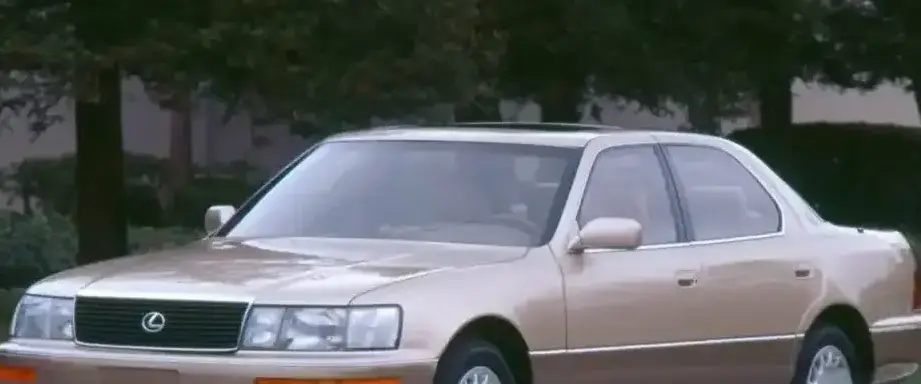
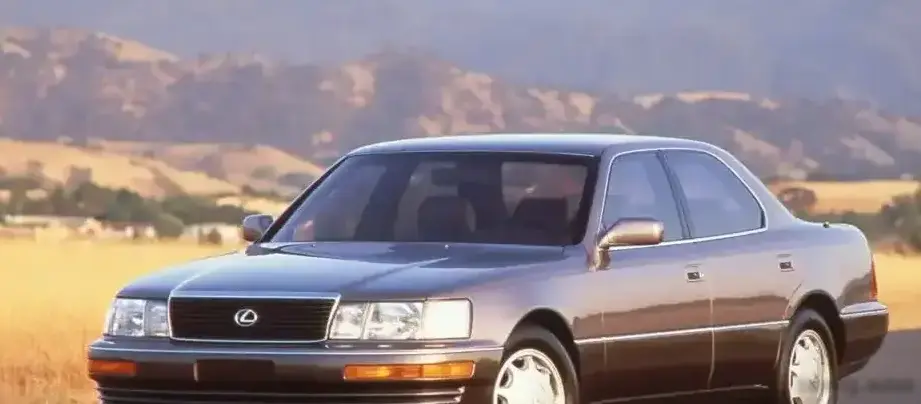
The Lexus LS 400, launched in 1989, was Lexus’s initial foray into the luxury sedan market, and the 1997-1998 facelift represented a refinement of the original design. Built on the Lexus platform 1HX0/A3, this iteration continued the LS’s commitment to a smooth, quiet ride and exceptional build quality. The 4.0-liter V8 engine paired with a five-speed automatic transmission was the top-of-the-line offering, providing ample power for effortless cruising and confident acceleration. This variant was positioned as the premium choice within the LS 400 range, appealing to buyers who prioritized performance alongside luxury.
Powertrain & Engine Architecture
The heart of the 1997-1998 LS 400 is the 1UZ-FE 4.0-liter V8 engine. This engine is renowned for its durability and smooth operation. It features a 60-degree V-angle, a cast-iron block, and aluminum cylinder heads. The 1UZ-FE utilizes a multi-port fuel injection system, delivering fuel directly to each cylinder for optimal combustion. The engine also employs a double overhead camshaft (DOHC) valvetrain with four valves per cylinder, enhancing breathing and contributing to its power output. The five-speed automatic transmission, a Lexus-developed unit, is designed for smooth and seamless gear changes. It features electronically controlled torque converter lock-up for improved fuel efficiency at highway speeds. The transmission’s gear ratios are tuned to balance acceleration with comfortable cruising, prioritizing a refined driving experience over outright sportiness.
Driving Characteristics
The LS 400 4.0L Automatic delivers a driving experience focused on comfort and refinement. While not a sports sedan, the 284 horsepower and 293 lb-ft of torque provide ample power for confident passing and merging. Acceleration from 0-60 mph takes approximately 6.6 seconds, which was competitive for a luxury sedan of its time. The automatic transmission shifts smoothly and predictably, contributing to a relaxed driving experience. Compared to the base LS 400 models with smaller engines, this variant offers noticeably stronger acceleration and a more effortless feel. Compared to a manual transmission equipped LS 400 (which was rare), the automatic prioritizes ease of use over driver engagement. The suspension is tuned for a plush ride, effectively absorbing bumps and imperfections in the road.
Equipment & Trim Levels
The 1997-1998 LS 400 came standard with a comprehensive list of luxury features. These included leather upholstery, power-adjustable front seats with memory function, a premium sound system, automatic climate control, and power windows and locks. Wood trim accents were used throughout the interior to enhance the sense of luxury. Optional extras included a navigation system, a rear-seat entertainment system, and upgraded leather options. The facelifted models also received minor interior refinements, such as updated switchgear and improved materials. The exterior featured subtle styling changes, including a revised grille and taillights.
Chassis & Braking
The LS 400 utilizes a double wishbone suspension system at both the front and rear, providing a comfortable and controlled ride. The suspension is tuned to prioritize ride quality over handling sharpness. The braking system consists of ventilated disc brakes on all four wheels, providing ample stopping power. An Anti-lock Braking System (ABS) is standard, enhancing safety and stability during hard braking. The steering is a rack-and-pinion system with hydraulic power assistance, offering precise and responsive steering feel. The LS 400’s chassis is designed for rigidity, minimizing body roll and contributing to a stable driving experience.
Market Reception & Comparison
The 1997-1998 LS 400 was generally well-received by automotive critics. It was praised for its smooth ride, quiet cabin, and exceptional build quality. The 4.0-liter V8 engine was lauded for its power and refinement. Fuel economy, however, was a common criticism, with the LS 400 consuming a significant amount of fuel compared to some of its competitors. Compared to other LS 400 trims, the 4.0-liter variant offered a noticeable performance advantage, but at a higher price point. It competed directly with the Mercedes-Benz S-Class and BMW 7 Series, offering a compelling alternative with a reputation for reliability.
Legacy
The Lexus LS 400, particularly the 1UZ-FE powered models, has earned a reputation for exceptional long-term reliability. Many examples remain on the road today, often with high mileage and minimal mechanical issues. The 1UZ-FE engine is known for its durability and ability to withstand high mileage. In the used car market, these LS 400s are sought after by enthusiasts who appreciate their reliability, comfort, and classic luxury appeal. While not as popular as some other classic Japanese cars, the LS 400 has a dedicated following and is considered a landmark vehicle in Lexus’s history.