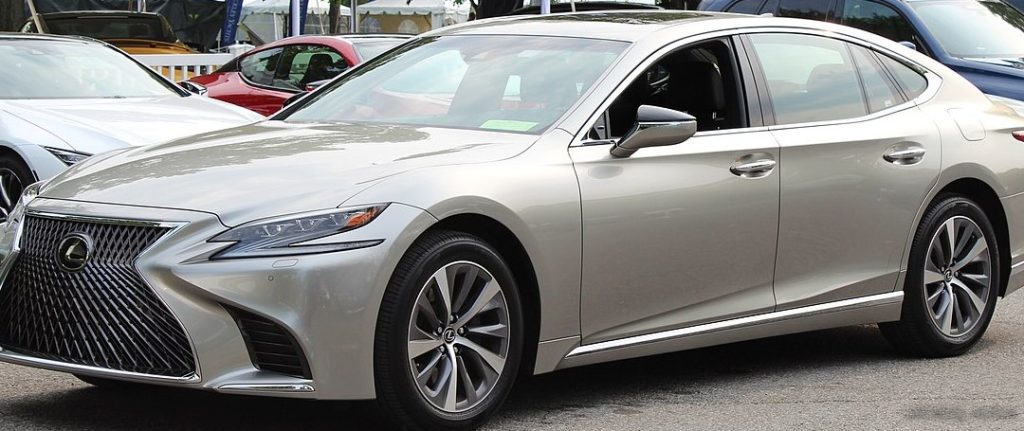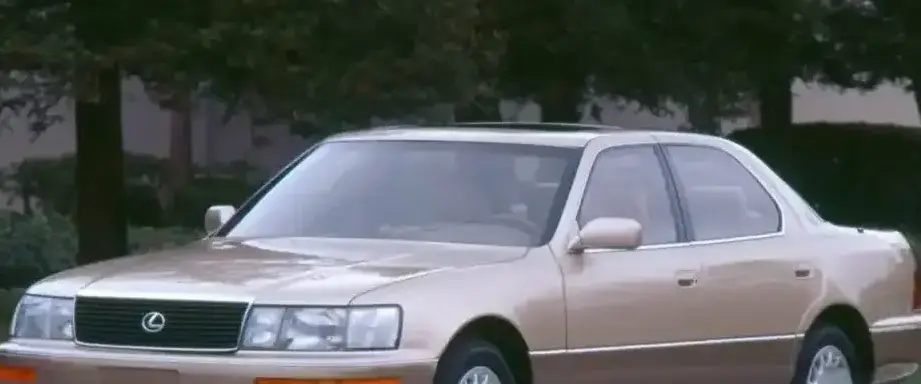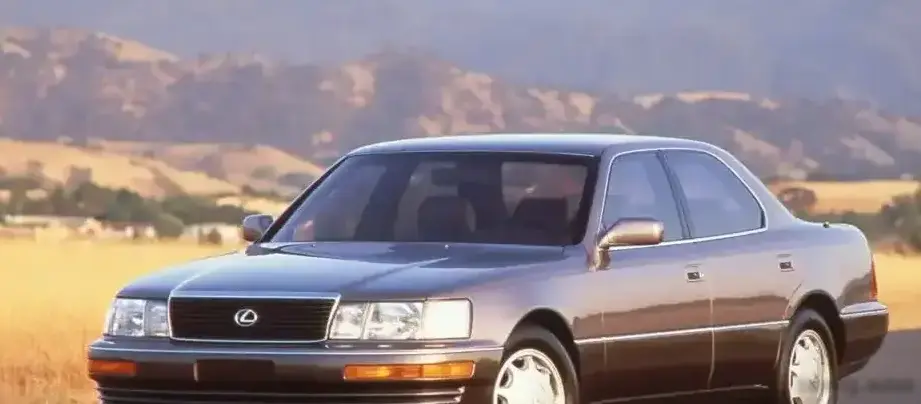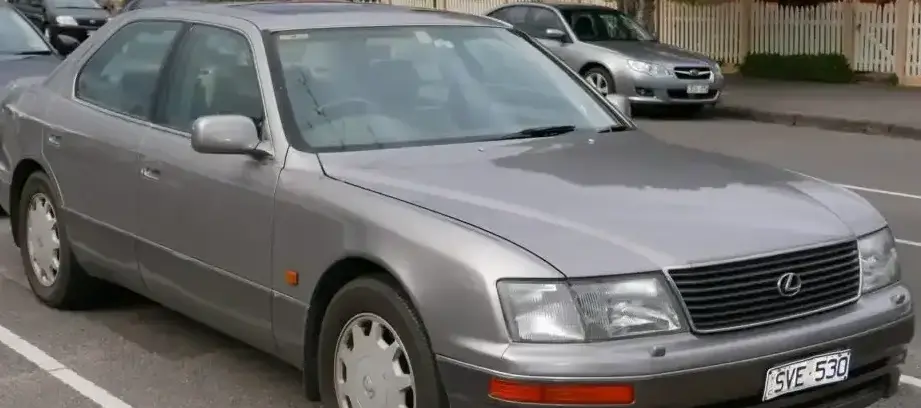
The Lexus LS 460, specifically the fourth generation produced from 2006 to 2012 (model years 2007-2012), represented a significant evolution in Lexus’ flagship sedan. Introduced in August 2008 for the 2009 model year, the 460 variant, equipped with the 4.6-liter V8 engine and an eight-speed automatic transmission (Super ECT), along with all-wheel drive, occupied the top tier of the LS lineup. This generation, internally designated as the XV40, aimed to blend traditional Lexus luxury with enhanced performance and cutting-edge technology. It competed directly with established German rivals like the BMW 7 Series and Mercedes-Benz S-Class, offering a unique combination of refinement, reliability, and value.
Technical Specifications
| Brand | Lexus |
| Model | LS |
| Generation | LS IV |
| Type (Engine) | 460 V8 (367 Hp) AWD Super ECT |
| Start of production | August, 2008 |
| End of production | October, 2009 |
| Powertrain Architecture | Internal Combustion engine |
| Body type | Sedan |
| Seats | 5 |
| Doors | 4 |
| Fuel consumption (economy) – urban (NEDC) | 17.2 l/100 km (13.7 US mpg, 16.4 UK mpg, 5.8 km/l) |
| Fuel consumption (economy) – extra urban (NEDC) | 8.4 l/100 km (28 US mpg, 33.6 UK mpg, 11.9 km/l) |
| Fuel consumption (economy) – combined (NEDC) | 11.6 l/100 km (20.3 US mpg, 24.4 UK mpg, 8.6 km/l) |
| CO2 emissions (NEDC) | 274 g/km |
| Fuel Type | Petrol (Gasoline) |
| Acceleration 0 – 100 km/h | 6.3 sec |
| Acceleration 0 – 62 mph | 6.3 sec |
| Acceleration 0 – 60 mph | 5.9 sec |
| Maximum speed | 250 km/h (155.34 mph), Electronically limited |
| Emission standard | Euro 4 |
| Weight-to-power ratio | 5.7 kg/Hp, 176 Hp/tonne |
| Weight-to-torque ratio | 4.4 kg/Nm, 224.9 Nm/tonne |
| Power | 367 Hp @ 6400 rpm |
| Power per litre | 79.6 Hp/l |
| Torque | 469 Nm @ 4100 rpm (345.92 lb.-ft. @ 4100 rpm) |
| Engine layout | Front, Longitudinal |
| Engine Model/Code | 1UR-FSE |
| Engine displacement | 4608 cm3 (281.2 cu. in.) |
| Number of cylinders | 8 |
| Engine configuration | V-engine |
| Cylinder Bore | 94 mm (3.7 in.) |
| Piston Stroke | 83 mm (3.27 in.) |
| Compression ratio | 11.8:1 |
| Number of valves per cylinder | 4 |
| Fuel injection system | Direct injection and Multi-port manifold injection |
| Engine aspiration | Naturally aspirated engine |
| Valvetrain | DOHC, Dual VVT-iE |
| Engine oil capacity | 9 l (9.51 US qt | 7.92 UK qt) |
| Coolant | 11.1 l (11.73 US qt | 9.77 UK qt) |
| Kerb Weight | 2085-2200 kg (4596.64 – 4850.17 lbs.) |
| Max. weight | 2640 kg (5820.2 lbs.) |
| Max load | 440-555 kg (970.03 – 1223.57 lbs.) |
| Trunk (boot) space – minimum | 565 l (19.95 cu. ft.) |
| Fuel tank capacity | 84 l (22.19 US gal | 18.48 UK gal) |
| Length | 5030 mm (198.03 in.) |
| Width | 1875 mm (73.82 in.) |
| Height | 1465-1475 mm (57.68 – 58.07 in.) |
| Wheelbase | 2970 mm (116.93 in.) |
| Front track | 1615 mm (63.58 in.) |
| Rear (Back) track | 1620 mm (63.78 in.) |
| Drag coefficient (Cd) | 0.26 |
| Minimum turning circle (turning diameter) | 11.8 m (38.71 ft.) |
| Drivetrain Architecture | The Internal combustion engine (ICE) drives permanently the four wheels of the vehicle. |
| Drive wheel | All wheel drive (4×4) |
| Number of gears and type of gearbox | 8 gears, automatic transmission Super ECT |
| Front suspension | Independent multi-link suspension, Transverse stabilizer, Air Suspension – Optional |
| Rear suspension | Independent multi-link suspension, Transverse stabilizer, Air Suspension – Optional |
| Front brakes | Ventilated discs, 358 mm |
| Rear brakes | Ventilated discs, 335 mm |
| Assisting systems | ABS (Anti-lock braking system) |
| Steering type | Steering rack and pinion |
| Power steering | Electric Steering |
| Tires size | 235/50 R18; 245/45 R19 |
| Wheel rims size | 7.5J x 18; 8J x 19 |
Powertrain & Engine Architecture
The heart of the LS 460 is the 1UR-FSE 4.6-liter V8 engine. This engine utilizes a sophisticated combination of direct injection (D-4S) and multi-port fuel injection to optimize combustion efficiency and power delivery. The D-4S system allows for both stratified charge operation at low loads for improved fuel economy and homogeneous charge operation at higher loads for increased power. The engine also features dual variable valve timing with intelligence (VVT-iE) on both intake and exhaust camshafts, further enhancing performance and efficiency. The eight-speed automatic transmission, dubbed “Super ECT,” was a key upgrade for this generation, offering smoother shifts and improved fuel economy compared to the previous six-speed unit. The transmission is electronically controlled and features manual shift mode for driver engagement. The all-wheel-drive system employs a viscous coupling center differential, distributing torque between the front and rear axles as needed for optimal traction.
Driving Characteristics
The LS 460 with the 4.6L V8 and automatic transmission delivers a remarkably smooth and refined driving experience. While not overtly sporty, the engine provides ample power for effortless acceleration and highway cruising. The 0-60 mph time of around 5.9 seconds is respectable for a large luxury sedan. The eight-speed transmission contributes to a relaxed driving feel, with well-spaced gear ratios that keep the engine in its optimal power band. Compared to the rear-wheel-drive LS 460, the AWD version offers enhanced stability and traction, particularly in inclement weather. However, it does come with a slight weight penalty, potentially impacting fuel economy and agility. The automatic transmission, while smooth, lacks the responsiveness of some competitors’ dual-clutch transmissions.
Equipment & Trim Levels
The LS 460 came generously equipped with standard features, including leather upholstery, wood trim, a premium sound system, navigation system, power-adjustable and heated/ventilated front seats, and a comprehensive suite of safety features. Optional extras included a Mark Levinson premium audio system, rear-seat entertainment, adaptive cruise control, and an air suspension system that further enhanced ride comfort. Trim levels were relatively simple, with the LS 460 representing the primary offering. A more luxurious LS 460 L (long wheelbase) version was also available, providing increased rear legroom.
Chassis & Braking
The LS 460 utilizes an independent multi-link suspension system at all four corners, providing a comfortable and controlled ride. The optional air suspension system further enhances ride quality by automatically adjusting the suspension damping based on road conditions and driving style. Braking duties are handled by ventilated disc brakes on all four wheels, providing ample stopping power. An anti-lock braking system (ABS) and electronic brake-force distribution (EBD) are standard features. The steering is a rack-and-pinion system with electric power assistance, offering precise and responsive steering feel.
Market Reception & Comparison
The Lexus LS 460 was generally well-received by automotive critics, praised for its luxurious interior, smooth ride, and strong V8 engine. However, some critics noted that the car lacked the sporty handling of its European rivals. Fuel economy, while improved over previous generations, remained a concern for some buyers. Compared to the LS 460 RWD, the AWD version offered a trade-off between enhanced traction and slightly reduced fuel efficiency. The LS 460 consistently ranked highly in reliability surveys, a key selling point for the Lexus brand.
Legacy
The Lexus LS 460, particularly the 2008-2009 models, has proven to be a remarkably reliable vehicle. The 1UR-FSE engine is known for its durability and longevity, and the eight-speed automatic transmission has also proven to be robust. On the used car market, these LS 460s represent a compelling value proposition, offering a luxurious and well-equipped sedan at a relatively affordable price. Maintenance costs are generally reasonable, although preventative maintenance, such as regular fluid changes, is crucial to ensure long-term reliability. The LS 460 solidified Lexus’ position as a major player in the luxury sedan segment, demonstrating the brand’s commitment to quality, refinement, and innovation.