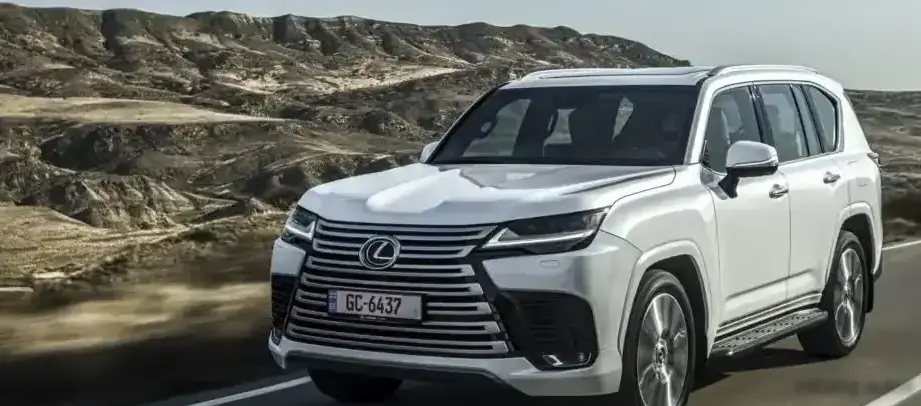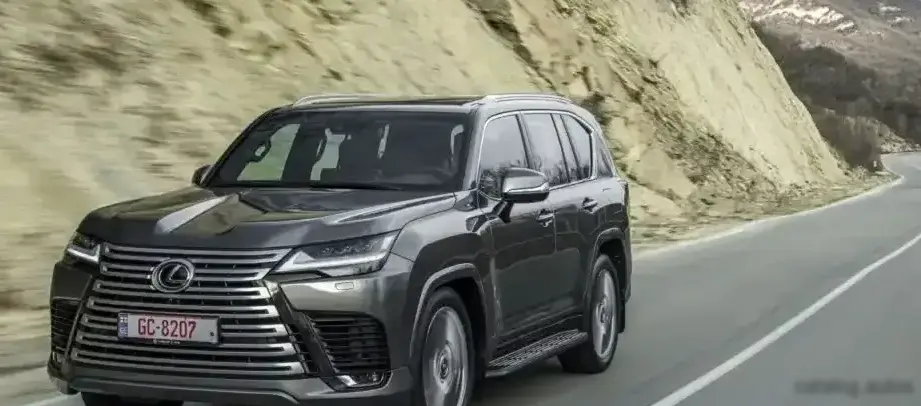
The Lexus LX II, specifically the facelifted version produced from 2005 to 2007, represents a significant iteration of Lexus’s full-size luxury SUV. Built upon the Toyota Land Cruiser Prado (J120) platform, the LX II aimed to deliver Land Cruiser reliability and off-road capability wrapped in Lexus’s signature refinement and luxury. The 470 variant, powered by the 4.7-liter 2UZ-FE V8 engine and paired with a five-speed automatic transmission, was a cornerstone of the LX II lineup during these years. This configuration positioned itself as the standard engine option, offering a balance between power, smoothness, and fuel efficiency within the broader LX range. It served as the primary offering for buyers seeking a luxurious, capable SUV without opting for potentially higher costs or specialized features, if any were offered in specific markets.
Technical Specifications
| Brand | Lexus |
| Model | LX |
| Generation | LX II (facelift 2005) |
| Type (Engine) | 470 V8 (275 Hp) AWD Automatic |
| Start of production | 2005 |
| End of production | 2007 |
| Powertrain Architecture | Internal Combustion engine |
| Body type | SUV |
| Seats | 8 |
| Doors | 5 |
| Fuel consumption (urban) | 17.9 l/100 km (13.1 US mpg, 15.8 UK mpg, 5.6 km/l) |
| Fuel consumption (extra urban) | 12.9 l/100 km (18.2 US mpg, 21.9 UK mpg, 7.8 km/l) |
| Fuel Type | Petrol (Gasoline) |
| Weight-to-power ratio | 8.9 kg/Hp, 112.2 Hp/tonne |
| Weight-to-torque ratio | 5.5 kg/Nm, 182.4 Nm/tonne |
| Power | 275 Hp @ 4800 rpm |
| Power per litre | 59 Hp/l |
| Torque | 447 Nm @ 3400 rpm (329.69 lb.-ft. @ 3400 rpm) |
| Engine layout | Front, Longitudinal |
| Engine Model/Code | 2UZ-FE |
| Engine displacement | 4664 cm3 (284.61 cu. in.) |
| Number of cylinders | 8 |
| Engine configuration | V-engine |
| Cylinder Bore | 94 mm (3.7 in.) |
| Piston Stroke | 84 mm (3.31 in.) |
| Compression ratio | 9.6:1 |
| Number of valves per cylinder | 4 |
| Fuel injection system | Multi-port manifold injection |
| Engine aspiration | Naturally aspirated engine |
| Valvetrain | DOHC |
| Engine oil capacity | 6.8 l (7.19 US qt | 5.98 UK qt) |
| Coolant capacity | 15.3 l (16.17 US qt | 13.46 UK qt) |
| Kerb Weight | 2450 kg (5401.33 lbs.) |
| Max. weight | 3110 kg (6856.38 lbs.) |
| Max load | 660 kg (1455.05 lbs.) |
| Trunk (boot) space – minimum | 510 l (18.01 cu. ft.) |
| Trunk (boot) space – maximum | 2560 l (90.41 cu. ft.) |
| Fuel tank capacity | 96 l (25.36 US gal | 21.12 UK gal) |
| Permitted trailer load with brakes (12%) | 2268 kg (5000.08 lbs.) |
| Length | 4890 mm (192.52 in.) |
| Width | 1941 mm (76.42 in.) |
| Height | 1850 mm (72.83 in.) |
| Wheelbase | 2850 mm (112.2 in.) |
| Front track | 1620 mm (63.78 in.) |
| Rear (Back) track | 1615 mm (63.58 in.) |
| Ride height (ground clearance) | 250 mm (9.84 in.) |
| Minimum turning circle (turning diameter) | 12.1 m (39.7 ft.) |
| Approach angle | 30° |
| Departure angle | 23° |
| Drive wheel | All wheel drive (4×4) |
| Number of gears and type of gearbox | 5 gears, automatic transmission |
| Front suspension | Double wishbone |
| Rear suspension | Independent multi-link suspension |
| Front brakes | Ventilated discs |
| Rear brakes | Ventilated discs |
| Assisting systems | ABS (Anti-lock braking system) |
| Steering type | Steering rack and pinion |
| Power steering | Hydraulic Steering |
| Tires size | 275/60 R18 |
| Wheel rims size | 8.0J x 18 |
Powertrain & Engine Architecture
The heart of the LX 470 is the 2UZ-FE 4.7-liter V8 engine. This engine, a member of Toyota’s UZ engine family, is renowned for its durability and smooth operation. It features a cast-iron block and aluminum cylinder heads, incorporating dual overhead camshafts (DOHC) and four valves per cylinder. The 2UZ-FE utilizes a multi-port fuel injection system, delivering fuel directly to each intake port. This design, while not as advanced as direct injection systems found in later engines, provided reliable performance and good fuel economy for its time. The engine’s 9.6:1 compression ratio contributes to its torque output, making it well-suited for towing and off-road driving. The five-speed automatic transmission, designated A750F, was specifically chosen for its robustness and ability to handle the engine’s substantial torque. This transmission features electronically controlled shifting and overdrive, contributing to both performance and fuel efficiency on the highway.
Driving Characteristics
The LX 470 with the 4.7-liter V8 and automatic transmission delivers a comfortable and capable driving experience. While not a sports SUV, the engine provides ample power for everyday driving and confident passing maneuvers. The automatic transmission is smooth and responsive, although it may not offer the same level of driver engagement as a manual transmission. The gear ratios are tuned for a balance of acceleration and fuel economy, with the overdrive gear helping to reduce engine speed at highway speeds. Compared to potential higher-output versions (if offered in other markets), the 275 hp variant prioritizes smoothness and refinement over outright performance. The automatic transmission, while convenient, does result in a slight reduction in fuel economy compared to a manual transmission, and some drivers may find the shift points less precise.
Equipment & Trim Levels
The 2005-2007 Lexus LX 470 typically came standard with a comprehensive list of luxury features. These included leather upholstery, power-adjustable front seats with memory function, a premium sound system, automatic climate control, and a sunroof. Standard safety features included ABS, traction control, and multiple airbags. Optional extras often included a navigation system, rear-seat entertainment system, and upgraded audio options. The interior trim was generally focused on providing a luxurious and comfortable environment, with wood accents and high-quality materials throughout the cabin.
Chassis & Braking
The LX 470’s chassis is based on the Toyota Land Cruiser Prado, providing a robust and capable foundation. It features a double wishbone front suspension and an independent multi-link rear suspension, designed to provide a comfortable ride both on and off-road. Ventilated disc brakes are used on all four wheels, providing ample stopping power. The LX 470 also incorporates an anti-lock braking system (ABS) to enhance safety during emergency braking situations. Due to the vehicle’s weight, the rear brakes were often smaller than the front brakes, but still provided adequate stopping performance.
Market Reception & Comparison
The Lexus LX 470 was generally well-received by critics for its luxurious interior, comfortable ride, and robust reliability. However, its fuel economy was often criticized as being relatively poor compared to other SUVs in its class. Compared to other trims within the LX lineup (if any were available), the 470 variant offered a good balance of price and performance, making it a popular choice for buyers seeking a luxurious and capable SUV without the added cost of higher-end features. Its reliability and durability were consistently praised, making it a desirable vehicle in the used car market.
Legacy
The 2UZ-FE engine, found in the LX 470, has earned a reputation for exceptional longevity and reliability. Many examples of this engine have surpassed 200,000 miles with proper maintenance. The LX 470 itself remains a popular choice in the used car market, particularly among buyers seeking a capable and reliable luxury SUV. While its fuel economy may not be ideal by modern standards, its overall durability and luxurious features continue to make it a desirable vehicle for those who prioritize long-term reliability and comfort.