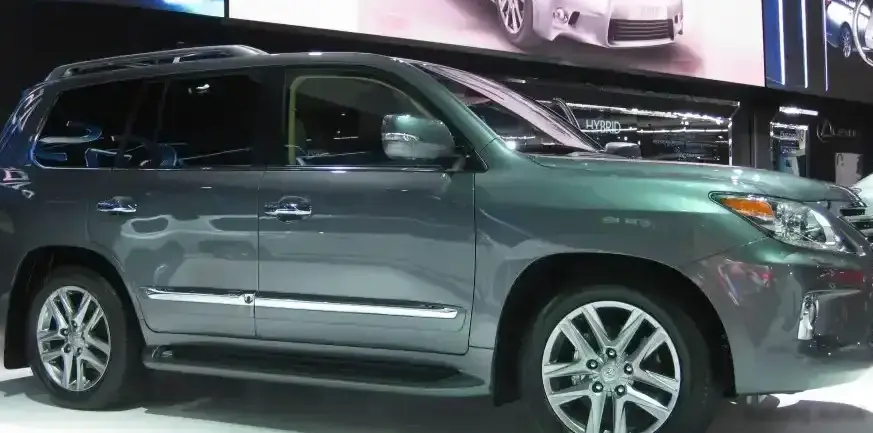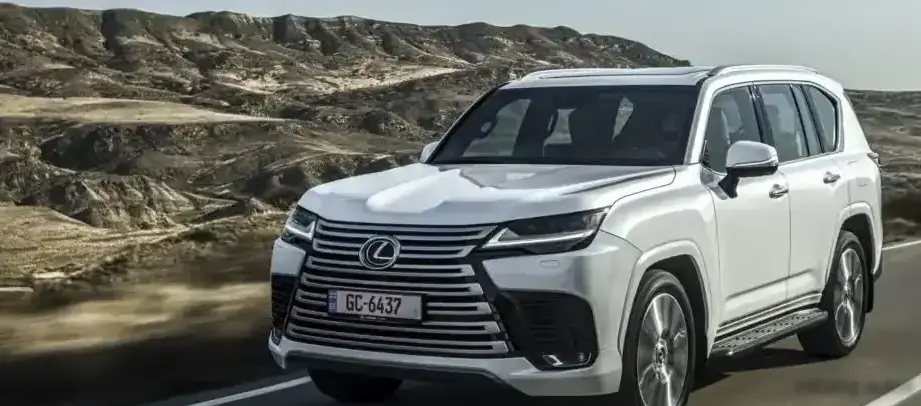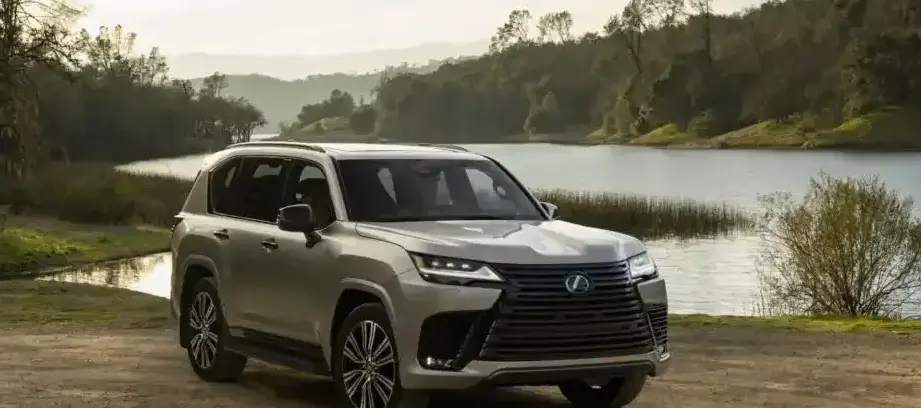
The Lexus LX IV (J300) 700h V6 represents the latest iteration of Lexus’ flagship full-size luxury SUV, launched for the 2025 model year. Building upon the foundation of the Toyota Land Cruiser Prado, the J300 series marks a significant departure from its predecessor, incorporating a new platform, updated technology, and a focus on both on-road refinement and off-road capability. The 700h variant specifically denotes a full hybrid powertrain, combining a 3.4-liter twin-turbocharged V6 gasoline engine with an electric motor, delivering a total system output of 457 horsepower. This model occupies the top tier of the LX IV lineup, offering a blend of performance, luxury, and fuel efficiency within the Lexus range.
Technical Specifications
| Brand | Lexus |
| Model | LX |
| Generation | LX IV (J300) |
| Type (Engine) | 700h V6 (457 Hp) Hybrid AWD Direct Shift |
| Start of production | 2025 |
| Powertrain Architecture | FHEV (Full Hybrid Electric Vehicle) |
| Body type | SUV |
| Seats | 4-5 |
| Doors | 5 |
| Fuel consumption (economy) – urban (EPA) | 12.4 l/100 km (19 US mpg, 22.8 UK mpg, 8.1 km/l) |
| Fuel consumption (economy) – extra urban (EPA) | 10.7 l/100 km (22 US mpg, 26.4 UK mpg, 9.3 km/l) |
| Fuel consumption (economy) – combined (EPA) | 11.8 l/100 km (19.9 US mpg, 23.9 UK mpg, 8.5 km/l) |
| Fuel Type | Petrol (Gasoline) |
| Acceleration 0 – 60 mph | 6.4 sec |
| Maximum speed | 210 km/h (130.49 mph) – Electronically limited |
| Emission standard | ULEV |
| Weight-to-power ratio | 6.1 kg/Hp, 164.4 Hp/tonne |
| Weight-to-torque ratio | 3.5 kg/Nm, 284.2 Nm/tonne |
| Battery voltage | 288 V |
| Battery technology | Nickel-metal hydride (NiMH) |
| Battery location | Under the trunk |
| Electric motor | 1 |
| Electric motor location | Between the combustion engine and the transmission |
| System power | 457 Hp @ 5200 rpm |
| System torque | 790 Nm @ 2400 rpm (582.67 lb.-ft. @ 2400 rpm) |
| Engine layout | Front, Longitudinal |
| Engine Model/Code | V35A-FTS |
| Engine displacement | 3445 cm3 (210.23 cu. in.) |
| Number of cylinders | 6 |
| Engine configuration | V-engine |
| Cylinder Bore | 85.5 mm (3.37 in.) |
| Piston Stroke | 100 mm (3.94 in.) |
| Compression ratio | 10.5:1 |
| Number of valves per cylinder | 4 |
| Fuel injection system | Direct injection and Multi-port manifold injection |
| Engine aspiration | Twin-Turbo, Intercooler |
| Valvetrain | DOHC, VVT-iE |
| Engine oil capacity | 7.3 l (7.71 US qt | 6.42 UK qt) |
| Coolant | 14.7 l (15.53 US qt | 12.93 UK qt) |
| Kerb Weight | 2780-2840 kg (6128.85 – 6261.13 lbs.) |
| Max. weight | 3379 kg (7449.42 lbs.) |
| Max load | 539-599 kg (1188.29 – 1320.57 lbs.) |
| Trunk (boot) space – minimum | 877 l (30.97 cu. ft.) |
| Trunk (boot) space – maximum | 1772 l (62.58 cu. ft.) |
| Fuel tank capacity | 68 l (17.96 US gal | 14.96 UK gal) |
| Permitted trailer load with brakes (12%) | 3629 kg (8000.58 lbs.) |
| Length | 5100 mm (200.79 in.) |
| Width | 1990 mm (78.35 in.) |
| Height | 1885-1895 mm (74.21 – 74.61 in.) |
| Wheelbase | 2850 mm (112.2 in.) |
| Front track | 1677 mm (66.02 in.) |
| Rear (Back) track | 1678 mm (66.06 in.) |
| Front overhang | 1035 mm (40.75 in.) |
| Rear overhang | 1215 mm (47.83 in.) |
| Ride height (ground clearance) | 200-205 mm (7.87 – 8.07 in.) |
| Minimum turning circle (turning diameter) | 12.8 m (41.99 ft.) |
| Approach angle | 21-23° |
| Departure angle | 21° |
| Wading depth | 700 mm (27.56 in.) |
| Drivetrain Architecture | The Internal combustion engine (ICE) and the electric motor permanently drive the four wheels of the car with the ability to work in full electric or mixed mode. |
| Drive wheel | All wheel drive (4×4) |
| Number of gears and type of gearbox | 10 gears, automatic transmission Direct Shift |
| Front suspension | Double wishbone |
| Rear suspension | Rigid axle suspension |
| Front brakes | Ventilated discs, 354×32 mm |
| Rear brakes | Ventilated discs, 335×20 mm |
| Steering type | Steering rack and pinion |
| Power steering | Electric Steering |
| Tires size | 265/65 R18; 265/70 R18; 265/55 R20; 265/50 R22 |
| Wheel rims size | 18; 20; 22 |
Powertrain & Engine Architecture
The heart of the LX 700h is the V35A-FTS 3.4-liter twin-turbocharged V6 engine. This engine utilizes a direct injection and multi-port fuel injection system for optimized combustion efficiency and power delivery. The engine boasts a compression ratio of 10.5:1 and features a Double Overhead Camshaft (DOHC) valvetrain with Variable Valve Timing-intelligent Electric motor (VVT-iE) for enhanced responsiveness. The engine is paired with an electric motor integrated between the engine and the 10-speed Direct Shift automatic transmission. This configuration allows for electric-only driving at low speeds and provides supplemental power during acceleration. The Nickel-metal hydride (NiMH) battery pack, located under the trunk floor, stores the electrical energy. The hybrid system operates seamlessly, prioritizing fuel efficiency while providing ample power when needed.
Driving Characteristics
The LX 700h delivers a refined and powerful driving experience. The combination of the twin-turbo V6 and the electric motor results in a total system output of 457 horsepower and 790 Nm (582.67 lb.-ft.) of torque. Acceleration to 60 mph is achieved in 6.4 seconds, and the electronically limited top speed is 210 km/h (130.49 mph). The 10-speed automatic transmission provides smooth and precise gear changes, contributing to a comfortable ride. Compared to lower-trim LX models with naturally aspirated engines, the 700h offers significantly improved acceleration and responsiveness. While the hybrid system adds weight, the increased torque output compensates for this, providing strong pulling power. The all-wheel-drive system ensures confident handling in various road conditions.
Equipment & Trim Levels
The LX 700h typically comes standard with a high level of luxury features, including premium leather upholstery, heated and ventilated front seats, a large touchscreen infotainment system with navigation, a Mark Levinson premium sound system, and a suite of advanced driver-assistance systems (ADAS). Available options include a rear-seat entertainment system, massaging seats, and a panoramic sunroof. The interior design emphasizes comfort and sophistication, with high-quality materials and meticulous attention to detail. Trim levels may vary depending on the market, but the 700h generally represents the highest level of equipment available.
Chassis & Braking
The LX IV utilizes a robust body-on-frame construction, providing excellent durability and off-road capability. The suspension system features double wishbones at the front and a rigid axle setup at the rear. Ventilated disc brakes are used on all four wheels, providing ample stopping power. The LX 700h benefits from a refined suspension tuning that balances ride comfort with handling precision. The standard inclusion of ABS (Anti-lock braking system) and electronic stability control further enhances safety.
Market Reception & Comparison
The Lexus LX IV 700h has been generally well-received by automotive critics, praised for its luxurious interior, powerful hybrid powertrain, and refined driving experience. Fuel economy, while improved compared to non-hybrid LX models, remains relatively low due to the vehicle’s size and weight. Compared to other full-size luxury SUVs, the LX 700h offers a unique combination of on-road comfort and off-road capability. Its hybrid powertrain sets it apart from many competitors, appealing to buyers seeking a more environmentally conscious option.
Legacy
The Lexus LX IV 700h represents a significant step forward for the LX lineup, incorporating advanced technology and a focus on both luxury and efficiency. The long-term reliability of the V35A-FTS engine and the hybrid system remains to be fully assessed, but Lexus has a strong reputation for building durable and dependable vehicles. As the LX IV ages, the 700h variant is expected to hold its value well, appealing to buyers seeking a premium full-size luxury SUV with a hybrid powertrain.