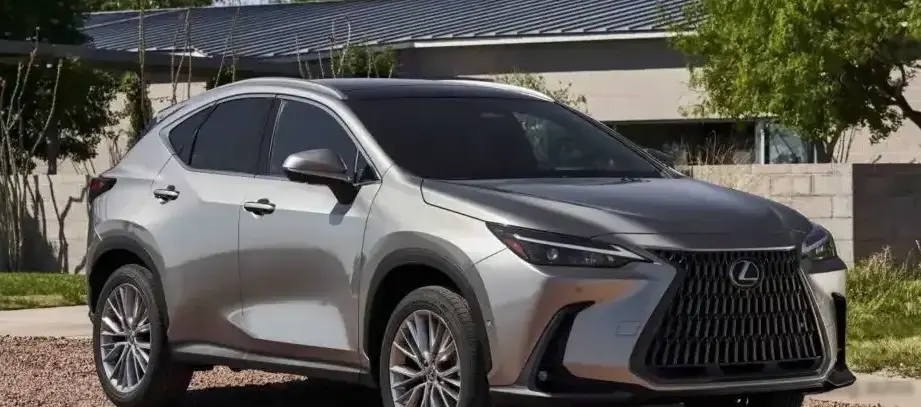
The Lexus NX 200t, produced between March 2015 and November 2017, represented the entry point into the first generation (AZ10) of Lexus’s compact luxury crossover SUV. Positioned beneath the NX 300h hybrid model, the 200t offered a more conventional, gasoline-powered option for buyers seeking a blend of luxury, practicality, and fuel efficiency. It was a key model for Lexus in expanding its reach within the burgeoning compact SUV segment, particularly in North America where the brand sought to attract a younger demographic. The NX 200t competed directly with vehicles like the Acura RDX, BMW X3, and Audi Q5.
Technical Specifications
| Brand | Lexus |
| Model | NX |
| Generation | NX I (AZ10) |
| Type (Engine) | 200t (238 Hp) Automatic |
| Start of production | March, 2015 |
| End of production | November, 2017 |
| Powertrain Architecture | Internal Combustion engine |
| Body type | SUV, Crossover |
| Seats | 5 |
| Doors | 5 |
| Fuel consumption (urban) | 10.3 l/100 km (22.8 US mpg) |
| Fuel consumption (extra urban) | 6.2 l/100 km (37.9 US mpg) |
| Fuel consumption (combined) | 7.7 l/100 km (30.5 US mpg) |
| CO2 emissions | 178 g/km |
| Fuel Type | Petrol (Gasoline) |
| Acceleration 0 – 100 km/h | 7.3 sec |
| Acceleration 0 – 62 mph | 7.3 sec |
| Acceleration 0 – 60 mph | 6.9 sec |
| Maximum speed | 200 km/h (124.27 mph) |
| Emission standard | Euro 6 b |
| Weight-to-power ratio | 6.8 kg/Hp |
| Weight-to-torque ratio | 4.7 kg/Nm |
| Power | 238 Hp @ 4800 rpm |
| Torque | 350 Nm @ 1650 rpm (258.15 lb.-ft. @ 1650 rpm) |
| Maximum engine speed | 5700 rpm |
| Engine layout | Front, Transverse |
| Engine Model/Code | 8AR-FTS |
| Engine displacement | 1998 cm3 (121.93 cu. in.) |
| Number of cylinders | 4 |
| Engine configuration | Inline |
| Cylinder Bore | 86 mm (3.39 in.) |
| Piston Stroke | 86 mm (3.39 in.) |
| Compression ratio | 10:1 |
| Number of valves per cylinder | 4 |
| Fuel injection system | Direct injection |
| Engine aspiration | Turbocharger, Intercooler |
| Valvetrain | DOHC – dual VVT-i |
| Engine oil capacity | 4.9 l (5.18 US qt | 4.31 UK qt) |
| Coolant | 7.9 l (8.35 US qt | 6.95 UK qt) |
| Kerb Weight | 1630-1685 kg (3593.53 – 3714.79 lbs.) |
| Max. weight | 2295 kg (5059.61 lbs.) |
| Max load | 610-665 kg (1344.82 – 1466.07 lbs.) |
| Trunk (boot) space – minimum | 555 l (19.6 cu. ft.) |
| Trunk (boot) space – maximum | 1600 l (56.5 cu. ft.) |
| Fuel tank capacity | 60 l (15.85 US gal | 13.2 UK gal) |
| Max. roof load | 80 kg (176.37 lbs.) |
| Permitted trailer load with brakes (12%) | 1500 kg (3306.93 lbs.) |
| Permitted trailer load without brakes | 750 kg (1653.47 lbs.) |
| Permitted towbar download | 60 kg (132.28 lbs.) |
| Length | 4630 mm (182.28 in.) |
| Width | 1845 mm (72.64 in.) |
| Height | 1645 mm (64.76 in.) |
| Wheelbase | 2660 mm (104.72 in.) |
| Front track | 1580 mm (62.2 in.) |
| Rear (Back) track | 1580 mm (62.2 in.) |
| Ride height (ground clearance) | 185 mm (7.28 in.) |
| Drag coefficient (Cd) | 0.33 |
| Minimum turning circle (turning diameter) | 12.1 m (39.7 ft.) |
| Approach angle | 17.2° |
| Departure angle | 24.5° |
| Drivetrain Architecture | Front wheel drive |
| Drive wheel | Front wheel drive |
| Number of gears and type of gearbox | 6 gears, automatic transmission |
| Front suspension | Independent type McPherson |
| Rear suspension | Double wishbone |
| Front brakes | Ventilated discs |
| Rear brakes | Disc |
| Assisting systems | ABS (Anti-lock braking system) |
| Steering type | Steering rack and pinion |
| Tires size | 225/65 R17 |
| Wheel rims size | 7J x17 |
Powertrain & Engine Architecture
The heart of the NX 200t is the 8AR-FTS, a 2.0-liter turbocharged inline-four cylinder gasoline engine. This engine is part of Toyota’s ‘AR’ family, known for its reliability and efficiency. The 8AR-FTS utilizes direct injection and a twin-scroll turbocharger with an intercooler to deliver a balance of power and fuel economy. The engine features a dual Variable Valve Timing-intelligent (VVT-i) system, optimizing valve timing for both intake and exhaust to improve performance across the rev range. The engine is transversely mounted in the front of the vehicle. The NX 200t exclusively used a six-speed automatic transmission, designed to provide smooth and responsive shifts. This transmission was not known for being particularly sporty, prioritizing comfort and fuel efficiency over aggressive gear changes.
Driving Characteristics
The NX 200t offered a comfortable and refined driving experience, though not particularly sporty. The 235 horsepower and 258 lb-ft of torque provided adequate acceleration, with a 0-60 mph time of around 6.9 seconds. The automatic transmission, while smooth, could feel somewhat hesitant during quick overtaking maneuvers. Compared to the NX 300h, the 200t lacked the instant torque of the hybrid system, requiring the engine to rev higher to achieve similar acceleration. The gear ratios were tuned for fuel economy, meaning the engine often operated at lower RPMs during highway cruising. The front-wheel-drive configuration contributed to a slight tendency towards understeer in cornering.
Equipment & Trim Levels
The NX 200t was typically offered in a single, well-equipped trim level, with optional packages available. Standard features included Lexus’s Display Remote Touch interface, a 7-inch infotainment screen, Bluetooth connectivity, a rearview camera, and a suite of safety features including pre-collision system, lane departure alert, and automatic high beams. Available options included a navigation system, a Mark Levinson premium sound system, heated and ventilated front seats, and a panoramic sunroof. Interior upholstery was typically a combination of synthetic leather and fabric, with genuine leather available as an upgrade. Dashboard materials were generally of high quality, reflecting Lexus’s commitment to luxury.
Chassis & Braking
The NX 200t utilized a MacPherson strut front suspension and a double wishbone rear suspension, providing a comfortable ride quality. Stabilizer bars were fitted to both axles to reduce body roll during cornering. Braking duties were handled by ventilated discs at the front and solid discs at the rear. Anti-lock Braking System (ABS) was standard. The suspension tuning prioritized comfort over sporty handling, resulting in a relatively soft and forgiving ride. The chassis was designed to balance rigidity with weight savings, contributing to the vehicle’s overall handling characteristics.
Market Reception & Comparison
The NX 200t was generally well-received by critics, who praised its stylish design, comfortable interior, and fuel efficiency. However, some reviewers noted that the engine lacked the refinement and power of its competitors, and the automatic transmission could feel sluggish at times. Compared to the NX 300h, the 200t offered a lower price point but sacrificed fuel economy and the benefits of hybrid technology. Against rivals like the Acura RDX and BMW X3, the NX 200t offered a competitive value proposition, but often fell short in terms of outright performance and driving engagement.
Legacy
The 8AR-FTS engine, while not without its quirks, proved to be a relatively reliable powertrain. Common issues reported by owners include occasional oil consumption and potential problems with the turbocharger. However, these issues were not widespread and were often addressed under warranty. On the used car market, the NX 200t represents a good value for buyers seeking a luxury crossover SUV with a reasonable price tag. Its combination of comfort, features, and reliability makes it a compelling option in its segment. The first generation NX laid the groundwork for subsequent iterations, establishing the model as a key player in Lexus’s lineup.