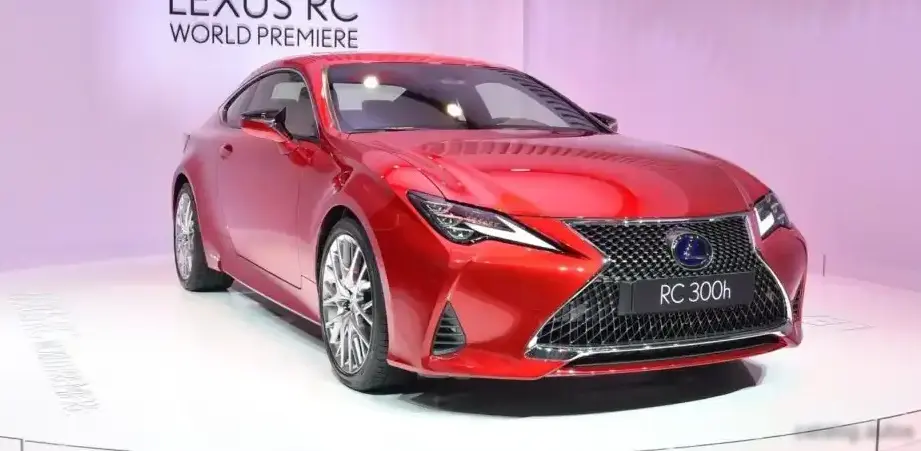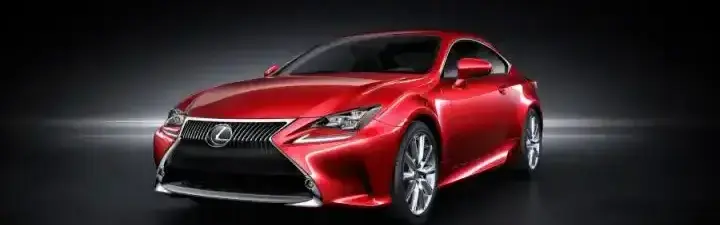
The Lexus RC 300, produced from 2015 to 2018, represents Lexus’s entry into the rear-wheel-drive luxury coupe segment. Positioned as a stylish alternative to established competitors like the BMW 4 Series and Audi RC, the RC 300 aimed to deliver a blend of performance, comfort, and Lexus’s renowned build quality. This specific variant, equipped with the 8AR-FTS 2.0-liter turbocharged inline-four engine and an eight-speed automatic transmission, served as the primary engine option for the RC in the North American market, offering a balance between power and fuel efficiency. It occupied a middle ground in the RC lineup, slotting below the more powerful RC 350 and above any potential base model configurations (which were not widely offered in the US).
Technical Specifications
| Brand | Lexus |
| Model | RC |
| Generation | RC |
| Type (Engine) | 300 (241 Hp) Automatic |
| Start of production | 2015 |
| End of production | 2018 |
| Powertrain Architecture | Internal Combustion engine |
| Body type | Coupe |
| Seats | 4 |
| Doors | 2 |
| Fuel consumption (urban) | 10.6 l/100 km (22.2 US mpg) |
| Fuel consumption (extra urban) | 7.3 l/100 km (32.2 US mpg) |
| Fuel consumption (combined) | 9.4 l/100 km (25 US mpg) |
| Fuel Type | Petrol (Gasoline) |
| Maximum speed | 230 km/h (142.92 mph) |
| Weight-to-power ratio | 7 kg/Hp |
| Weight-to-torque ratio | 4.8 kg/Nm |
| Power | 241 Hp @ 5800 rpm |
| Power per litre | 120.6 Hp/l |
| Torque | 350 Nm @ 1650-4400 rpm (258.15 lb.-ft. @ 1650-4400 rpm) |
| Engine layout | Front, Longitudinal |
| Engine Model/Code | 8AR-FTS |
| Engine displacement | 1999 cm3 (121.99 cu. in.) |
| Number of cylinders | 4 |
| Engine configuration | Inline |
| Cylinder Bore | 86.1 mm (3.39 in.) |
| Piston Stroke | 86.1 mm (3.39 in.) |
| Compression ratio | 10:1 |
| Number of valves per cylinder | 4 |
| Fuel injection system | Direct injection |
| Engine aspiration | Turbocharger, Intercooler |
| Valvetrain | DOHC |
| Engine oil capacity | 4.6 l (4.86 US qt | 4.05 UK qt) |
| Coolant | 8 l (8.45 US qt | 7.04 UK qt) |
| Kerb Weight | 1695 kg (3736.84 lbs.) |
| Max. weight | 2186 kg (4819.31 lbs.) |
| Max load | 491 kg (1082.47 lbs.) |
| Trunk (boot) space – minimum | 294 l (10.38 cu. ft.) |
| Fuel tank capacity | 66 l (17.44 US gal | 14.52 UK gal) |
| Length | 4695 mm (184.84 in.) |
| Width | 1840 mm (72.44 in.) |
| Width including mirrors | 2070 mm (81.5 in.) |
| Height | 1394 mm (54.88 in.) |
| Wheelbase | 2730 mm (107.48 in.) |
| Front track | 1580 mm (62.2 in.) |
| Rear (Back) track | 1570 mm (61.81 in.) |
| Ride height (ground clearance) | 135 mm (5.31 in.) |
| Drag coefficient (Cd) | 0.285 |
| Minimum turning circle (turning diameter) | 10.4 m (34.12 ft.) |
| Drivetrain Architecture | Rear wheel drive |
| Number of gears and type of gearbox | 8 gears, automatic transmission |
| Front suspension | Double wishbone |
| Rear suspension | Independent multi-link suspension |
| Front brakes | Ventilated discs |
| Rear brakes | Ventilated discs |
| Assisting systems | ABS (Anti-lock braking system) |
| Steering type | Steering rack and pinion |
| Power steering | Electric Steering |
| Tires size | 235/45 R18 94Y; 235/40 R19 96Y; 265/35 R19 94Y |
| Wheel rims size | 8J x 18; 8J x 19 |
Powertrain & Engine Architecture
The heart of the RC 300 is the 8AR-FTS, a 2.0-liter inline-four cylinder engine. This engine utilizes a twin-scroll turbocharger with intercooling to boost power output. Direct fuel injection is employed for precise fuel delivery and improved combustion efficiency. The engine features a dual overhead camshaft (DOHC) valvetrain with four valves per cylinder, optimizing airflow for enhanced performance. The 8AR-FTS is known for its responsiveness and relatively smooth power delivery. The eight-speed automatic transmission, sourced from Aisin, is a crucial component of this powertrain. It provides quick and seamless gear changes, contributing to both acceleration and fuel economy. The transmission features a wide gear ratio spread, allowing for both strong off-the-line acceleration and relaxed highway cruising.
Driving Characteristics
The RC 300 Automatic delivers a comfortable and refined driving experience. While not overtly sporty, the turbocharged engine provides adequate power for everyday driving and occasional spirited acceleration. The eight-speed automatic transmission is well-tuned, offering smooth shifts and responsive downshifts. Compared to the RC 350 with its 3.5-liter V6, the RC 300 offers less outright power, resulting in a slightly slower 0-60 mph time (around 7.5 seconds versus the RC 350’s 5.8 seconds). However, the RC 300’s lighter weight and efficient turbocharger contribute to better fuel economy. The rear-wheel-drive configuration provides a balanced feel, although it lacks the agility of some competitors with more sophisticated suspension setups. The gear ratios are optimized for a balance between acceleration and fuel efficiency, with lower gears providing quick response and higher gears enabling relaxed cruising at highway speeds.
Equipment & Trim Levels
The RC 300 typically came standard with features such as Lexus Display Audio with a 7-inch screen, Bluetooth connectivity, a rearview camera, and a ten-speaker audio system. Interior upholstery was typically NuLuxe, a high-quality synthetic leather. Available options included a Mark Levinson premium sound system, a larger 10.3-inch display screen with navigation, heated and ventilated front seats, and a power moonroof. Trim levels varied slightly depending on the year, but generally included base models and optional packages that added features like blind-spot monitoring, rear cross-traffic alert, and rain-sensing wipers.
Chassis & Braking
The RC 300 utilizes a double wishbone front suspension and an independent multi-link rear suspension, providing a comfortable ride and decent handling characteristics. The suspension is tuned for a balance between comfort and control, prioritizing ride quality over outright sportiness. Braking duties are handled by ventilated disc brakes on all four wheels, providing adequate stopping power. Anti-lock braking system (ABS) is standard, enhancing safety and stability during hard braking. The RC 300’s chassis is relatively rigid, contributing to a stable and predictable driving experience.
Market Reception & Comparison
Critics generally praised the RC 300 for its stylish design, comfortable interior, and Lexus’s reputation for reliability. However, some reviewers noted that the turbocharged four-cylinder engine lacked the refinement and power of the V6 engine offered in the RC 350. Fuel economy was generally considered good for a luxury coupe, with combined ratings around 25 mpg. Compared to the RC 350, the RC 300 offered a more affordable entry point into the RC lineup, appealing to buyers who prioritized fuel efficiency and value over outright performance. The RC 300 also faced competition from other luxury coupes, such as the BMW 428i and Audi A5, which offered similar levels of performance and features.
Legacy
The RC 300 has proven to be a relatively reliable vehicle, with the 8AR-FTS engine generally considered durable. Common maintenance items include regular oil changes, coolant flushes, and brake pad replacements. The turbocharger can be a potential point of concern, requiring careful maintenance and monitoring. In the used car market, the RC 300 offers a compelling value proposition, providing a stylish and well-equipped luxury coupe at a relatively affordable price. Its blend of comfort, reliability, and fuel efficiency makes it an attractive option for buyers seeking a premium driving experience without breaking the bank.