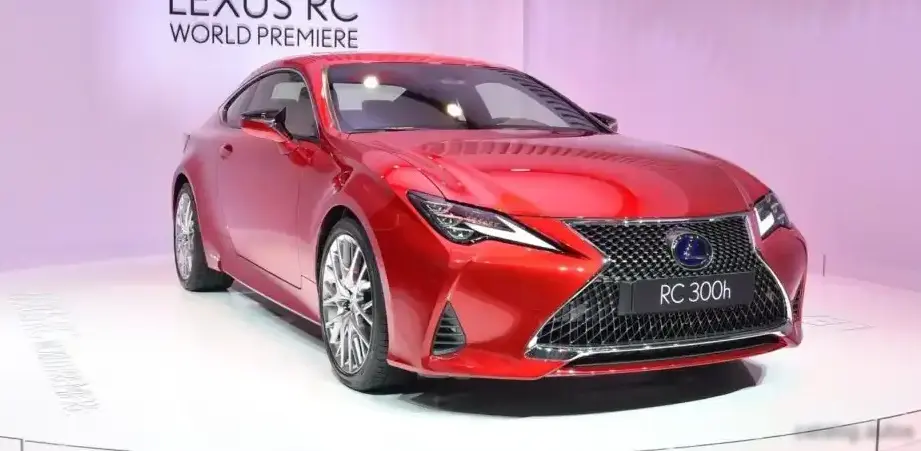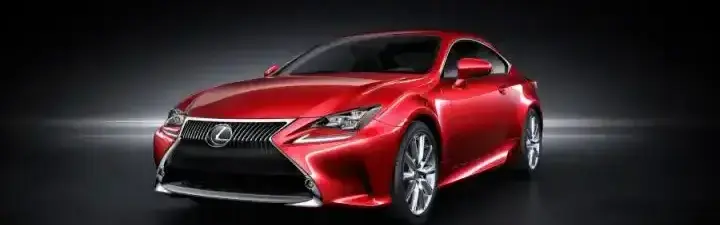
The Lexus RC F 5.0, produced between 2014 and 2018, marked Lexus’s significant entry into the high-performance coupe market. Positioned as the flagship performance variant of the RC lineup, it aimed to provide a compelling alternative to established European competitors like the BMW M4 and the Mercedes-AMG C63 Coupe. The RC F distinguished itself by featuring a naturally aspirated V8 engine, a relatively uncommon choice in a segment increasingly dominated by turbocharged powertrains. It was built on the Lexus RC platform, sharing the basic architecture of the standard RC coupe but incorporating substantial performance-focused upgrades.
Technical Specifications
| Brand | Lexus |
| Model | RC |
| Generation | RC |
| Type (Engine) | F 5.0 (477 Hp) Automatic |
| Start of production | 2014 |
| End of production | 2018 |
| Powertrain Architecture | Internal Combustion engine |
| Body type | Coupe |
| Seats | 4 |
| Doors | 2 |
| Fuel consumption (economy) – urban | 16.1 l/100 km (14.6 US mpg, 17.5 UK mpg, 6.2 km/l) |
| Fuel consumption (economy) – extra urban | 7.8 l/100 km (30.2 US mpg, 36.2 UK mpg, 12.8 km/l) |
| Fuel consumption (economy) – combined | 10.8 l/100 km (21.8 US mpg, 26.2 UK mpg, 9.3 km/l) |
| CO2 emissions | 251 g/km |
| Fuel Type | Petrol (Gasoline) |
| Acceleration 0 – 100 km/h | 4.5 sec |
| Acceleration 0 – 62 mph | 4.5 sec |
| Acceleration 0 – 60 mph | 4.3 sec |
| Maximum speed | 270 km/h (167.77 mph) |
| Emission standard | Euro 6 W |
| Weight-to-power ratio | 3.9 kg/Hp, 256.5 Hp/tonne |
| Weight-to-torque ratio | 3.5 kg/Nm, 284.9 Nm/tonne |
| Power | 477 Hp @ 6400-7100 rpm |
| Power per litre | 96 Hp/l |
| Torque | 530 Nm @ 4800-5600 rpm (390.91 lb.-ft. @ 4800-5600 rpm) |
| Engine layout | Front, Longitudinal |
| Engine Model/Code | 2UR-GSE |
| Engine displacement | 4969 cm3 (303.23 cu. in.) |
| Number of cylinders | 8 |
| Engine configuration | V-engine |
| Cylinder Bore | 94 mm (3.7 in.) |
| Piston Stroke | 89.5 mm (3.52 in.) |
| Compression ratio | 12.3:1 |
| Number of valves per cylinder | 4 |
| Fuel injection system | Direct injection |
| Engine aspiration | Naturally aspirated engine |
| Valvetrain | DOHC – dual VVT-i |
| Engine oil capacity | 8.8 l (9.3 US qt | 7.74 UK qt) |
| Coolant | 11.6 l (12.26 US qt | 10.21 UK qt) |
| Kerb Weight | 1860 kg (4100.6 lbs.) |
| Max. weight | 2250 kg (4960.4 lbs.) |
| Max load | 390 kg (859.8 lbs.) |
| Fuel tank capacity | 66 l (17.44 US gal | 14.52 UK gal) |
| Length | 4705 mm (185.24 in.) |
| Width | 1845 mm (72.64 in.) |
| Height | 1390 mm (54.72 in.) |
| Wheelbase | 2730 mm (107.48 in.) |
| Front track | 1555 mm (61.22 in.) |
| Rear (Back) track | 1560 mm (61.42 in.) |
| Minimum turning circle | 10.8 m (35.43 ft.) |
| Drivetrain Architecture | Rear wheel drive |
| Number of gears | 6 |
| Gearbox type | Automatic transmission |
| Front suspension | Double wishbone |
| Rear suspension | Independent multi-link suspension |
| Front brakes | Ventilated discs |
| Rear brakes | Ventilated discs |
| Assisting systems | ABS (Anti-lock braking system) |
| Steering type | Steering rack and pinion |
| Tires size | 255/35 ZR19; 275/35 ZR19 |
| Wheel rims size | 9J x 19 |
Powertrain & Engine Architecture
The core of the RC F is the 2UR-GSE 5.0-liter naturally aspirated V8 engine. This engine represents a deliberate divergence from the industry trend towards smaller, turbocharged engines. It incorporates direct injection, dual VVT-i (Variable Valve Timing with intelligence) on both intake and exhaust valves, and a high 12.3:1 compression ratio. These technologies contribute to a high specific output of 96 horsepower per liter. The engine generates 477 horsepower at 6400-7100 rpm and 390 lb-ft of torque between 4800-5600 rpm. The engine’s architecture features a 65-degree V-angle, engineered for optimal balance and rigidity. The RC F utilizes an eight-speed automatic transmission, specifically calibrated for performance and equipped with a manual shift mode. This transmission was selected for its responsiveness and ability to manage the engine’s substantial torque output.
Driving Characteristics
The RC F 5.0 Automatic provides a unique driving experience when contrasted with its turbocharged competitors. The naturally aspirated engine delivers a linear power curve, building smoothly to its peak output. While the 4.3-second 0-60 mph acceleration is competitive, the RC F’s strength lies in its robust mid-range power and the captivating sound of the V8. The eight-speed automatic transmission is generally responsive, although some reviewers observed that it wasn’t as swift-shifting as some dual-clutch transmissions found in rival vehicles. The gear ratios are optimized for both acceleration and comfortable highway cruising. The rear-wheel-drive configuration contributes to a balanced chassis, although the car’s weight (approximately 4100 lbs) is noticeable during cornering.
Equipment & Trim Levels
The RC F came well-equipped as standard. Interior features included leather sport seats, a premium audio system, a navigation system, and a comprehensive suite of driver-assistance technologies. Upholstery options typically included black, red, and white leather. Optional extras included a carbon fiber spoiler, a Mark Levinson premium sound system, and adaptive variable suspension. The interior design emphasized a sporty and luxurious aesthetic, featuring aluminum trim and distinctive RC F badging.
Chassis & Braking
The RC F features a double-wishbone front suspension and an independent multi-link rear suspension, both meticulously tuned for performance. Larger stabilizer bars and stiffer springs, compared to the standard RC coupe, contribute to reduced body roll. Braking is provided by ventilated discs at all four corners. The RC F also incorporates an advanced ABS (Anti-lock Braking System) and stability control system. The tires are specifically chosen for high performance, typically 255/35 ZR19 in the front and 275/35 ZR19 in the rear.
Market Reception & Comparison
Critics generally lauded the RC F for its powerful engine, engaging driving dynamics, and luxurious interior. However, it was often criticized for its weight and its fuel economy, which was considerably lower than that of its turbocharged rivals. Compared to the BMW M4, the RC F offered a more visceral driving experience but lacked the ultimate track performance of the BMW. Against the Mercedes-AMG C63 Coupe, the RC F provided a more refined and comfortable ride, but the AMG offered more raw power. The RC F’s fuel economy averaged around 21.8 US mpg combined, which was significantly lower than the 25-30 mpg achieved by many of its competitors.
Legacy
The Lexus RC F 5.0 represents a distinctive offering in the high-performance coupe segment. Its naturally aspirated V8 engine has become increasingly rare, making it a desirable choice for enthusiasts who appreciate the sound and feel of a traditional engine. While not the fastest or most fuel-efficient car in its class, the RC F offers a compelling blend of performance, luxury, and reliability. On the used car market, the RC F has maintained relatively strong resale values, particularly for well-maintained examples with low mileage. The 2UR-GSE engine is known for its durability, although consistent maintenance is crucial to ensure its longevity. The RC F stands as a testament to Lexus’s dedication to building high-performance vehicles with a unique character.