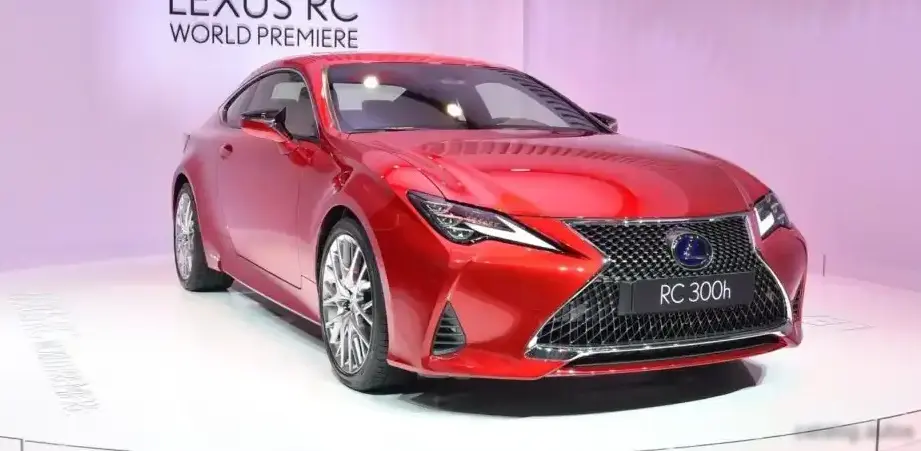
The Lexus RC 300, specifically the facelifted model introduced in 2018, represents Lexus’s entry into the luxury sports coupe market. This variant, powered by a 3.5-liter V6 engine producing 260 horsepower and paired with a six-speed automatic transmission and all-wheel drive (AWD), was positioned as a comfortable and capable grand tourer rather than an outright performance machine. The 2018 facelift brought revised styling, updated technology, and refinements to the driving experience, aiming to broaden the RC’s appeal. It falls within the second generation of the RC (designated as the XV70 series), building upon the platform first introduced in 2014.
Technical Specifications
| Brand | Lexus |
| Model | RC |
| Generation | RC (facelift 2018) |
| Type (Engine) | 300 V6 (260 Hp) AWD Automatic |
| Start of production | 2018 |
| Powertrain Architecture | Internal Combustion engine |
| Body type | Coupe |
| Seats | 4 |
| Doors | 2 |
| Fuel consumption (urban) | 13 l/100 km (18.1 US mpg, 21.7 UK mpg, 7.7 km/l) |
| Fuel consumption (extra urban) | 9.8 l/100 km (24 US mpg, 28.8 UK mpg, 10.2 km/l) |
| Fuel consumption (combined) | 11.2 l/100 km (21 US mpg, 25.2 UK mpg, 8.9 km/l) |
| Fuel Type | Petrol (Gasoline) |
| Maximum speed | 209 km/h (129.87 mph) |
| Weight-to-power ratio | 6.8 kg/Hp, 147.3 Hp/tonne |
| Weight-to-torque ratio | 5.5 kg/Nm, 181.3 Nm/tonne |
| Power | 260 Hp |
| Power per litre | 75.2 Hp/l |
| Torque | 320 Nm @ 2000-4800 rpm (236.02 lb.-ft. @ 2000-4800 rpm) |
| Engine layout | Front, Longitudinal |
| Engine Model/Code | 2GR-FKS |
| Engine displacement | 3456 cm3 (210.9 cu. in.) |
| Number of cylinders | 6 |
| Engine configuration | V-engine |
| Compression ratio | 11.8:1 |
| Number of valves per cylinder | 4 |
| Fuel injection system | Direct injection |
| Engine aspiration | Naturally aspirated engine |
| Valvetrain | VVT-i |
| Engine oil capacity | 5.7 l (6.02 US qt | 5.02 UK qt) |
| Coolant | 9.5 l (10.04 US qt | 8.36 UK qt) |
| Kerb Weight | 1765 kg (3891.16 lbs.) |
| Trunk (boot) space – minimum | 294 l (10.38 cu. ft.) |
| Fuel tank capacity | 66 l (17.44 US gal | 14.52 UK gal) |
| Length | 4699 mm (185 in.) |
| Width with mirrors folded | 1839 mm (72.4 in.) |
| Height | 1400 mm (55.12 in.) |
| Wheelbase | 2731 mm (107.52 in.) |
| Drag coefficient (Cd) | 0.30 |
| Minimum turning circle (turning diameter) | 10.6 m (34.78 ft.) |
| Drive wheel | All wheel drive (4×4) |
| Number of gears and type of gearbox | 6 gears, automatic transmission |
| Front suspension | Double wishbone |
| Rear suspension | Independent multi-link spring suspension with stabilizer |
| Front brakes | Ventilated discs |
| Rear brakes | Ventilated discs |
| Assisting systems | ABS (Anti-lock braking system) |
| Steering type | Steering rack and pinion |
| Power steering | Electric Steering |
| Tires size | 235/45 R18; 235/40 R19 |
| Wheel rims size | 18; 19 |
Powertrain & Engine Architecture
The heart of the RC 300 AWD is the 2GR-FKS 3.5-liter V6 engine. This engine utilizes Toyota’s D-4S direct and port fuel injection system, combining the benefits of both technologies for improved efficiency and power delivery. The 2GR-FKS features a 60-degree V-angle and employs Variable Valve Timing-intelligent (VVT-i) on both intake and exhaust valves, optimizing engine performance across the rev range. The engine produces its peak torque of 236 lb-ft between 2000 and 4800 rpm, providing a broad and usable powerband. The six-speed automatic transmission is designed for smooth and refined shifts, prioritizing comfort over aggressive gear changes. While not a sport-tuned transmission, it offers manual shift control via paddle shifters, allowing the driver some degree of engagement.
Driving Characteristics
The RC 300 AWD delivers a comfortable and composed driving experience. The automatic transmission, while smooth, isn’t particularly quick to downshift, and the engine’s power delivery is linear rather than explosive. This configuration prioritizes effortless cruising and everyday usability. Compared to the RC 350 with its more powerful V6, the RC 300 feels noticeably less urgent in acceleration. The all-wheel-drive system provides enhanced traction, particularly in inclement weather, but adds weight compared to rear-wheel-drive models. The gear ratios are tuned for fuel efficiency and relaxed highway driving, meaning the engine doesn’t always feel like it’s operating in its sweet spot during aggressive maneuvers.
Equipment & Trim Levels
The 2018 RC 300 AWD typically came standard with features such as Lexus Safety System+, which included Pre-Collision System with Pedestrian Detection, Lane Departure Alert with Intelligent Steering Assist, and Dynamic Radar Cruise Control. Interior appointments included leather upholstery, a 7-inch infotainment display (later upgraded to 10.3 inches), and a premium sound system. Optional extras included a Mark Levinson premium audio system, heated and ventilated front seats, a power-adjustable steering column, and blind-spot monitoring with rear cross-traffic alert. Trim levels varied slightly by region, but generally offered packages that bundled convenience and luxury features.
Chassis & Braking
The RC 300 AWD utilizes a double wishbone front suspension and an independent multi-link rear suspension, providing a comfortable ride and predictable handling. Stabilizer bars are fitted to both axles to reduce body roll during cornering. The braking system consists of ventilated discs on all four wheels, providing adequate stopping power for the vehicle’s weight and performance. The electric power steering offers a light and precise feel, although it lacks the feedback of a hydraulic system. The AWD system is primarily rear-biased, sending more power to the rear wheels under normal driving conditions to enhance driving engagement.
Market Reception & Comparison
Critics generally praised the RC 300 AWD for its comfortable ride, refined interior, and standard safety features. However, some reviewers found the engine’s performance to be underwhelming, particularly compared to competitors like the BMW 4 Series and Audi A5. Fuel economy was considered average for its class. Compared to the RC 350, the RC 300 offered a more affordable entry point into the RC lineup, but at the expense of performance. The RC 300 also differed significantly from the RC F, which was a dedicated performance model with a naturally aspirated 5.0-liter V8 engine.
Legacy
The 2GR-FKS engine has proven to be a reliable and durable powerplant, with a good track record for longevity. The six-speed automatic transmission is also generally considered to be reliable, although regular maintenance is crucial. On the used car market, the 2018 RC 300 AWD represents a good value proposition for buyers seeking a stylish and comfortable luxury coupe. While it may not offer the same level of performance as some of its rivals, its reliability, standard features, and Lexus’s reputation for quality make it an attractive option. Common issues reported by owners include minor infotainment system glitches and occasional wear and tear on suspension components, but these are generally not major concerns.