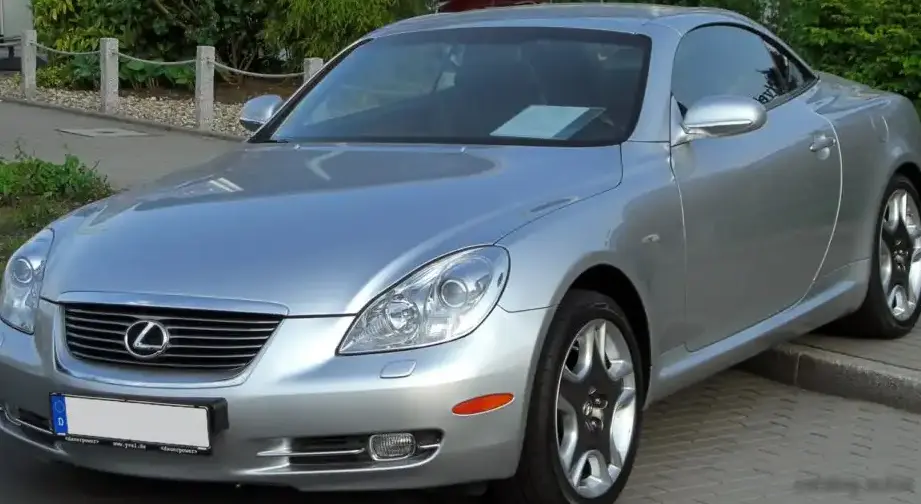
The Lexus SC 300, produced from 1991 to 2001 (as part of the Z30 chassis code generation), represented Lexus’s initial foray into the luxury sports coupe market. Positioned as a grand tourer, the SC 300 aimed to blend Lexus’s renowned refinement and build quality with a more engaging driving experience. This variant, powered by the 2JZ-GE 3.0-liter inline-six engine and a four-speed automatic transmission, served as the entry point into the SC lineup, offering a balance of performance and comfort. It competed directly with vehicles like the BMW 6 Series, Mercedes-Benz CLK, and Acura Legend Coupe.
Technical Specifications
| Brand | Lexus |
| Model | SC |
| Generation | SC I (Z30) |
| Type (Engine) | 300 (228 Hp) |
| Start of production | 1991 |
| End of production | 2001 |
| Powertrain Architecture | Internal Combustion engine |
| Body type | Coupe |
| Seats | 4 |
| Doors | 2 |
| Fuel consumption (urban) | 12.8 l/100 km (18.4 US mpg) |
| Fuel consumption (extra urban) | 9.4 l/100 km (25 US mpg) |
| Fuel Type | Petrol (Gasoline) |
| Acceleration 0 – 100 km/h | 7.5 sec |
| Acceleration 0 – 62 mph | 7.5 sec |
| Acceleration 0 – 60 mph | 7.1 sec |
| Maximum speed | 235 km/h (146.02 mph) |
| Weight-to-power ratio | 7.1 kg/Hp |
| Weight-to-torque ratio | 5.4 kg/Nm |
| Power | 228 Hp @ 6000 rpm |
| Torque | 298 Nm @ 4000 rpm (219.79 lb.-ft. @ 4000 rpm) |
| Engine layout | Front, Longitudinal |
| Engine Model/Code | 2JZ-GE |
| Engine displacement | 2997 cm3 (182.89 cu. in.) |
| Number of cylinders | 6 |
| Engine configuration | Inline |
| Cylinder Bore | 86 mm (3.39 in.) |
| Piston Stroke | 86 mm (3.39 in.) |
| Compression ratio | 10.5:1 |
| Number of valves per cylinder | 4 |
| Fuel injection system | Multi-port manifold injection |
| Engine aspiration | Naturally aspirated engine |
| Valvetrain | DOHC |
| Engine oil capacity | 5.2 l (5.49 US qt | 4.58 UK qt) |
| Coolant capacity | 8.4 l (8.88 US qt | 7.39 UK qt) |
| Kerb Weight | 1610 kg (3549.44 lbs.) |
| Max. weight | 1875 kg (4133.67 lbs.) |
| Max load | 265 kg (584.22 lbs.) |
| Trunk (boot) space – minimum | 265 l (9.36 cu. ft.) |
| Fuel tank capacity | 78 l (20.61 US gal | 17.16 UK gal) |
| Length | 4850 mm (190.94 in.) |
| Width | 1790 mm (70.47 in.) |
| Height | 1340 mm (52.76 in.) |
| Wheelbase | 2690 mm (105.91 in.) |
| Front track | 1520 mm (59.84 in.) |
| Rear (Back) track | 1520 mm (59.84 in.) |
| Drivetrain Architecture | Rear wheel drive |
| Number of gears and type of gearbox | 4 gears, automatic transmission |
| Front suspension | Double wishbone |
| Rear suspension | Coil spring |
| Front brakes | Ventilated discs |
| Rear brakes | Disc |
| Assisting systems | ABS (Anti-lock braking system) |
| Steering type | Steering rack and pinion |
| Power steering | Hydraulic Steering |
| Tires size | 225/55 R16 |
Powertrain & Engine Architecture
The heart of the SC 300 is the 2JZ-GE, a 3.0-liter (2997 cc) inline-six engine. This engine is renowned for its smoothness and durability. It features a cast-iron block and an aluminum cylinder head, employing a double overhead camshaft (DOHC) valvetrain with four valves per cylinder. The 2JZ-GE utilizes a multi-port fuel injection system, delivering precise fuel metering for optimal combustion. The engine produces 228 horsepower at 6000 rpm and 298 Nm (219.79 lb-ft) of torque at 4000 rpm. The four-speed automatic transmission, while providing convenience, was a point of contention for some enthusiasts who preferred the responsiveness of the available five-speed manual. The automatic transmission was designed for smooth shifts and comfortable cruising, prioritizing refinement over outright performance.
Driving Characteristics
The SC 300 with the automatic transmission delivers a comfortable and refined driving experience. Acceleration from 0 to 60 mph takes approximately 7.1-7.5 seconds, which was respectable for a luxury coupe of its era, but noticeably slower than the manual transmission equipped models. The automatic transmission’s gear ratios are geared towards fuel efficiency and smooth cruising, resulting in a less aggressive feel compared to the manual. While the engine provides adequate power for everyday driving and highway passing, it lacks the immediate response and sporty character of the higher-output turbocharged variants (like the SC 400). The rear-wheel-drive configuration contributes to balanced handling, but the relatively soft suspension setup prioritizes ride comfort over sharp cornering.
Equipment & Trim Levels
The SC 300 came standard with a generous array of features, reflecting its luxury positioning. These included leather upholstery, power-adjustable front seats, a premium sound system, automatic climate control, and power windows and locks. Optional extras included a sunroof, upgraded audio systems (often a Mark Levinson unit), and traction control. The interior design emphasized elegance and comfort, with wood trim accents and a driver-focused layout. The exterior styling was characterized by its sleek, rounded lines and a long hood, giving it a classic grand tourer appearance.
Chassis & Braking
The SC 300 utilizes a double wishbone suspension setup at the front and a coil spring suspension at the rear. This configuration provides a comfortable ride while maintaining reasonable handling characteristics. The braking system consists of ventilated discs at the front and solid discs at the rear, equipped with an Anti-lock Braking System (ABS) as standard. The steering is rack-and-pinion with hydraulic power assistance, offering precise and responsive steering feel. The standard tire size is 225/55 R16, providing a good balance of grip and ride comfort.
Market Reception & Comparison
The SC 300 was generally well-received by critics, who praised its luxurious interior, smooth ride, and refined engine. However, the automatic transmission was often criticized for its lack of responsiveness compared to the manual. Fuel economy was considered average for its class, with combined figures around 21 mpg. Compared to the SC 400 (equipped with the 4.0-liter V8 engine), the SC 300 offered a more affordable entry point into the SC lineup, but at the expense of outright performance. The SC 300 appealed to buyers who prioritized comfort and refinement over sporty handling and acceleration.
Legacy
The Lexus SC 300 has developed a loyal following among enthusiasts, particularly those who appreciate its reliability and potential for modification. The 2JZ-GE engine is known for its robustness and ability to handle significant power upgrades. While the automatic transmission may not be the preferred choice for performance enthusiasts, it remains a reliable and durable unit. Today, well-maintained SC 300s are becoming increasingly collectible, representing a unique blend of luxury, style, and Japanese engineering. The car’s enduring appeal lies in its ability to provide a comfortable and refined driving experience, coupled with the potential for customization and performance enhancement.